
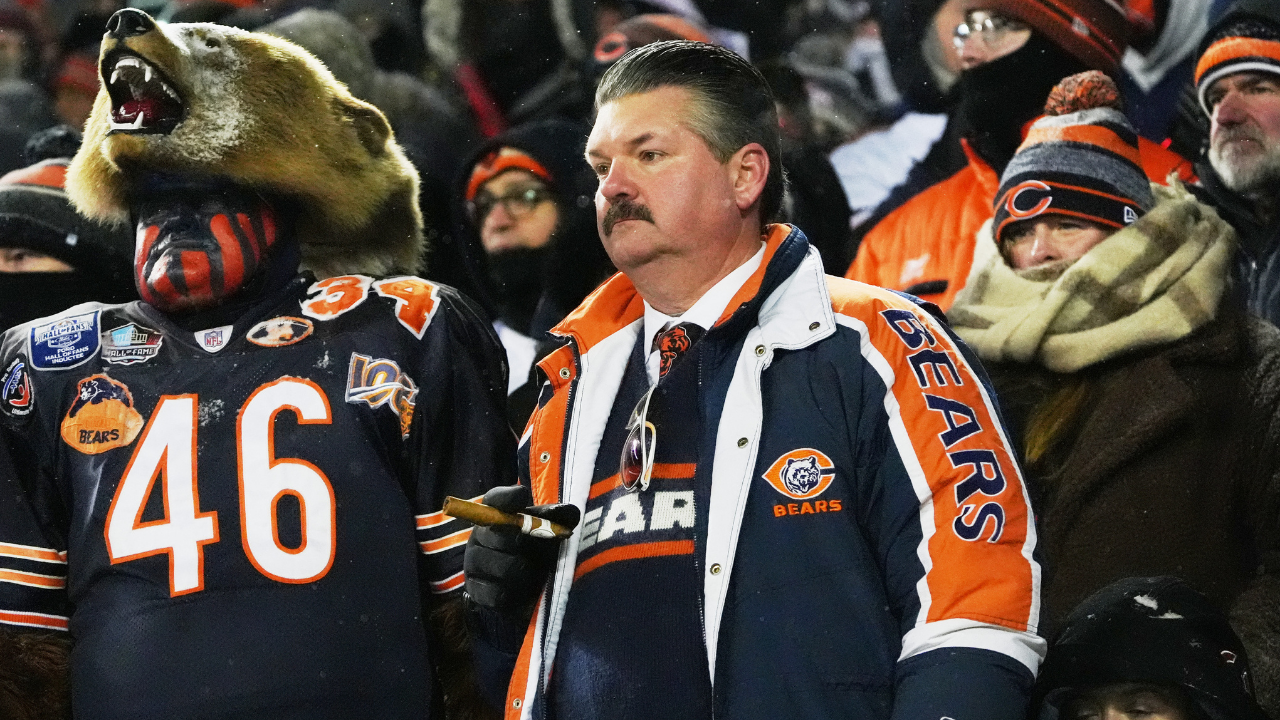
After 105 years in Chicago, the Bears just took their biggest step yet toward leaving the city—and the state of Illinois—behind. On Thursday, Indiana lawmakers unanimously approved a bill that would pave the way for a new stadium in Hammond, Indiana—just 20 miles from downtown Chicago. The Bears called it “the most meaningful step forward in our stadium planning efforts to date.” Meanwhile, Illinois taxpayers are staring down $534 million in leftover Soldier Field debt, with no plan in sight.
What Just Happened?
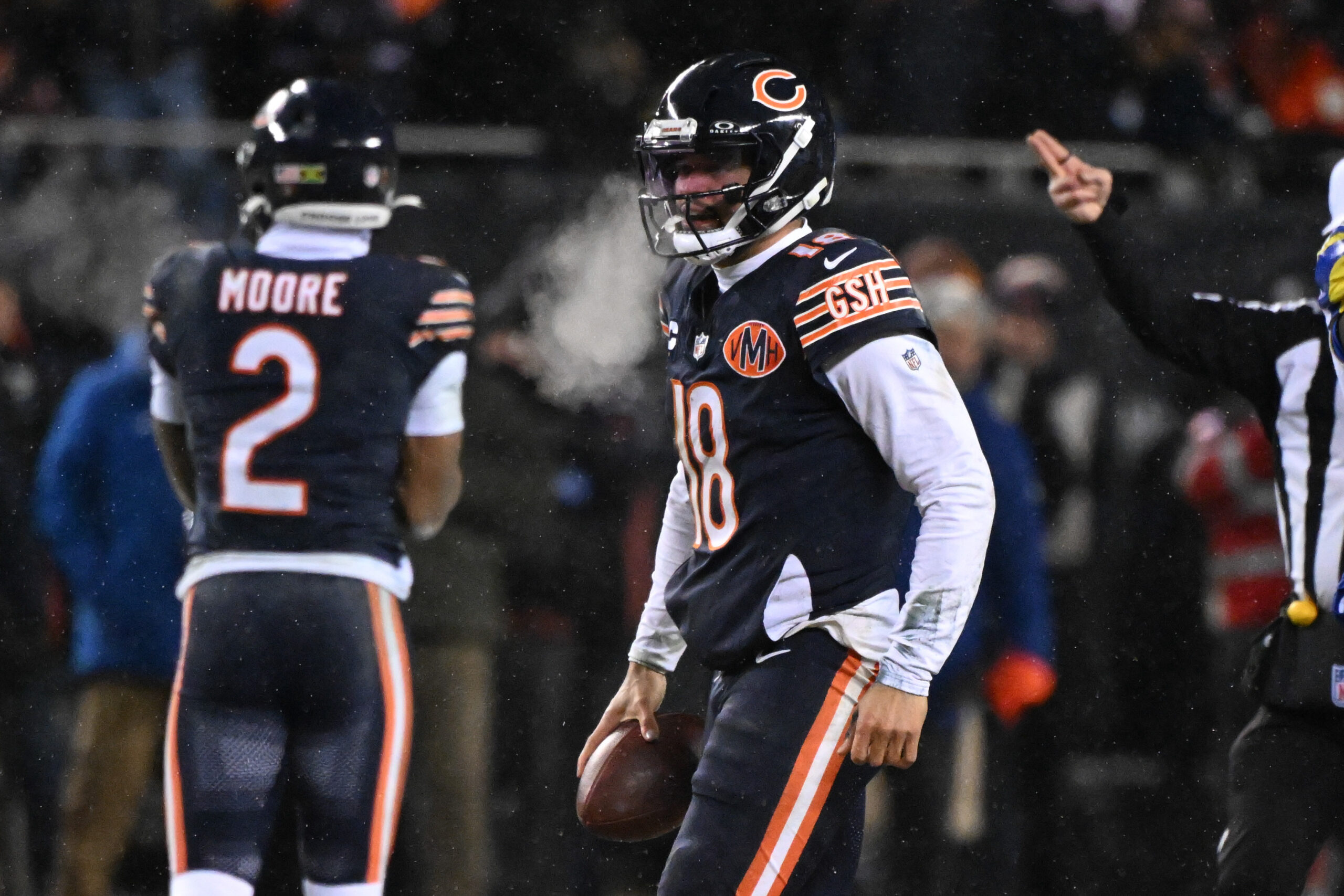
Jan 18, 2026; Chicago, IL, USA; in Chicago Bears quarterback Caleb Williams (18) during an NFC Divisional Round game against the Los Angeles Rams at Soldier Field. Mandatory Credit: Matt Marton-Imagn Images
Indiana’s House Ways and Means Committee passed Senate Bill 27 with a 24-0 vote, creating the Northwest Indiana Stadium Authority. This new agency would have the power to issue bonds, buy land, and build a stadium near Wolf Lake in Hammond. The Bears have pledged $2 billion in private funding, but Indiana would cover infrastructure costs through public financing tools. Governor Mike Braun posted on X: “Indiana is open for business.”
Why Indiana?
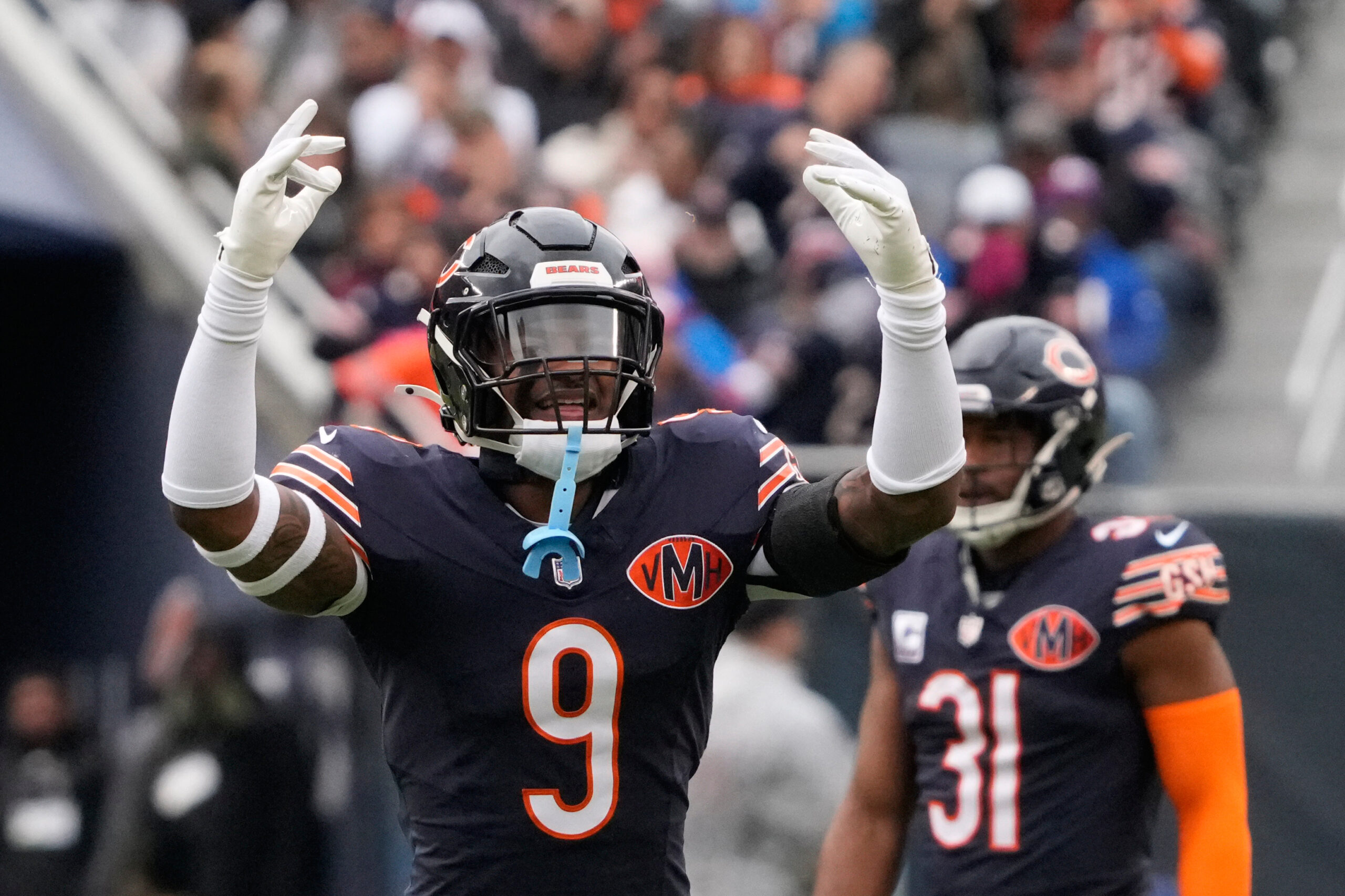
Oct 19, 2025; Chicago, Illinois, USA; Chicago Bears safety Jaquan Brisker (9) reacts after making a defensive play against the New Orleans Saints during the first half at Soldier Field. Mandatory Credit: David Banks-Imagn Images
For years, the Bears pushed for a $5 billion stadium and mixed-use development in Arlington Heights, Illinois. They bought 326 acres of racetrack land for $197.2 million and asked the state for roughly $855 million in infrastructure support. But Illinois lawmakers balked. Governor Pritzker insisted the Bears first address $534 million in Soldier Field renovation debt. The state legislature prioritized other funding issues, and the Bears’ preferred property tax legislation stalled. Indiana saw an opening—and moved fast.
Illinois Caught Off Guard
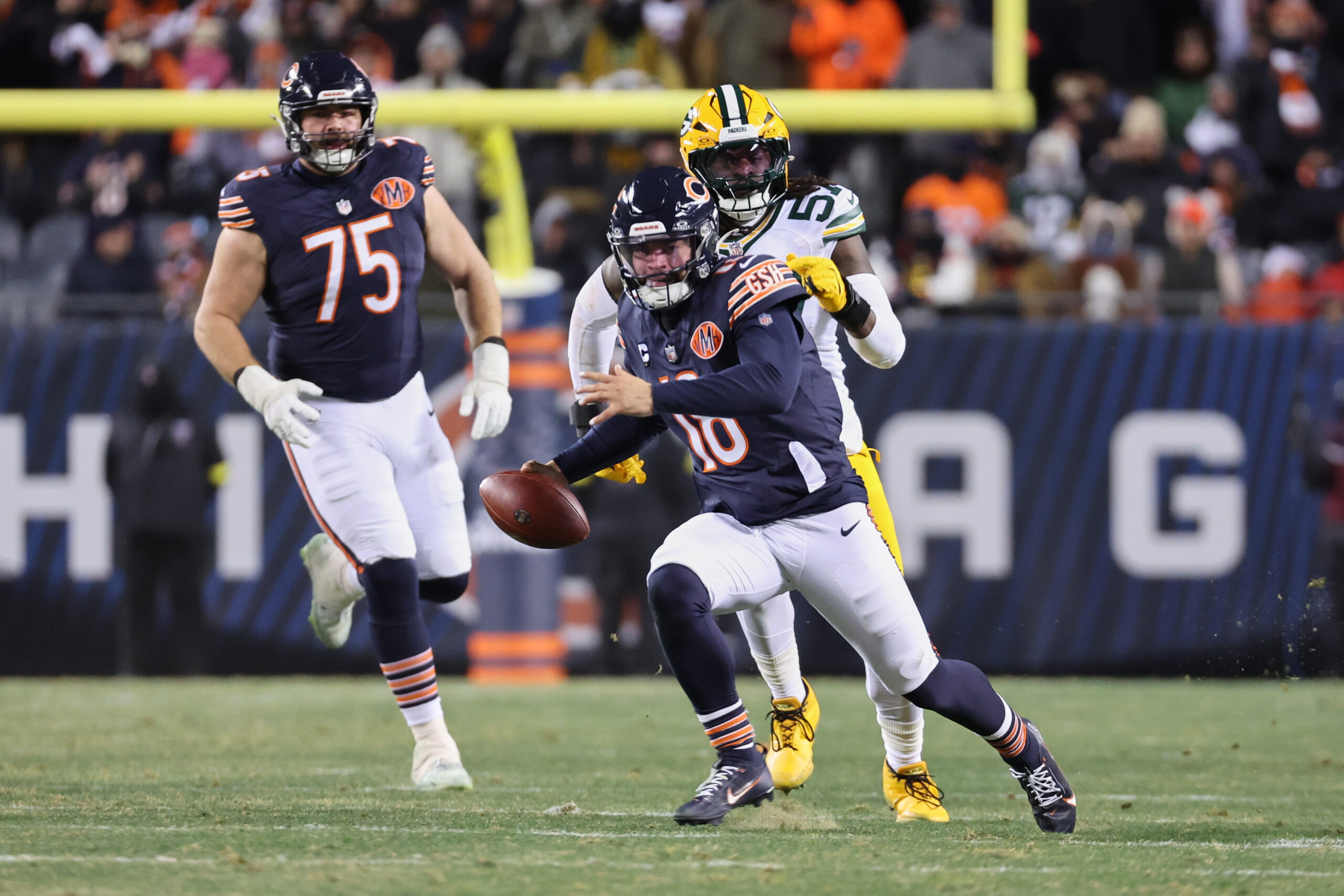
Dec 20, 2025; Chicago, Illinois, USA; Chicago Bears quarterback Caleb Williams (18) runs with the ball and offensive tackle Ozzy Trapilo (75) watches the play against Green Bay Packers defensive end Brenton Cox Jr. (57) during overtime at Soldier Field. Mandatory Credit: Mike Dinovo-Imagn Images
The timing was brutal. Just one day before Indiana’s vote, Illinois officials held what Governor Pritzker described as “very positive” closed-door negotiations with Bears brass and Arlington Heights officials. The parties had “mostly agreed” on a bill. Then the Bears released their Indiana statement—without mentioning Illinois at all. State Rep. Kam Buckner, whose district includes Soldier Field, compared the situation to a “dine and dash.”
The $534 Million Soldier Field Problem
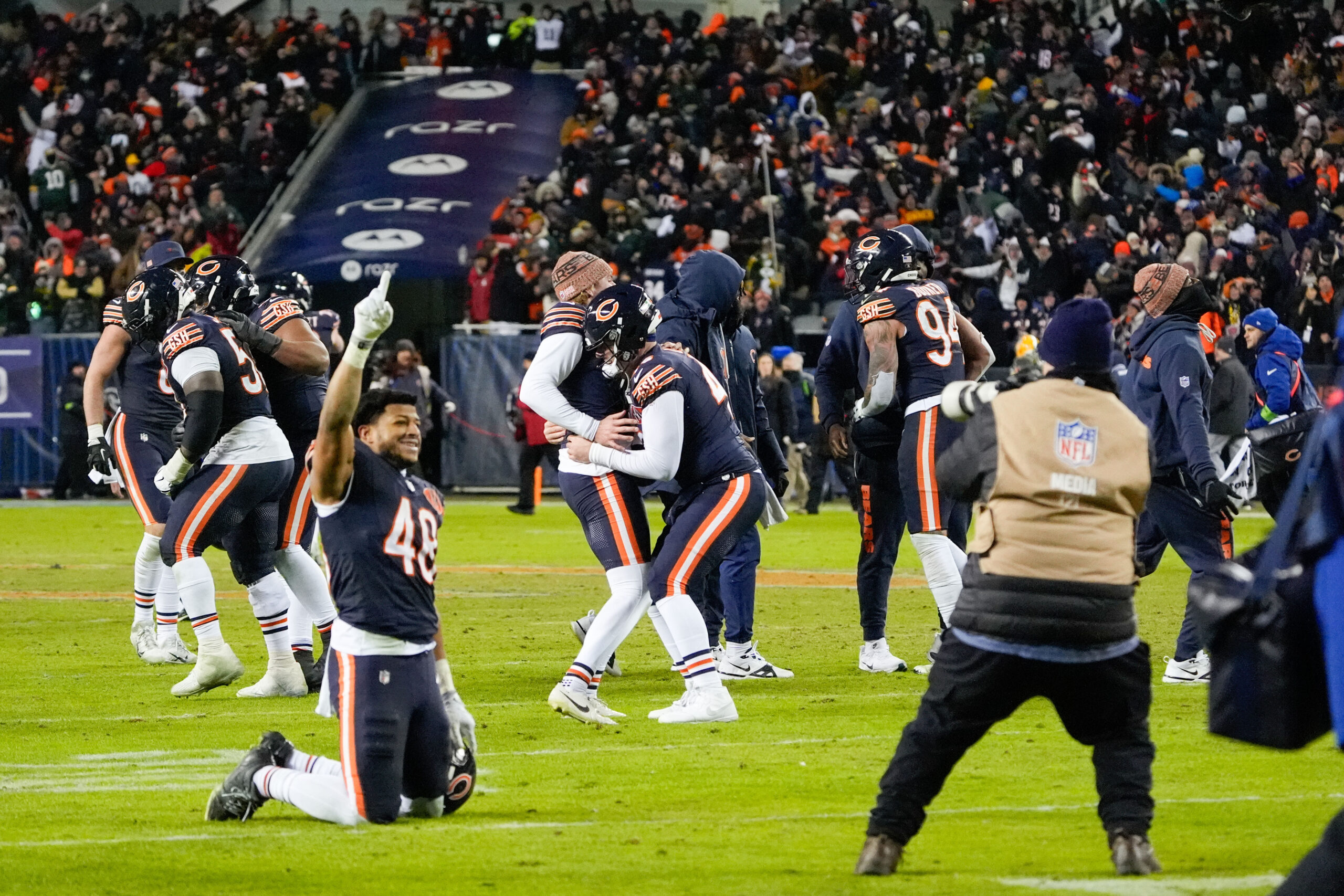
Jan 10, 2026; Chicago, IL, USA; Chicago Bear players reacts following the final play off the game against the Green Bay Packers an NFC Wild Card Round game at Soldier Field. Mandatory Credit: David Banks-Imagn Images
When the Bears leave—whether for Indiana or Arlington Heights—they leave behind a massive financial headache. Soldier Field’s 2003 renovation was financed with bonds that still carry roughly $534 million in remaining debt (principal of approximately $356 million, plus interest through 2033). That debt is backed by Chicago hotel taxes and state subsidies—not the Bears directly. But if revenue drops after the Bears leave, taxpayers fill the gap. The stadium generates about $50 million in annual revenue, including the Bears’ $7 million rent. Losing the team—and potentially concerts and events that would shift to a new venue—would blow a hole in the Chicago Park District’s budget.
What Would It Cost the Bears to Leave Soldier Field?
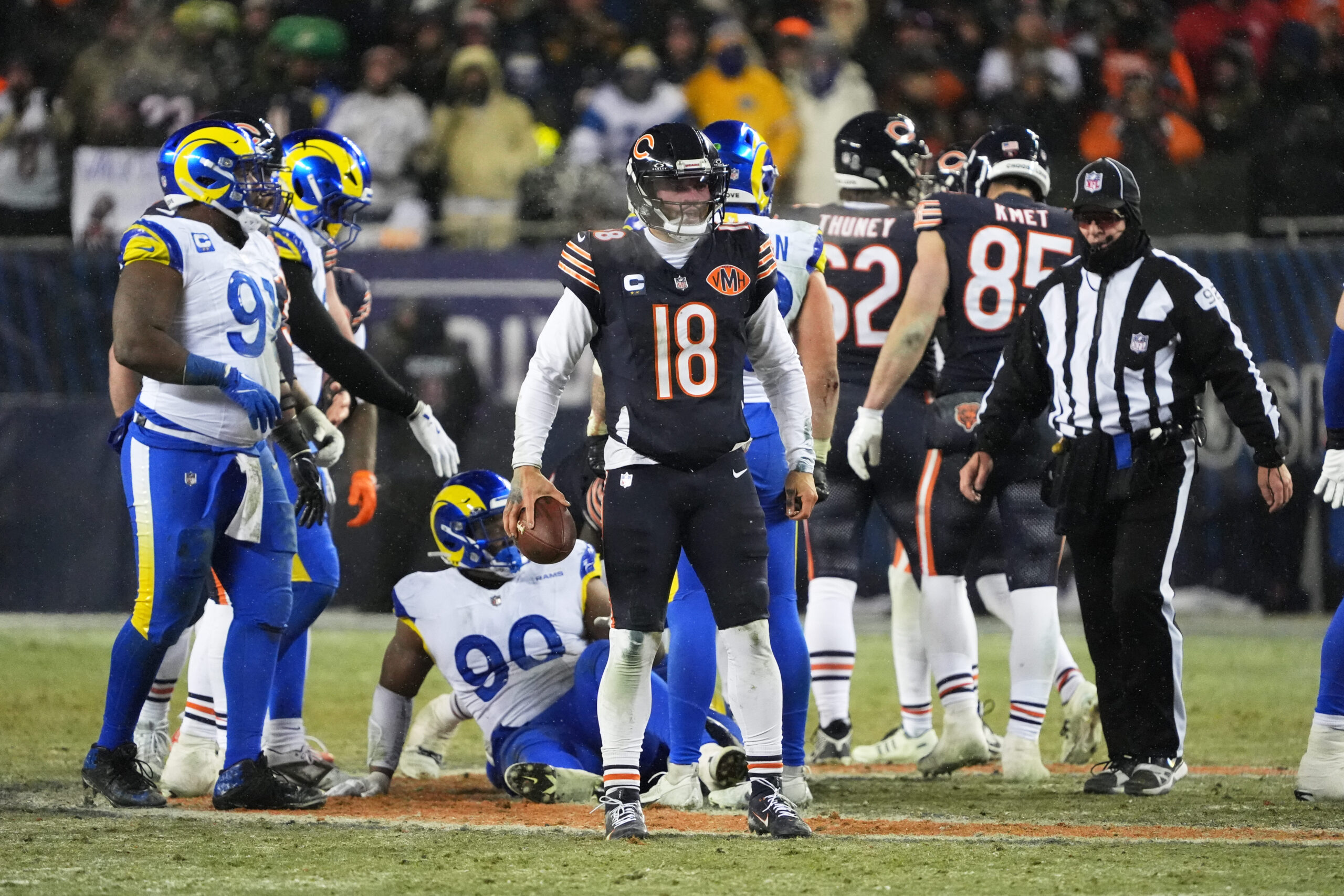
Jan 18, 2026; Chicago, IL, USA; Chicago Bears quarterback Caleb Williams (18) looks on against the Los Angeles Rams during overtime of an NFC Divisional Round game at Soldier Field. Mandatory Credit: David Banks-Imagn Images
The Bears’ lease runs through 2033, but they can break it early—for a price. The termination fee starts at $84 million in 2026, decreasing annually—dropping to $74 million in 2027, $63.8 million in 2028, and continuing to decline each year down to $11 million by 2033. For a franchise valued at over $3.5 billion, that’s a rounding error.
The Tax Advantage of Crossing State Lines
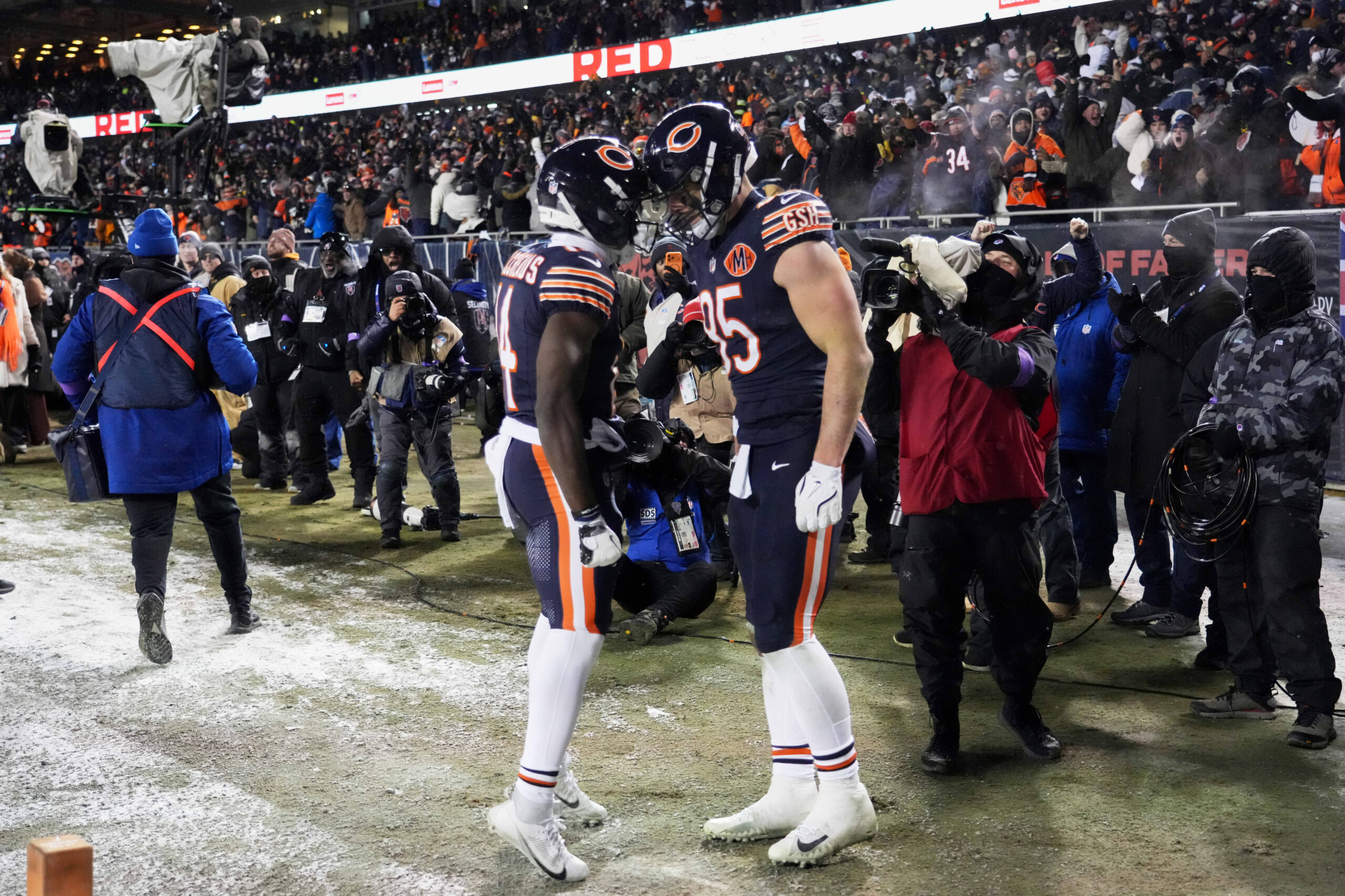
Jan 18, 2026; Chicago, IL, USA; Chicago Bears tight end Cole Kmet (85) celebrates with wide receiver Olamide Zaccheaus (14) after catching a fourteen-yard touchdown pass against the Los Angeles Rams with eighteen seconds remaining in the fourth quarter of an NFC Divisional Round game at Soldier Field. Mandatory Credit: David Banks-Imagn Images
One underreported angle: Indiana’s tax environment is significantly more favorable. Indiana’s statewide sales tax is 7%—with no local add-ons. Chicago’s combined sales tax is currently 10.25%, and a pending RTA increase will push it to 10.5%—the highest of any major U.S. city—once it takes effect in June 2026. That’s a widening tax gap that matters for everything from concession sales to surrounding development.
A Widening Tax Gap

Jan 18, 2026; Chicago, IL, USA; Fans cheer after a touchdown scored by Chicago Bears tight end Cole Kmet (85) against the Los Angeles Rams with eighteen seconds remaining in the fourth quarter of an NFC Divisional Round game at Soldier Field. Mandatory Credit: David Banks-Imagn Images
The current gap between Chicago’s 10.25% combined sales tax and Indiana’s flat 7% is already 3.25 percentage points. Once Chicago’s RTA-driven increase to 10.5% takes effect, that gap widens to 3.5 percentage points. For fans buying tickets, food, merchandise, and parking—and for businesses considering where to invest around a new stadium—that difference adds up fast.
A Ticking Clock
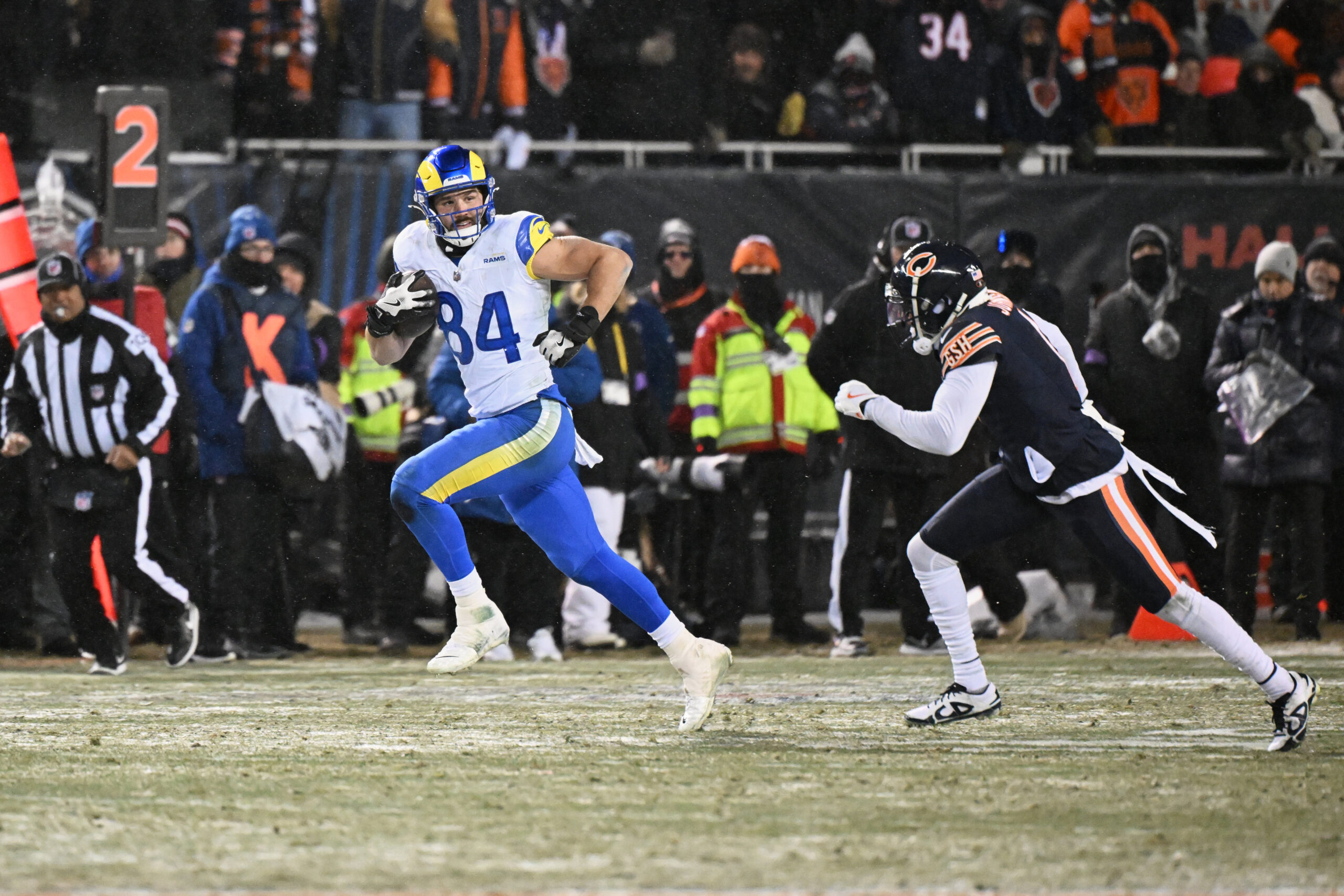
Jan 18, 2026; Chicago, IL, USA; Los Angeles Rams tight end Colby Parkinson (84) runs after the catch against Chicago Bears safety C.J. Gardner-Johnson (35) during the fourth quarter of an NFC Divisional Round game at Soldier Field. Mandatory Credit: Matt Marton-Imagn Images
The clock is ticking. Indiana’s legislative session is set to adjourn by February 27, meaning SB 27 needs full House and Senate approval within days. In Illinois, a House committee hearing has been rescheduled for 8 a.m. on February 26. The Bears previously indicated that a new stadium could be completed within three to five years of breaking ground. The Bears haven’t made a final decision—but for the first time in the franchise’s history, leaving Illinois is more than just a threat. It’s a legislative reality.
A Franchise Full Circle
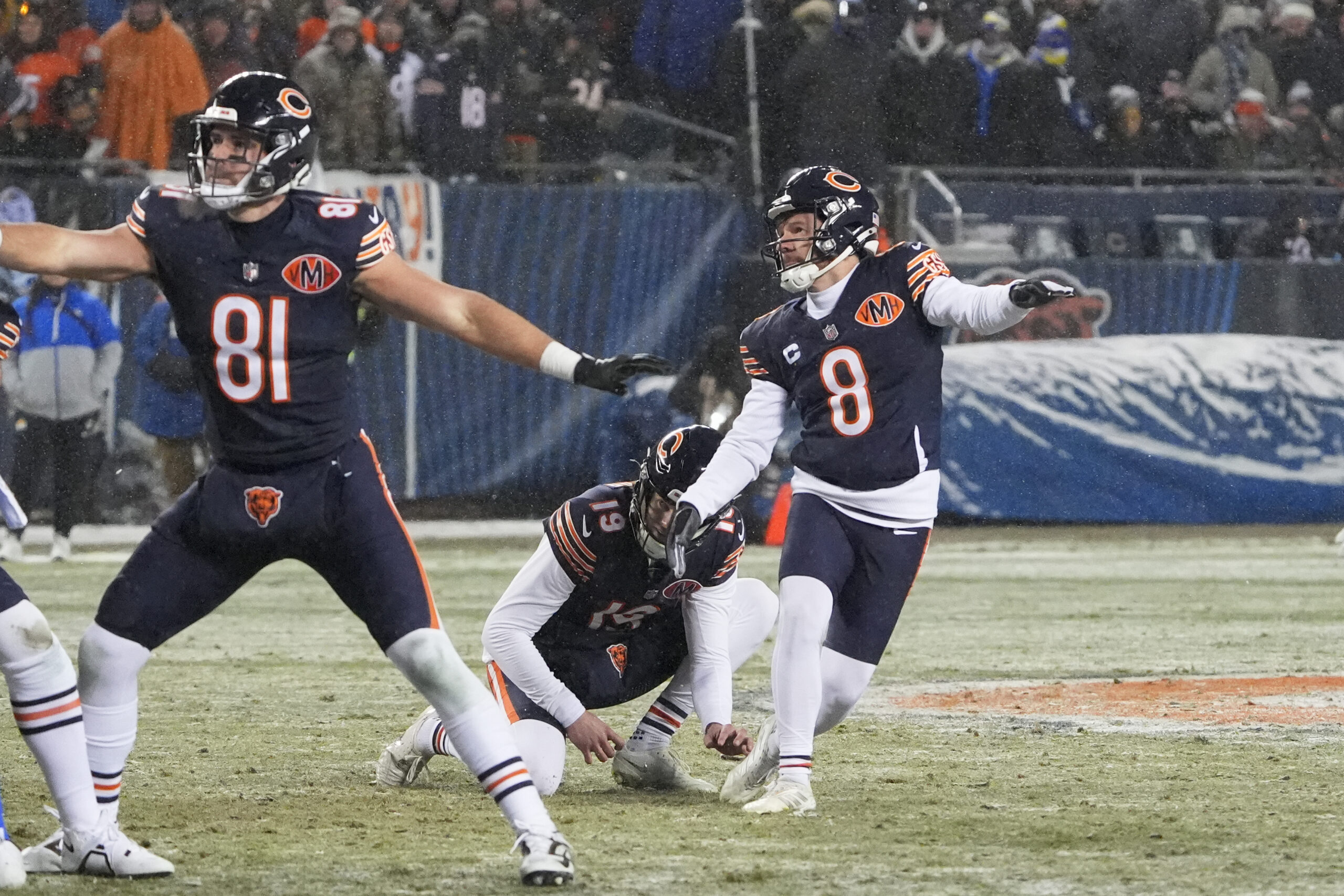
Jan 18, 2026; Chicago, IL, USA; Chicago Bears placekicker Cairo Santos (8) watches the flight of a forty-eight yard field goal against the Los Angeles Rams during the second quarter of an NFC Divisional Round game at Soldier Field. Mandatory Credit: David Banks-Imagn Images
Here’s the irony: the Bears’ founder, George Halas, actually played for the Hammond Bobcats in 1919—one year before he organized the Decatur Staleys, who became the Bears. If the Bears move to Hammond, they wouldn’t just be leaving Chicago. They’d be returning to the exact city where their founder first played professional football—over a century ago.
If you enjoyed this article, please like and follow us here on MSN! Thank you for reading, and have a great day!
Sources:
“Indiana unanimously passes bill to lure Bears away from Chicago.” ESPN, 18 Feb 2026.
“Gov. JB Pritzker urges Bears to ‘make their intentions known’ amid Indiana stadium push.” CBS News Chicago, 19 Feb 2026.
“Bears’ New Stadium Plans Hindered by Soldier Field Debt.” Forbes, 12 Sep 2025.
“Chicago’s high sales taxes about to increase to No. 1 in nation.” Illinois Policy Institute, 11 Nov 2025.