
Carnell Tate ran a 4.53-second 40-yard dash at the 2026 NFL Combine. Tetairoa McMillan was widely reported in the 4.4s, but draft analyst Dane Brugler has specifically referenced him with a 4.53 in the context of Cleveland’s evaluation. The Cleveland Browns held a top‑10 pick in 2025, traded down from No. 2 to No. 5, and selected Mason Graham instead of McMillan. Brugler says McMillan’s incomplete testing profile was one of the reasons they passed on him in that range. Now Tate sits at No. 6 overall on many boards with a similar time, similar testing gaps, and the same front office staring at his file. A 90.3 PFF grade. Zero drops on 67 targets. Widely viewed as the top receiver prospect in the class across major mock drafts. And none of it might matter. The number that helped shape the McMillan conversation in Cleveland just showed up again.
Same Number, Same Blind Spot
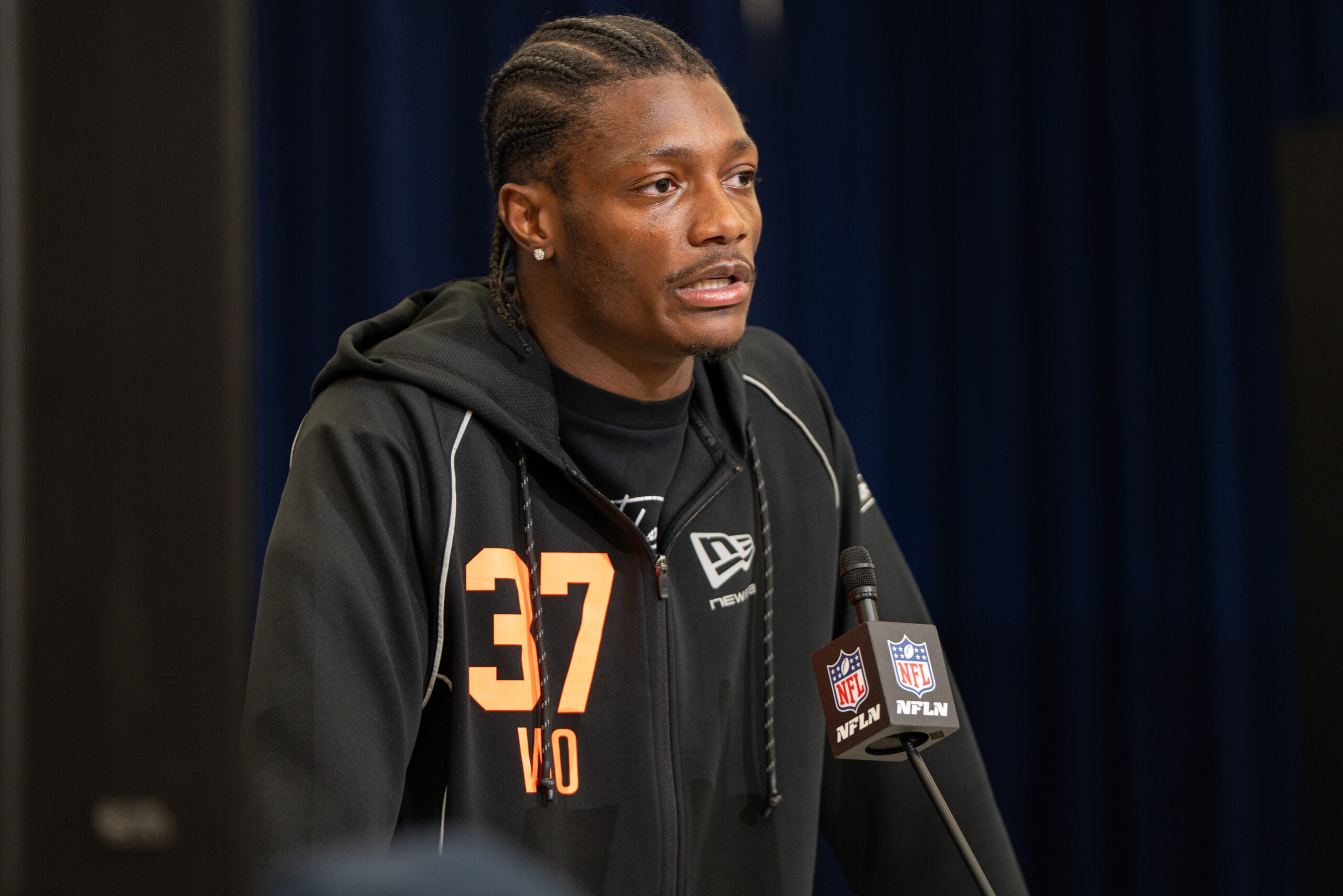
Feb 27, 2026; Indianapolis, IN, USA; Ohio State wideout Carnell Tate (WO37) speaks to members of the media during the NFL Combine at the Indiana Convention Center. Mandatory Credit: Jacob Musselman-Imagn Images
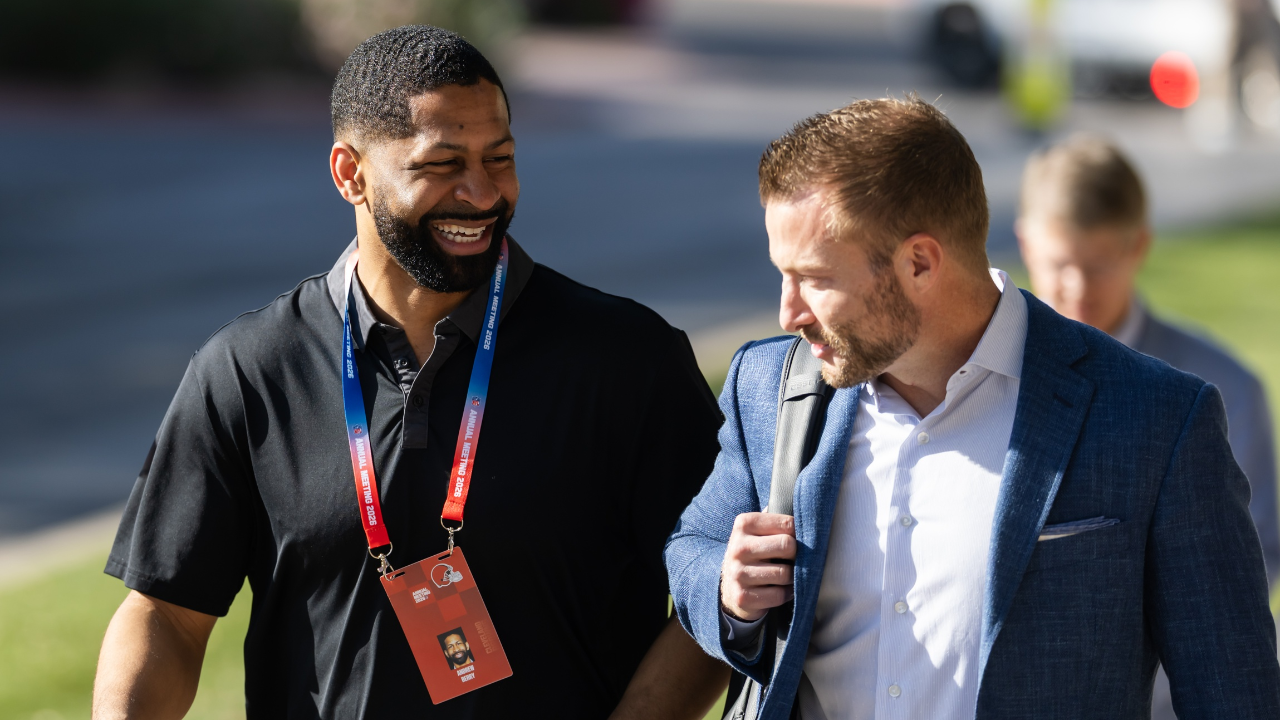
Tate completed only the 40-yard dash among the standard combine tests. That leaves most of his athletic testing data uncollected: no vertical jump, no broad jump, no 3-cone, no shuttle, no bench press. The NFL’s evaluation system often treats that gap like a red stamp on a passport. Brugler connected the dots directly on a Cleveland show: “One of the reasons they passed on McMillan last year in the top 10 and they went with Mason Graham was because they had an incomplete testing profile on McMillan. He had a 40-yard dash, and he ran a 4.53. What did Tate do?” The mechanism driving that concern — incomplete testing breeding institutional doubt — hasn’t changed. The prospect just did.
Your Grocery Bill Has a Draft Parallel
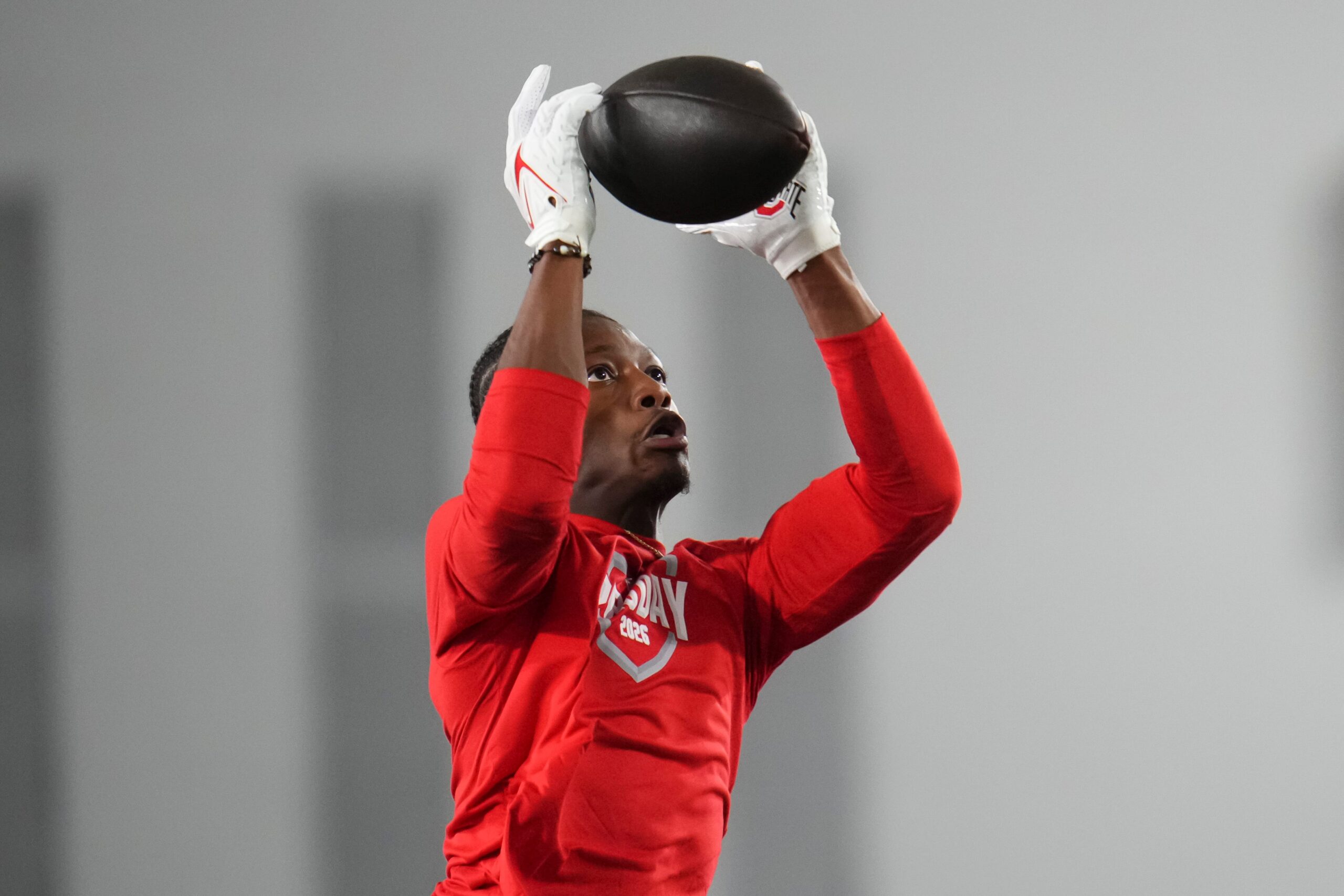
Ohio State Buckeyes wide receiver Carnell Tate catches a ball during Pro Day for NFL scouts at the Woody Hayes Athletics Center on March 25, 2026.-Imagn Images
Browns fans already lived a version of this. Cleveland traded down from No. 2 to No. 5 in the 2025 draft and selected Mason Graham instead of taking a wide receiver such as McMillan, who went No. 8 to Carolina and quickly became the Panthers’ No. 1 receiver. McMillan helped Carolina reach the playoffs and won Offensive Rookie of the Year. If Tate slides the same way while Cleveland again looks elsewhere, the Browns’ receiving corps could absorb the cost for years. Tate caught 51 passes for 875 yards and 9 touchdowns in 11 games last season, competing for targets alongside Jeremiah Smith. That production disappears from Cleveland’s offense and reappears on a rival’s roster. The direct hit lands on the fan base first.
The Draft Board Reshuffles Behind Him
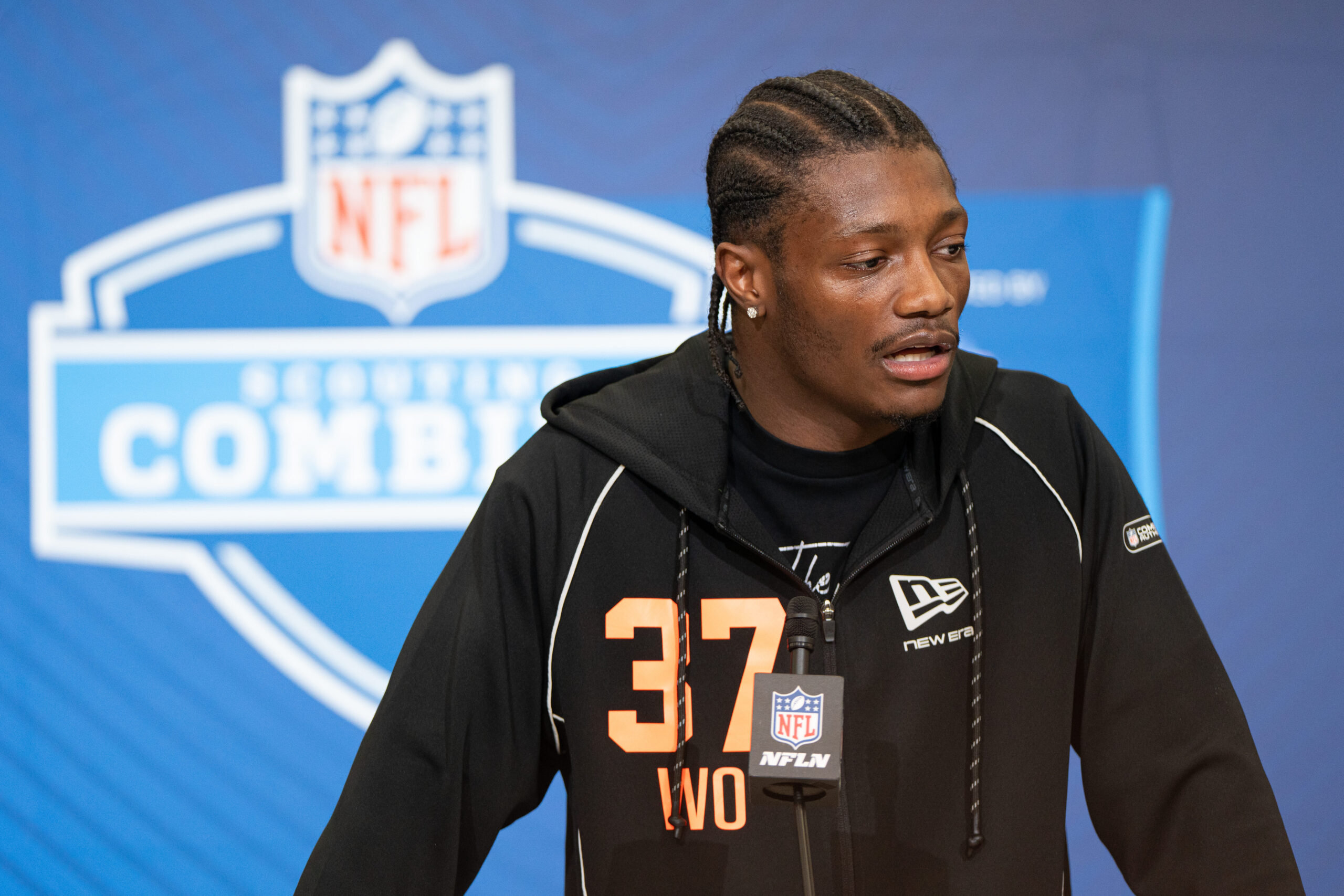
Feb 27, 2026; Indianapolis, IN, USA; Ohio State wideout Carnell Tate (WO37) speaks to members of the media during the NFL Combine at the Indiana Convention Center. Mandatory Credit: Jacob Musselman-Imagn Images
If a widely projected WR1 slides past No. 6, every team picking seventh through tenth just received a gift they didn’t earn. The Giants. The Saints. Receivers projected in the 8-to-12 range suddenly climb because the top name moved down. Meanwhile, Omar Cooper Jr. from Indiana completed more combine drills, ran a 4.42 with a 37-inch vertical, and starts looking like the “safer” pick on paper. Tate’s incomplete profile doesn’t just affect Tate. It reprices the entire first-round receiver market in real time.
The Calf Injury Nobody Mentions Enough
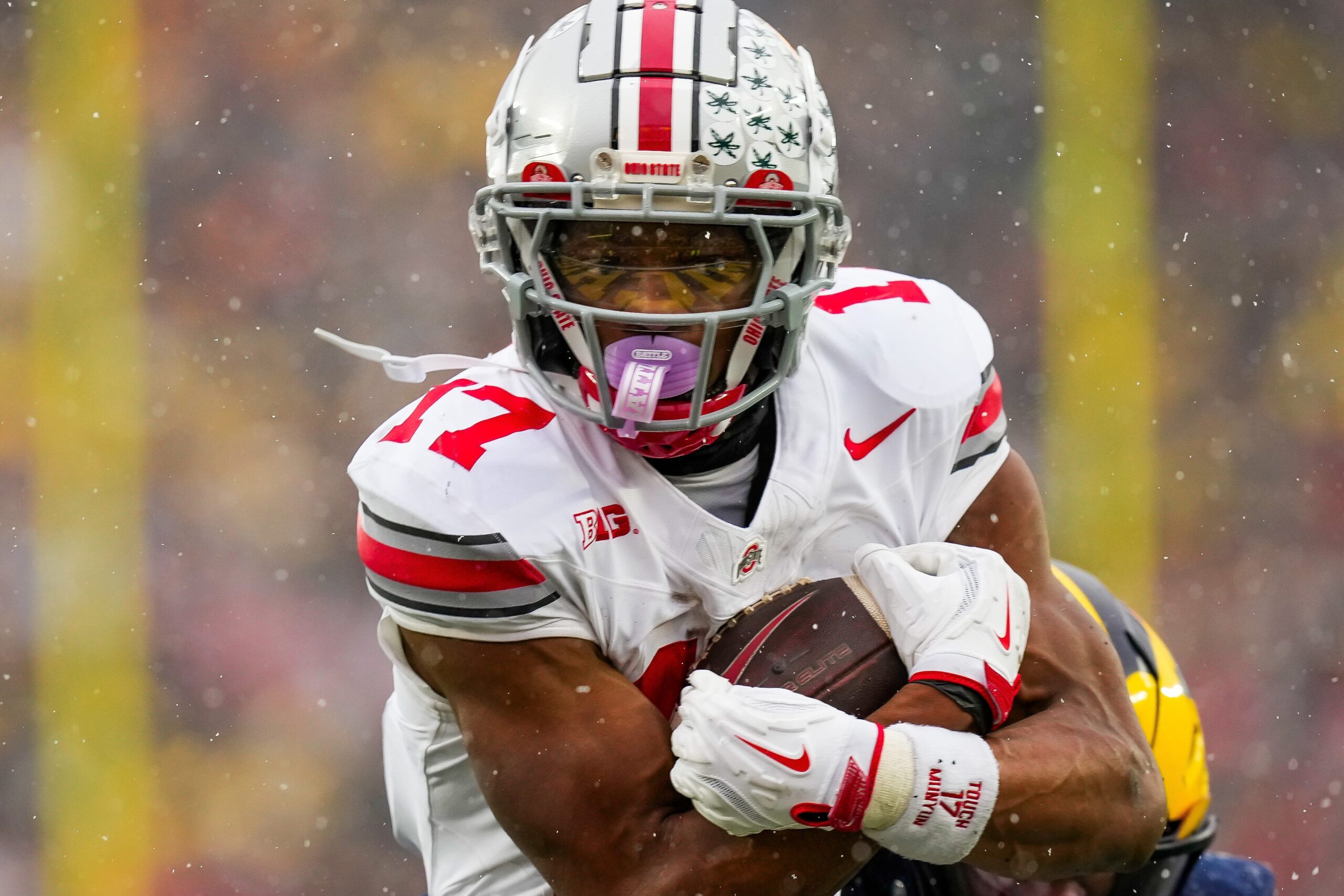
Ohio State Buckeyes wide receiver Carnell Tate (17) runs in a touchdown against the Michigan Wolverines in the second half of the NCAA football game at Michigan Stadium on Saturday, Nov. 29, 2025 in Ann Arbor, Michigan.-Imagn Images
Tate missed three games in 2025 with a lingering calf injury that started in late October, according to scouting reports. That same calf likely influenced his decision to skip six combine drills. Extrapolate his 11-game production across a full 14-game season and the projections land near 65 catches, 1,113 yards, and 11–12 touchdowns. Those numbers would have silenced most testing concerns. Instead, the calf created the testing gap, and the testing gap created the institutional doubt. One injury, months earlier, set the entire chain in motion. Think about that for a second.
The Veto That Overrides Film
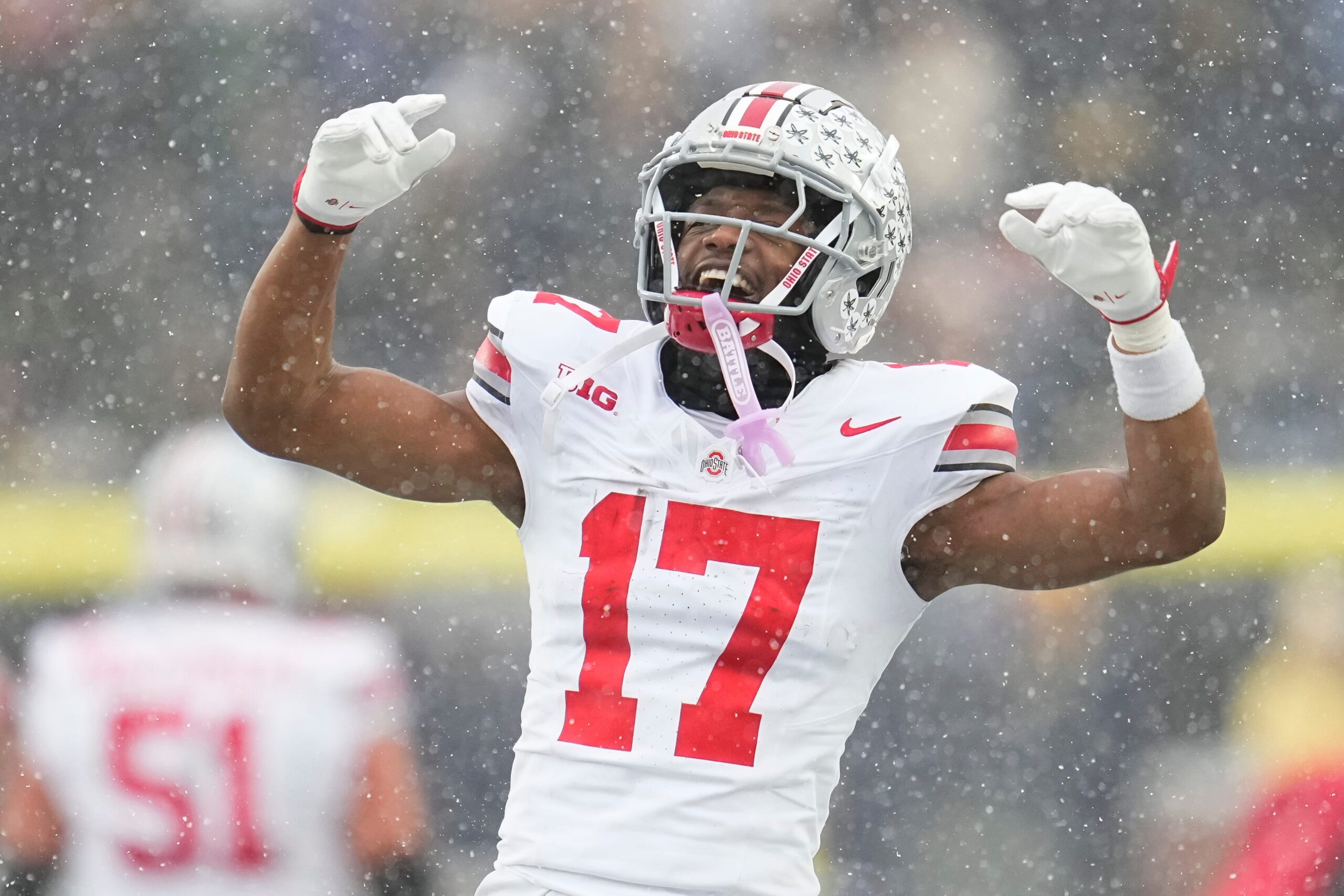
Ohio State Buckeyes wide receiver Carnell Tate (17) celebrates during the NCAA football game against the Michigan Wolverines at Michigan Stadium in Ann Arbor, Mich. on Nov. 29, 2025. Ohio State won 27-9.-Imagn Images
The hidden mechanism connecting every ripple is straightforward: many NFL front offices treat incomplete combine testing less like a data point and more like a veto. Tate’s 28.2 percent catch rate over expectation — cited in some analytics-focused scouting reports — would rank among the elite. His zero-drop season on 67 targets screams reliability. His film earned first-team All-Big Ten and second-team All-American honors from multiple outlets. None of it fully erases the empty boxes on the combine sheet. Calf injury leads to skipped drills. Skipped drills trigger institutional skepticism. Skepticism, in some buildings, becomes a veto. The veto becomes a pass on a top‑10 receiver. Same mechanism. Different year. Potentially similar result.
‘It Can Be a Bit Overvalued’
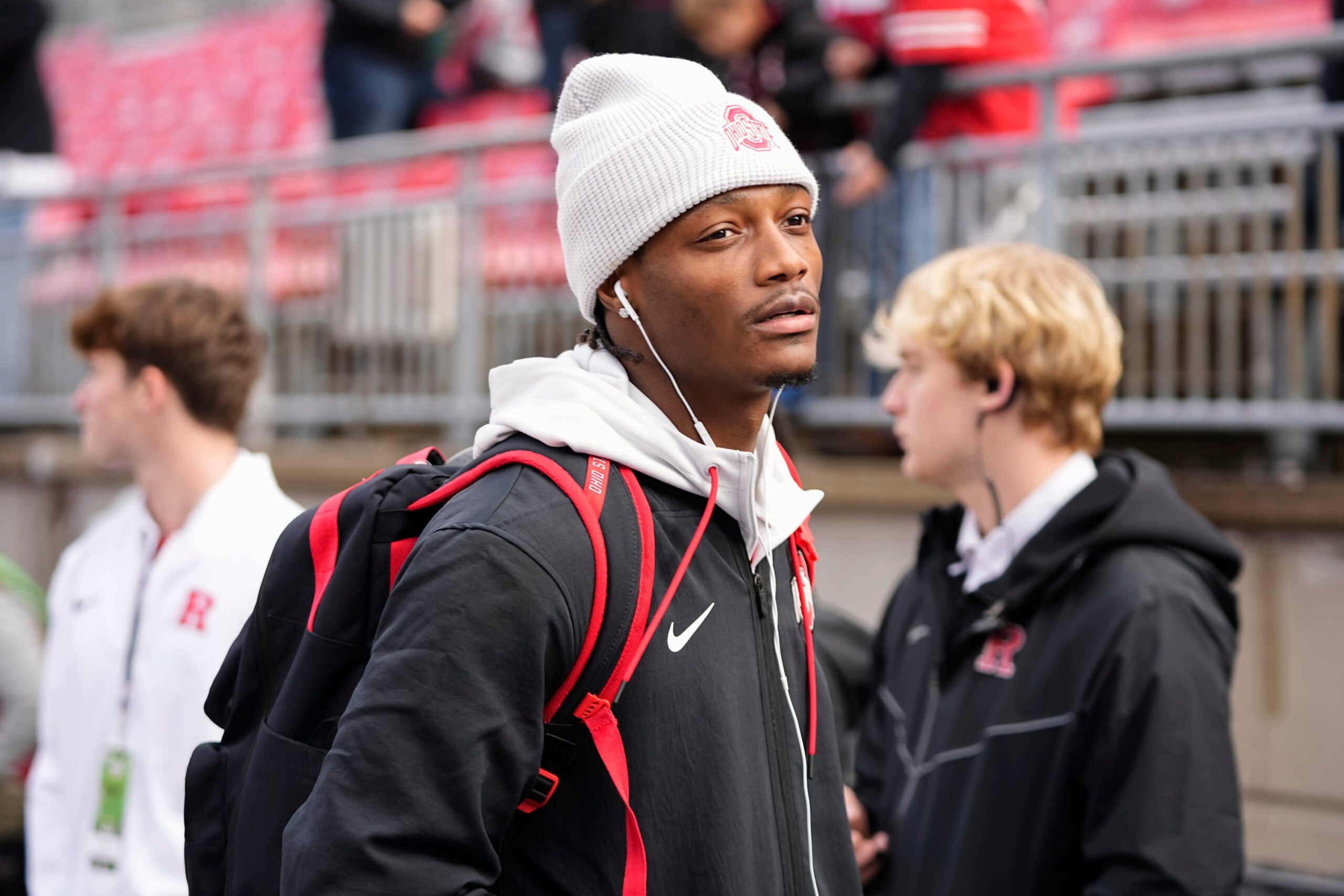
Ohio State Buckeyes wide receiver Carnell Tate walks into Ohio Stadium prior to the NCAA football game against the Rutgers Scarlet Knights in Columbus on Nov. 22, 2025.-Imagn Images
That’s Tate’s own assessment of the 40-yard dash, delivered at his March pro day. He said teams hadn’t expressed speed concerns. He declined to rerun the 40. The confidence read as conviction at the time. Now it reads as the exact miscalculation that could cost him millions. If Tate falls from a projected top‑five to the 8‑to‑10 range, public contract-slot estimates suggest his four-year rookie deal could lose roughly $3 to $5 million. His words didn’t just fail to help him. They may have reinforced every front office’s hesitation.
A Precedent That Rewrites Pro Days
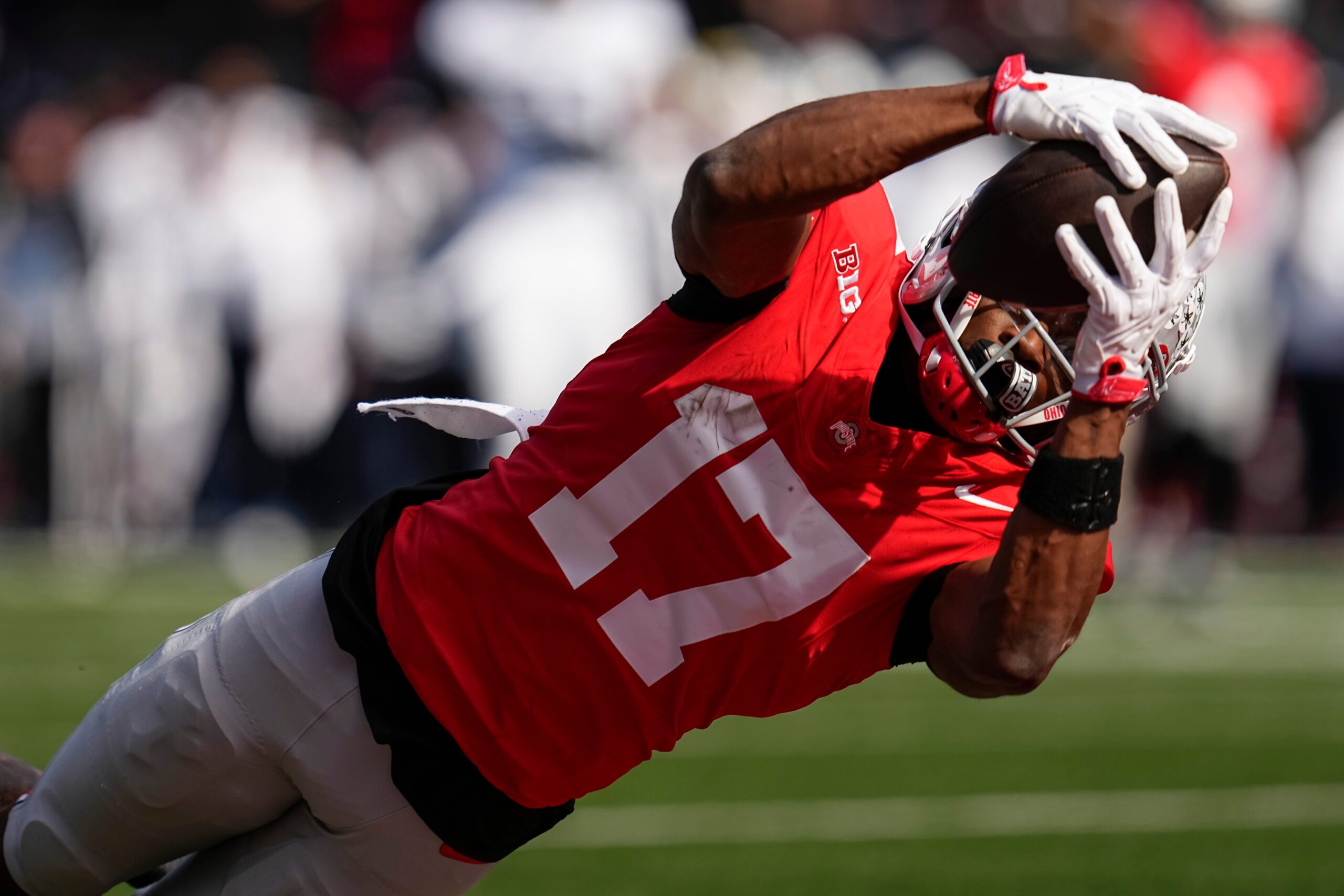
Ohio State Buckeyes wide receiver Carnell Tate (17) catches a touchdown pass during the NCAA football game against the Penn State Nittany Lions at Ohio Stadium in Columbus on Nov. 1, 2025.-Imagn Images
If the Browns pass on Tate for similar reasons to those Brugler outlined with McMillan, a new rule gets written across the league without anyone voting on it: incomplete combine testing can override top-of-class receiver status. Every future prospect’s agent will treat optional drills as mandatory. Training facilities will market “combine-complete” prep packages. Pro days will shift from selective showcases to full testing batteries. The Browns won’t have announced a policy change. But two high-profile passes on receivers with incomplete profiles would look like one anyway. Institutional behavior, repeated, becomes industry standard.
Winners, Losers, and the Clock
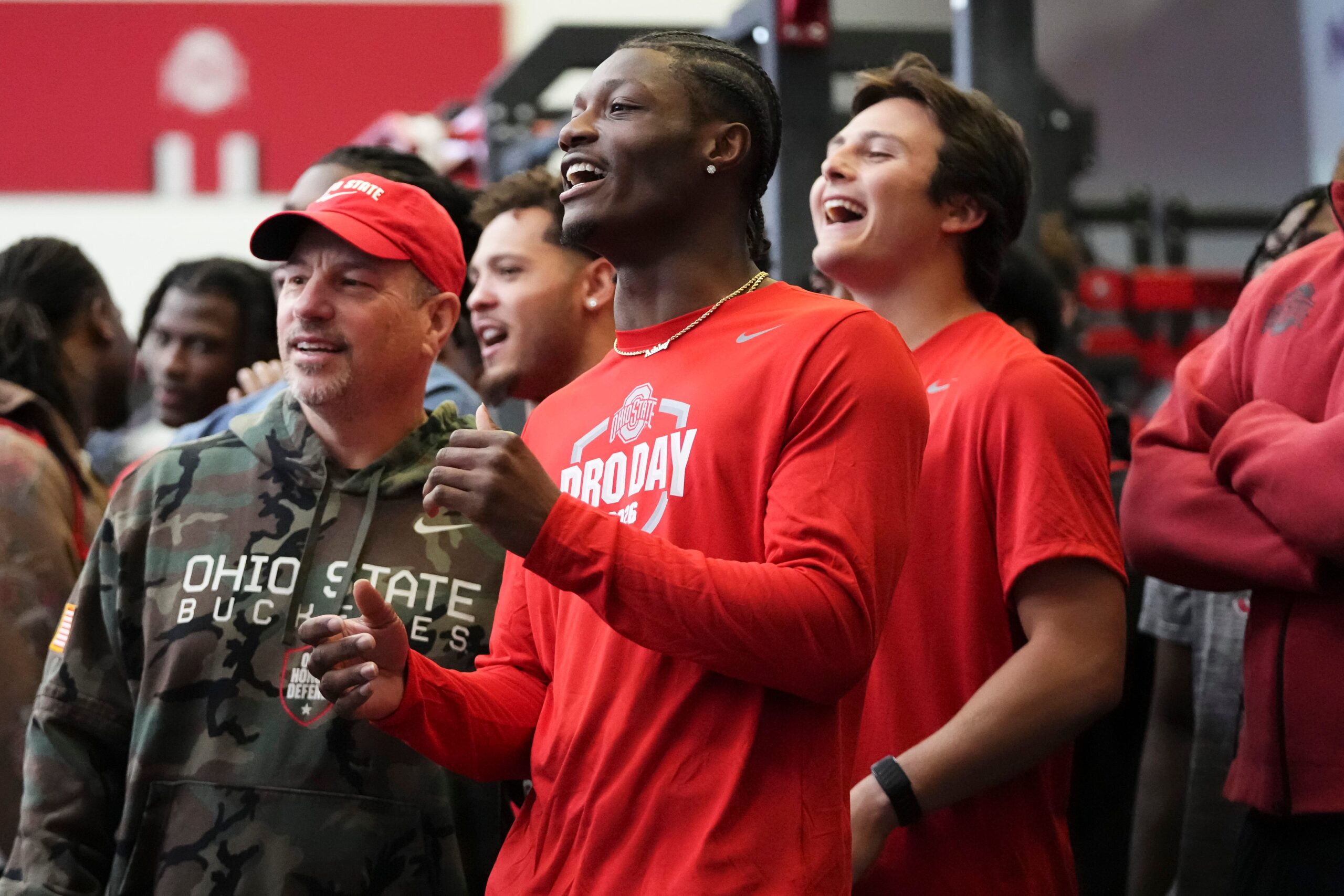
Ohio State Buckeyes wide receiver Carnell Tate (17) watches as teammates do the vertical jump during Pro Day for NFL scouts at the Woody Hayes Athletics Center on March 25, 2026.-Imagn Images
The winners are obvious: whichever team drafts Tate if he slides past Cleveland gets a second-team All-American with 121 career catches, 1,872 yards, and 14 touchdowns at a discount slot. The losers are less obvious. Every receiver who skips a combine drill now carries Tate’s stigma. Every prospect with a nagging injury faces pressure to test through pain rather than risk the data gap. McMillan is already proving his NFL value in Carolina, where he helped fuel a playoff run. If Tate does the same for another team, Cleveland’s front office owns two different passes on elite receiver talent in a two-year span — both with incomplete testing at the center of the evaluation conversation.
Nine Days and Counting
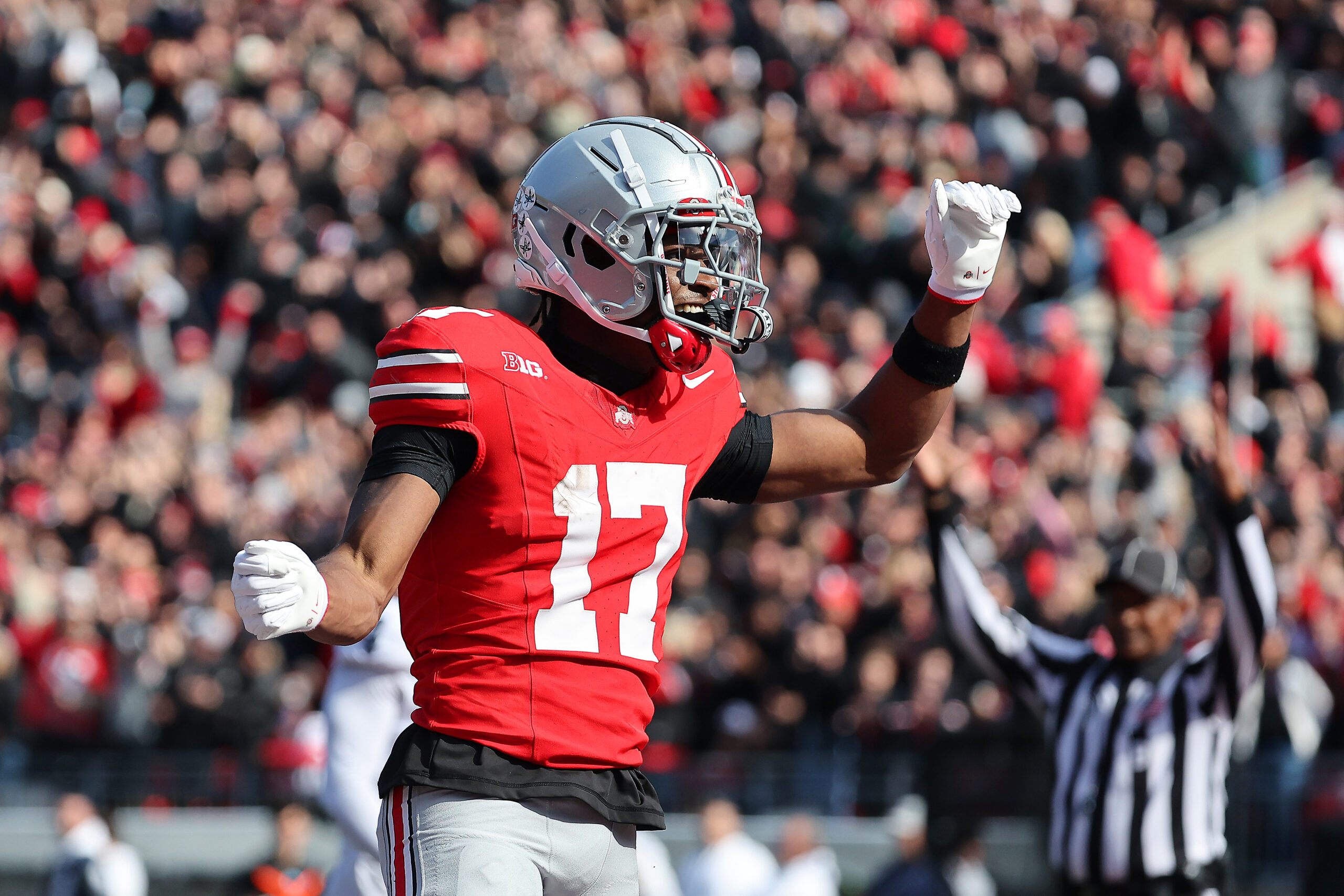
Nov 1, 2025; Columbus, Ohio, USA; Ohio State Buckeyes wide receiver Carnell Tate (17) celebrates his touchdown during the second quarter against the Penn State Nittany Lions at Ohio Stadium. Mandatory Credit: Joseph Maiorana-Imagn Images
The draft opens April 23. Cleveland’s front office will either break its emerging pattern or confirm it. If they draft Tate, the narrative flips to redemption: the Browns learned from passing on McMillan. If they trade down or look elsewhere again, the testing veto becomes the defining feature of this organization’s draft philosophy at receiver. Agents are already adjusting. Future prospects are already planning full combine participation. The cascade from one 4.53-second sprint, echoed in another analyst’s 4.53 reference a year earlier, has already reshaped how talent gets evaluated before Cleveland even makes the call.
Sources:
“Carnell Tate runs official 4.53-second 40-yard dash at 2026 combine.” NFL.com, 27 Feb 2026.
“Carnell Tate doesn’t run ‘overvalued’ 40 at Ohio State pro day.” ESPN, 24 Mar 2026.
“Browns 2025 NFL Draft takeaways: Twists, turns and a Shedeur surprise.” The Athletic, late Apr 2025.
“Browns NFL Draft: Dane Brugler reveals concern with Cleveland and Carnell Tate.” Yahoo Sports, mid Apr 2026.