
Somewhere in Oxford, Ohio, Chuck Martin’s phone buzzes. A former player, now suiting up for a Power Four program, just called a Miami recruit. The message wasn’t a sales pitch for the bigger school. It was a warning. Since the June 2021 policy shift that opened the NIL floodgates — a market now widely reported to exceed $1 billion annually — everyone assumed the richest programs would vacuum up every blue-chip athlete in America. That assumption is dying in real time, and the people killing it are the players who chased the money themselves.
The Warning Nobody Expected
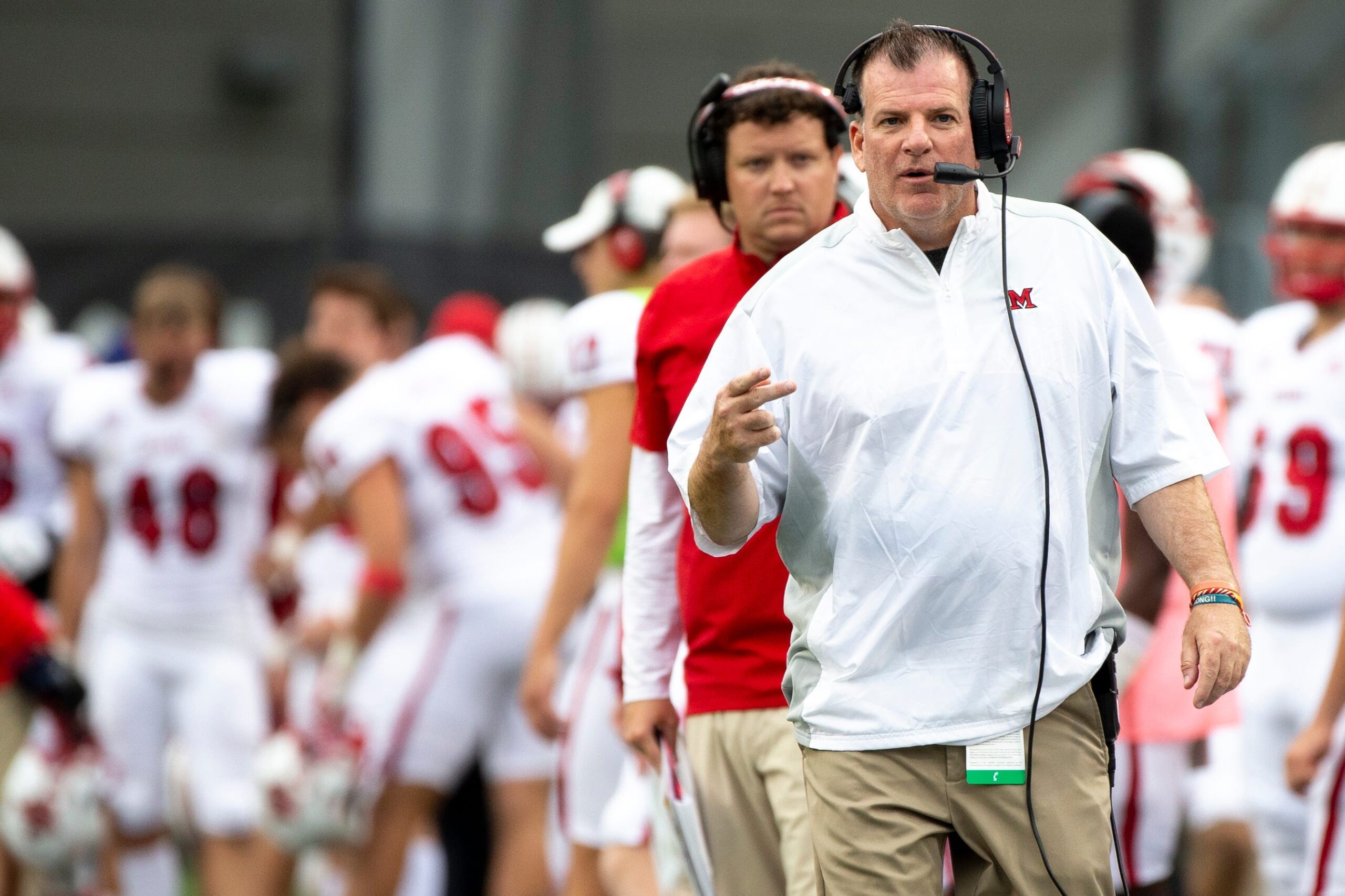
Miami Redhawks head coach Chuck Martin speaks to the referee in the second half of the NCAA football game on Saturday, Sept. 4, 2021, at Nippert Stadium in Cincinnati. Cincinnati Bearcats defeated Miami Redhawks 49-14. Cincinnati Bearcats Miami Redhawks-Imagn Images
Players who left Miami for bigger programs became the school’s most effective recruiters. Not by selling Oxford. By telling recruits what they found at the top: a decline in enjoyment and a shift toward a more job-like atmosphere. That framing has been echoed publicly by Chuck Martin in discussing how NIL and the transfer portal have reshaped player experience. Martin didn’t manufacture this messaging. His former players volunteered it. A program losing talent to richer schools was supposed to bleed credibility. Instead, every departure returned as a testimonial.
The Myth That Died First
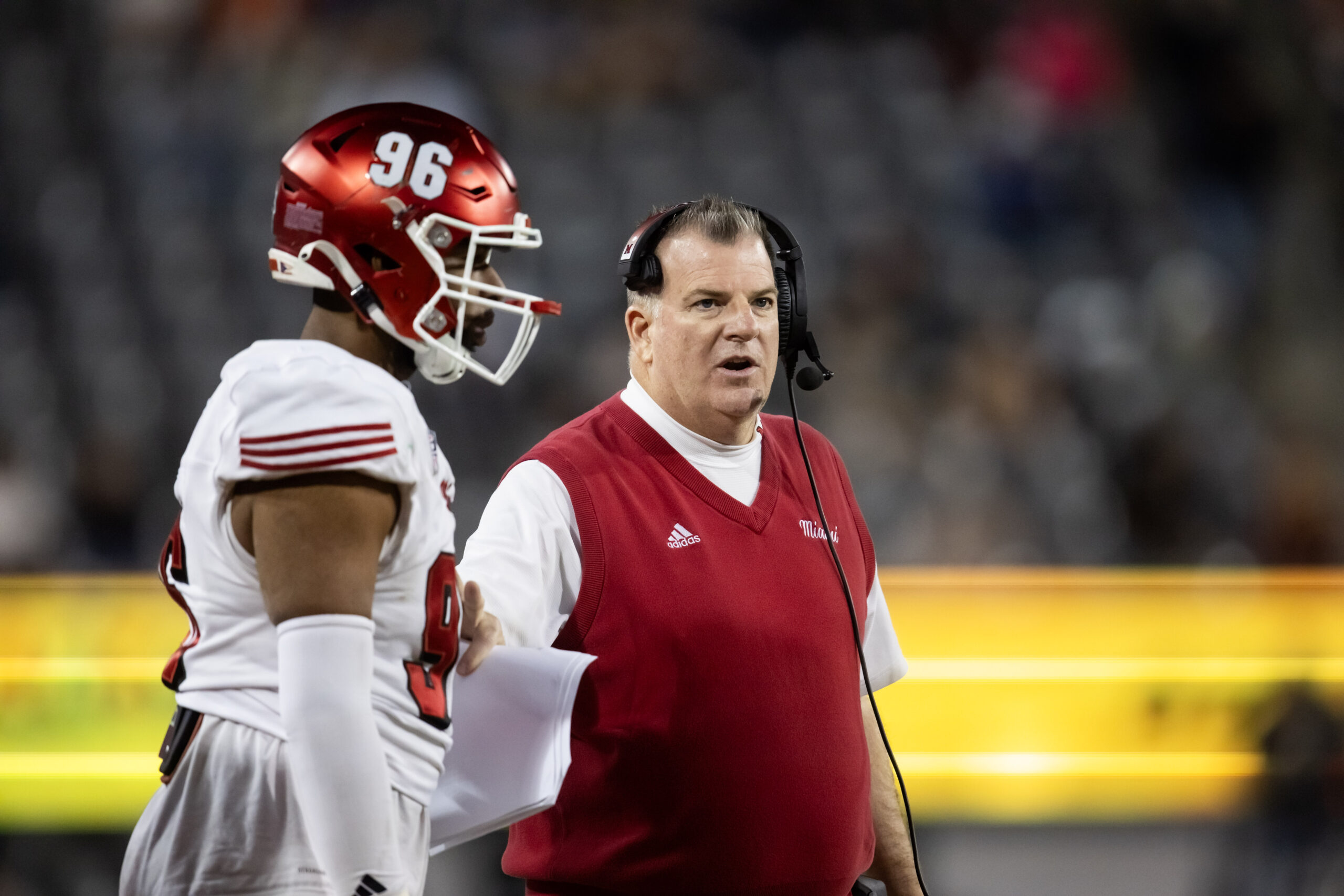
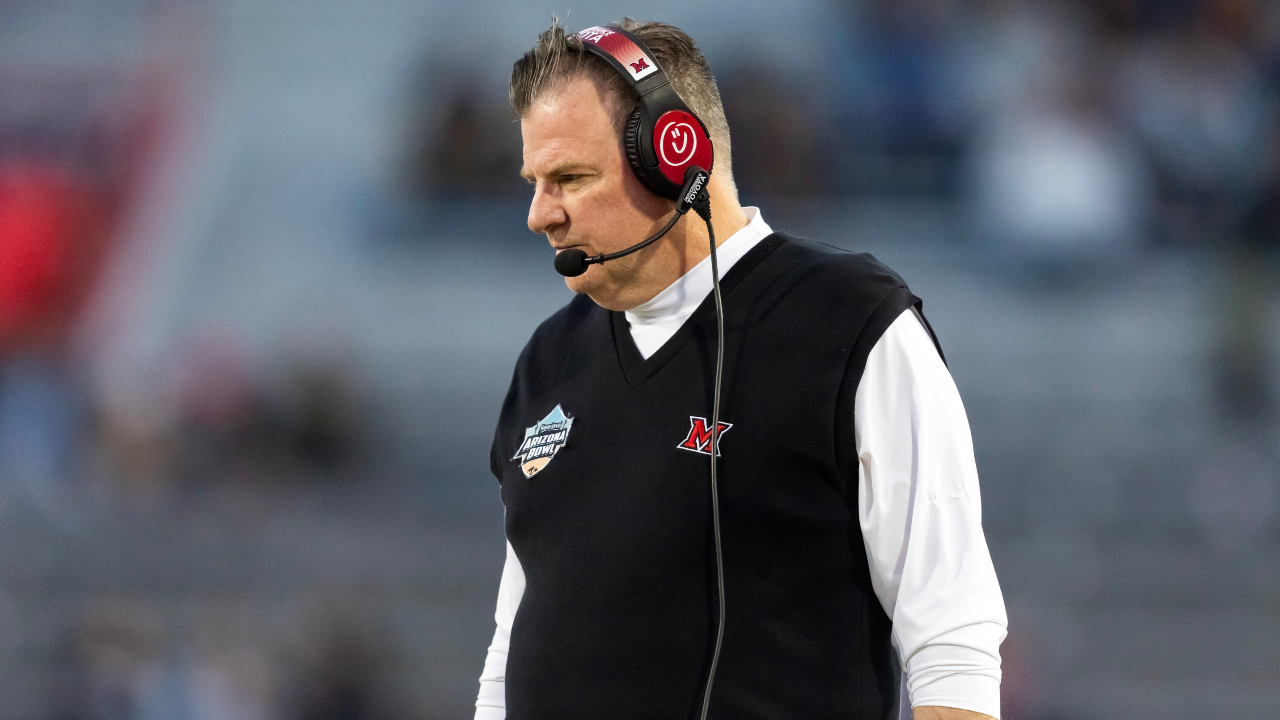
Dec 28, 2024; Tucson, AZ, USA; Miami (OH) RedHawks head coach Chuck Martin against the Colorado State Rams during the Snoop Dogg Arizona Bowl at Arizona Stadium. Mandatory Credit: Mark J. Rebilas-Imagn Images
Before NIL, the recruiting logic was clean: biggest wallet, best roster. Talent would concentrate at the top ten programs the way gravity pulls water downhill. Research from Carnegie Mellon’s Tepper School, published in Management Science, tested that prediction against post-2021 reality and found the opposite. Talent dispersed. Lower-ranked programs attracted measurably higher-quality recruits than their pre-NIL baseline, particularly among 5-star and lower-ranked 4-star athletes. The money didn’t consolidate power. It gave mid-tier schools enough compensation to compete, then forced recruits to evaluate something money couldn’t buy.
What NIL Actually Revealed
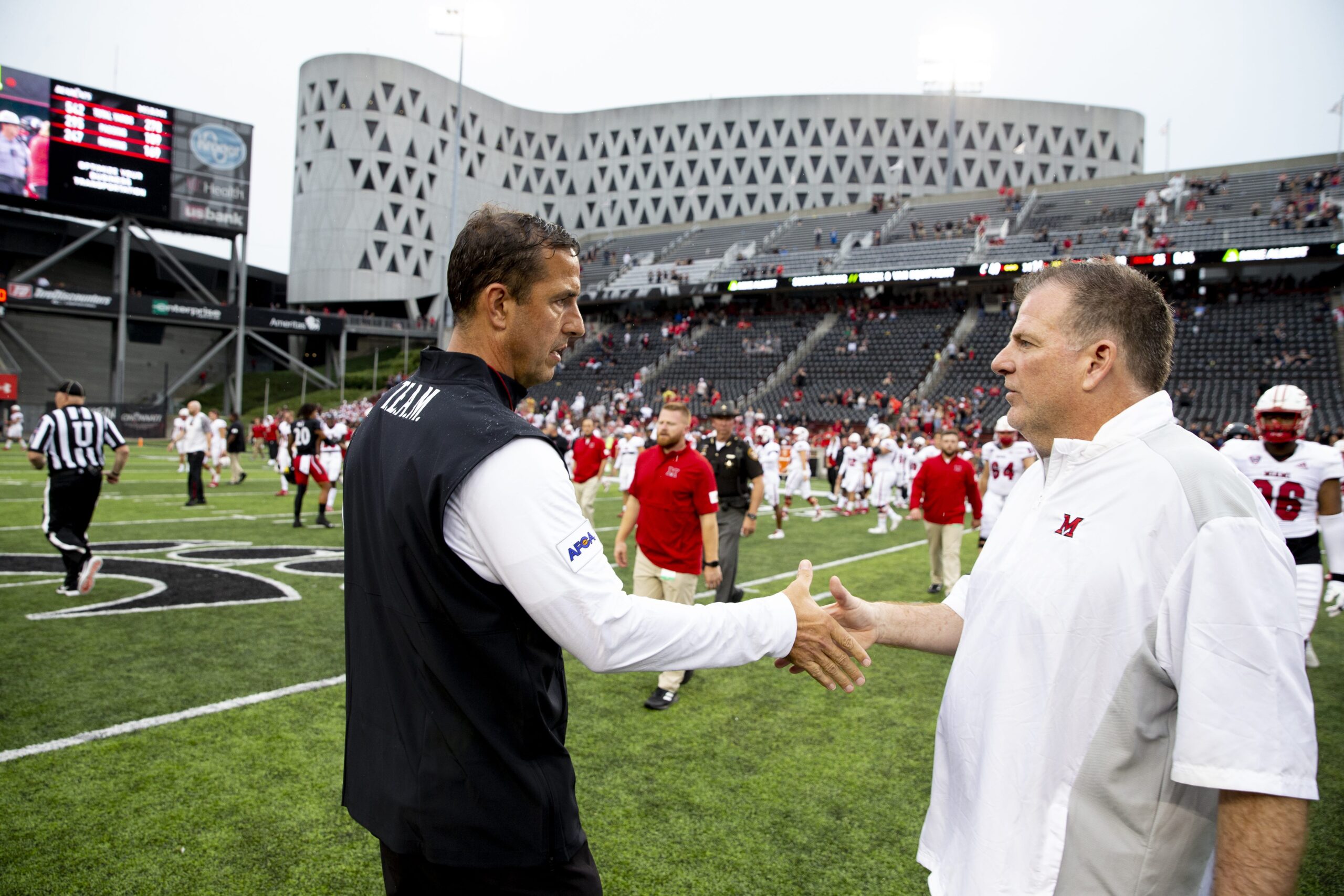
Cincinnati Bearcats head coach Luke Fickell and Miami Redhawks head coach Chuck Martin after the NCAA football game on Saturday, Sept. 4, 2021, at Nippert Stadium in Cincinnati. Cincinnati Bearcats defeated Miami Redhawks 49-14. Cincinnati Bearcats Miami Redhawks-Imagn Images
When every school can offer a check, the check stops being the differentiator. What separates programs becomes everything the check can’t replicate: community, coaching relationships, genuine belonging. Power programs marketed prestige and opportunity for decades without foregrounding the cost. Scale erodes intimacy. Rosters churn through the transfer portal at volumes unseen before the NIL era, turning locker rooms into revolving doors. Martin discovered Miami owned an asset the biggest programs had liquidated.
The Machine That Eats Culture
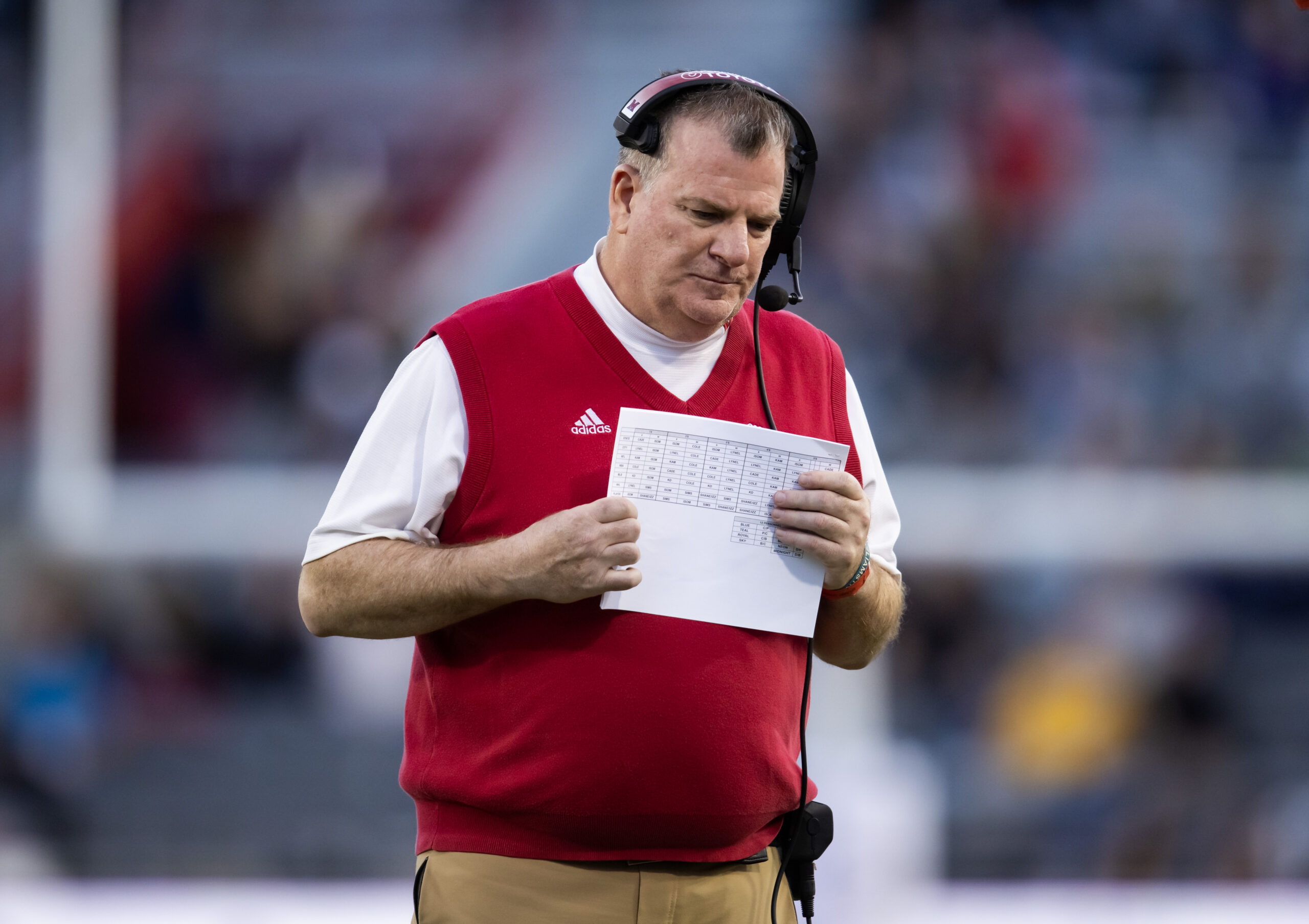
Dec 28, 2024; Tucson, AZ, USA; Miami (OH) RedHawks head coach Chuck Martin against the Colorado State Rams during the Snoop Dogg Arizona Bowl at Arizona Stadium. Mandatory Credit: Mark J. Rebilas-Imagn Images
College football now operates as a labor market with free-agency dynamics. Coaching staff reputation and program history rank among the meaningful decision drivers for student-athletes as NIL has empowered them to weigh financial, athletic, and personal-fit factors together. That means a mid-tier coach with deep player relationships competes directly against a Power Four brand running through coordinators every eighteen months. The hidden mechanism is structural: programs that scale for national dominance necessarily sacrifice the relational density that smaller programs preserve. Bigger rosters, more turnover, less connection. The math works against intimacy at every level.
Miami’s Institutional Bet
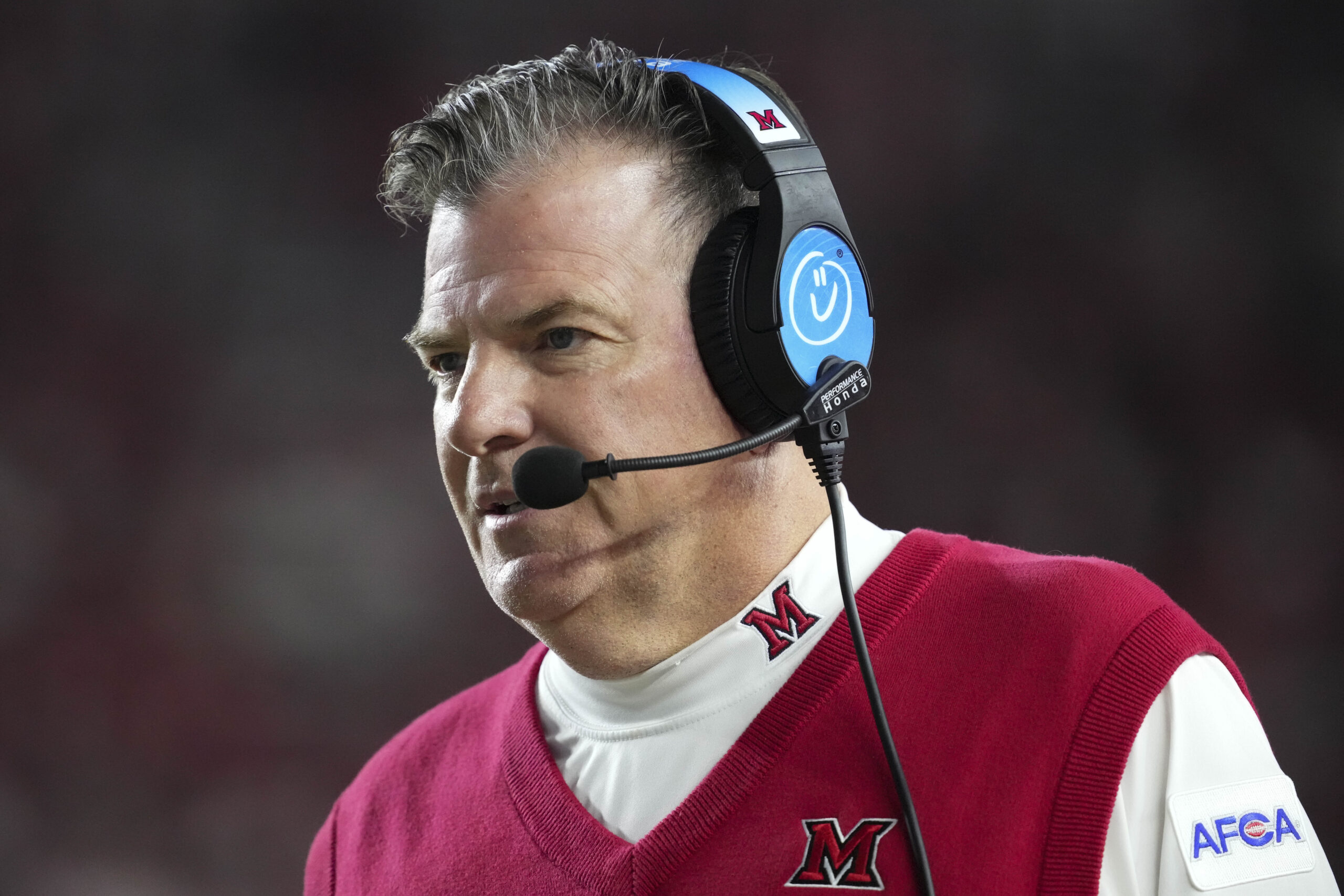
Aug 28, 2025; Madison, Wisconsin, USA; Miami (OH) RedHawks head coach Chuck Martin looks on during the third quarter against the Wisconsin Badgers at Camp Randall Stadium. Mandatory Credit: Jeff Hanisch-Imagn Images
Miami University’s athletic department has publicly committed to competing in the NIL era at a scale that mirrors Power Four strategies despite operating on a fraction of their budget. That institutional commitment signals something recruits can feel: permanence. Compare that to programs where NIL collectives operate as shadow organizations disconnected from the university itself. Players at schools that feel authentic tend to build stronger personal brands, because recruits and fans can tell the difference between genuine institutional support and checkbook marketing.
The Ripple Hitting Every Roster
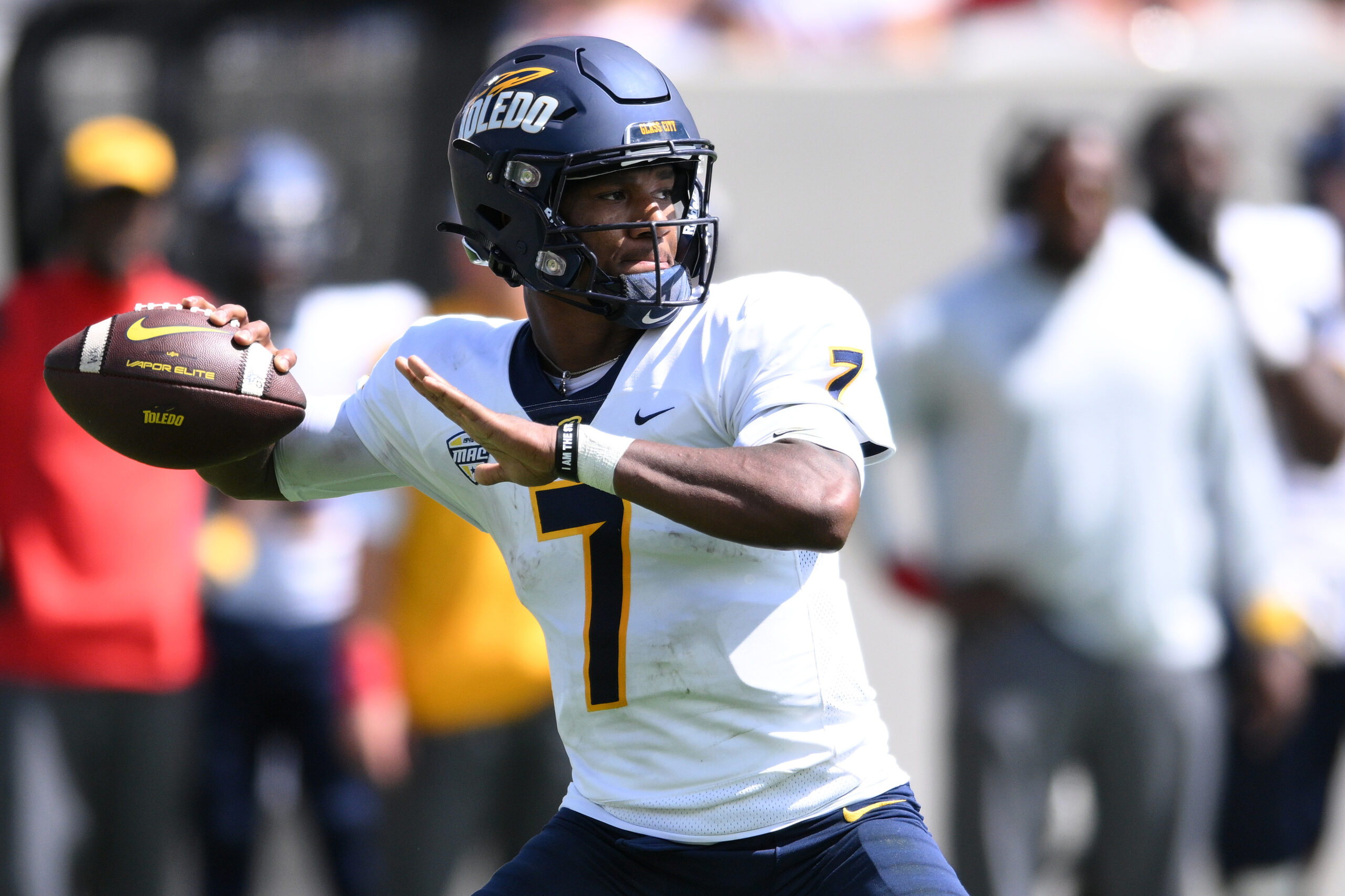
Sep 24, 2022; San Diego, California, USA; Toledo Rockets quarterback Dequan Finn (7) throws a pass against the San Diego State Aztecs during the first half at Snapdragon Stadium. Mandatory Credit: Orlando Ramirez-Imagn Images
QB Dequan Finn, a seventh-year player with 8,828 career passing yards across three schools, left Miami after 11 months to prepare for the NFL. That departure exemplifies the constant pressure mid-tier programs face. But the ripple cuts both ways. Power programs bleed talent downward now, too. Recruits publicly cite culture fit and enjoyment as deciding factors. Alumni engagement spending is becoming a formal athletic budget line item at schools that never had one. The recruiting economy bifurcated: transactional programs on one side, community-driven programs on the other.
The Precedent Nobody Can Undo
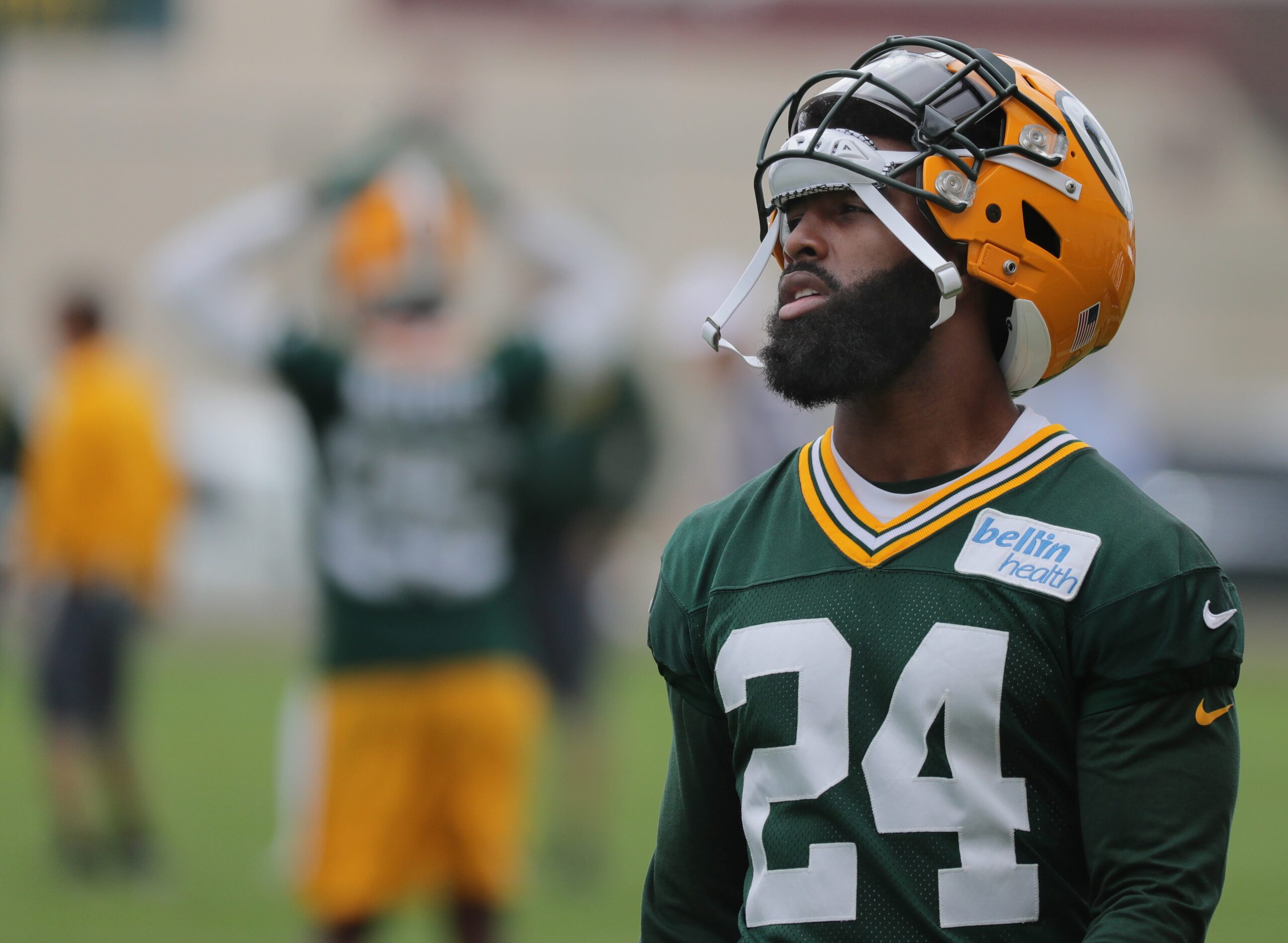
5/31/18; Green Bay, WI, USA; Green Bay Packers cornerback Quinten Rollins (24) is shown during organized team activities. Nfl Green Bay Packers Organized Team Activity-Imagn Images
Quinten Rollins played one season of Miami football, became a 2015 second-round NFL pick, and signed a four-year, $3.74 million contract with Green Bay. That pipeline existed before NIL. Now multiply it by transparency: every recruit can see that mid-tier programs develop NFL talent without destroying the college experience. Community and culture moved into the formal recruiting rubric. Once recruits started comparing total experience across programs, power schools couldn’t stuff that information back into the box. The old prestige monopoly depended on players not knowing what they were trading away.
The Dominoes Still Falling
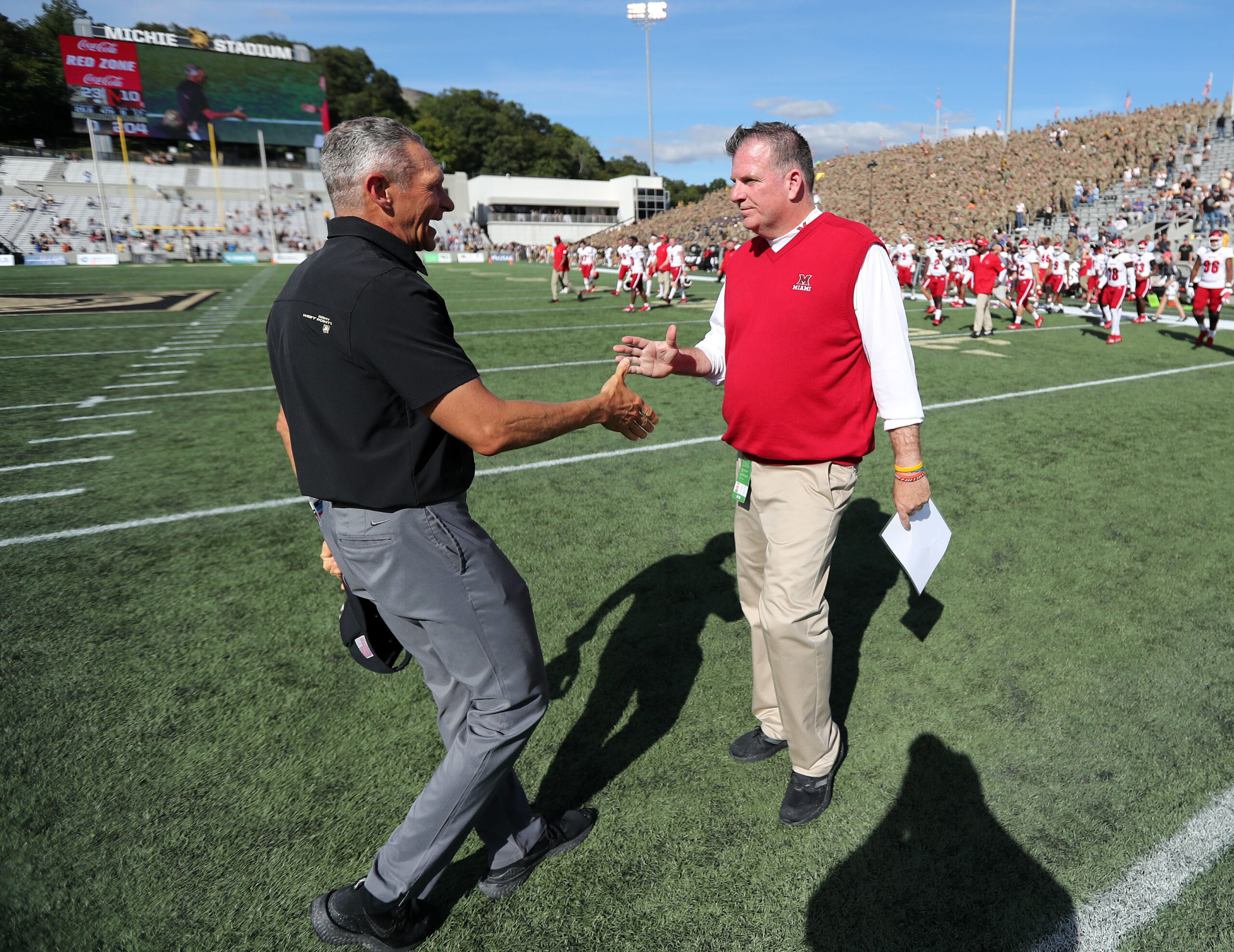
Sep 25, 2021; West Point, New York, USA; Army Black Knights head coach Jeff Monken shakes hands with Miami (Ohio) RedHawks head coach Chuck Martin after Army s 23-10 win at Michie Stadium. Mandatory Credit: Danny Wild-Imagn Images
Programs that grew wealthy through recent television deals without building deep alumni traditions face the sharpest vulnerability. Money bought facilities. It didn’t buy community. Over the next recruiting cycles, expect power programs to hire “culture officers” and invest in player well-being infrastructure, trying to backfill what they scaled away. That effort will lag years behind schools where community already exists organically. Newly rich programs without authentic roots will discover that culture cannot be purchased on the same timeline as a weight room.
The Advantage That Can’t Be Bought
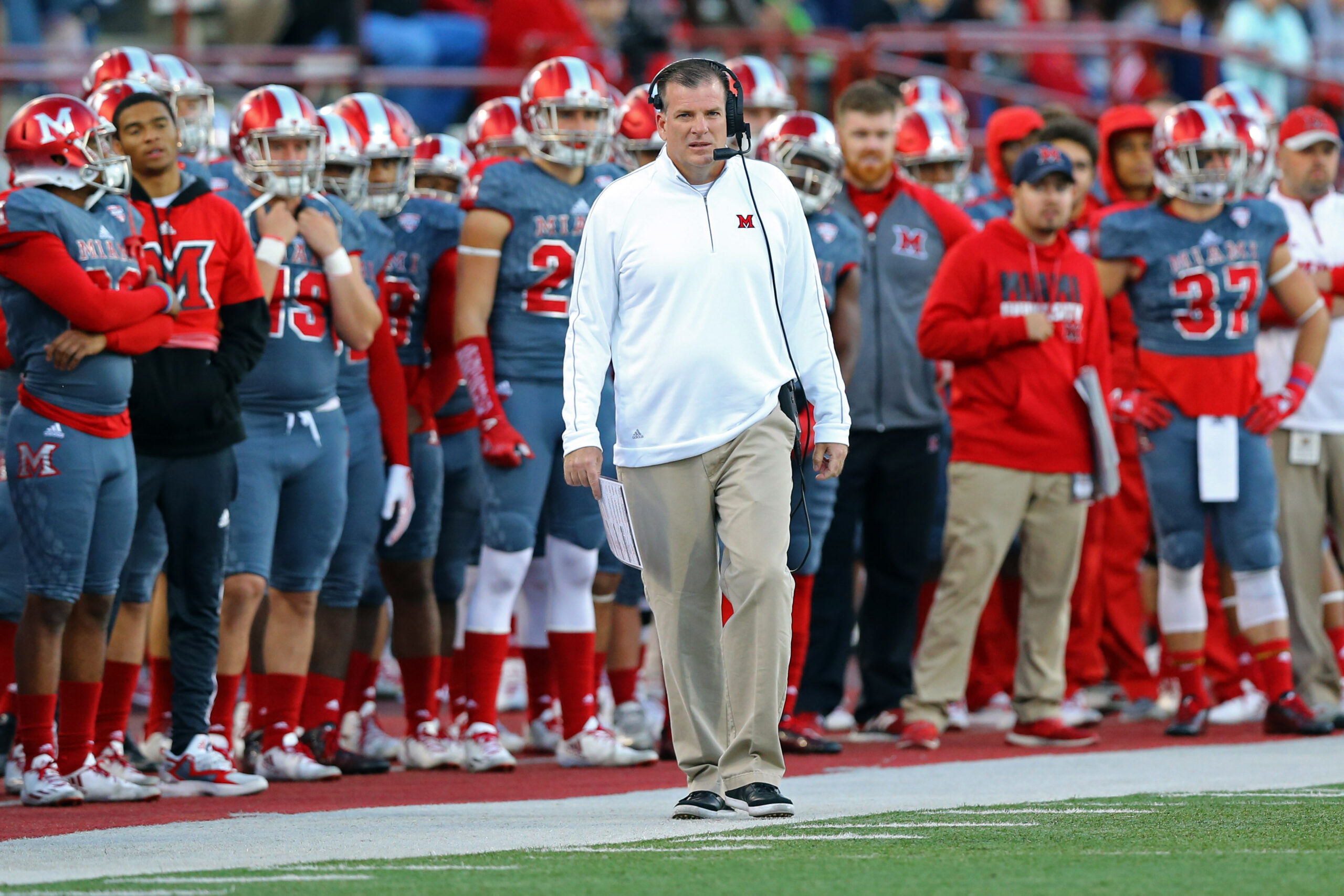
Nov 4, 2016; Oxford, OH, USA; Miami (Oh) Redhawks head coach Chuck Martin looks on from the sidelines against the Central Michigan Chippewas in the first half at Fred Yager Stadium. The Redhawks won 37-17. Mandatory Credit: Aaron Doster-Imagn Images
Here is what most people still miss about the NIL era: it didn’t hand power to the richest programs. It handed leverage to the most authentic ones. College football fans are deeply invested in programs they perceive as communities rather than franchises. They feel the difference between a program that treats players like assets and one that treats them like people. Chuck Martin figured out that his former players warning recruits away from bigger schools was the strongest brand signal money can’t manufacture. Power programs are now scrambling to rebuild what they spent decades dismantling.
Sources:
Derdenger, Tim, and Ivan Li. “Do the Rich Get Richer? Competitiveness in the Student-Athlete Name, Image and Likeness Market.” Management Science, 2025.
Scarcella, Mike. “Miami (Ohio) QB Dequan Finn Ends Season to Focus on NFL.” ESPN, Nov. 14, 2025.
Associated Press. “Miami QB Dequan Finn Leaves Program Mid-Season to Focus on NFL.” Yahoo Sports, Nov. 14, 2025.
Ryan, Tom. “Miami’s Quinten Rollins Drafted by Packers in 2nd Round.” The Cincinnati Enquirer, May 1, 2015.
“Quinten Rollins Contract Details.” Over the Cap, 2020.
“NIL Levels the Playing Field in College Football, Study Finds.” Carnegie Mellon University News, Sept. 2, 2025.