

NFL front offices scrambling to find a franchise quarterback isn’t something new. Having an elite QB was also important in the ’70s and ’80s, but everything else was different. There was no salary cap, no phones or social media, and everything ran at a slower pace. Players had time to develop, owners weren’t deglatiating each other to hire the new offensive genius or something like that.
Even in the ’90s and ’00s, after the league implemented free agency and the salary cap, it didn’t seem rushed like it is today. Part of this problem is due to how we live as a society today. With cellphones, social media, and now AI, we’re used to having information in the palm of our hands and at the blink of an eye. So, when anything takes time to happen, we are frustrated.
The Impacts Of The Rookie Wage Scale
Specifically in the NFL, the need to get a QB-HC pair quickly is due, in part, to the rookie scale wage. Before the 2011 CBA, drafted players negotiated contracts like a veteran player would, trying to agree with teams on money, length, signing bonus, etc. The first player selected #1 overall with the rookie scale was Cam Newton, who signed a 4-year, $22M contract. Cam Ward, the most recent 1st pick, signed a 4-year, $48.7M deal. The last 1st pick before 2011, Sam Bradford, signed a 6-year, $78M contract in 2010.
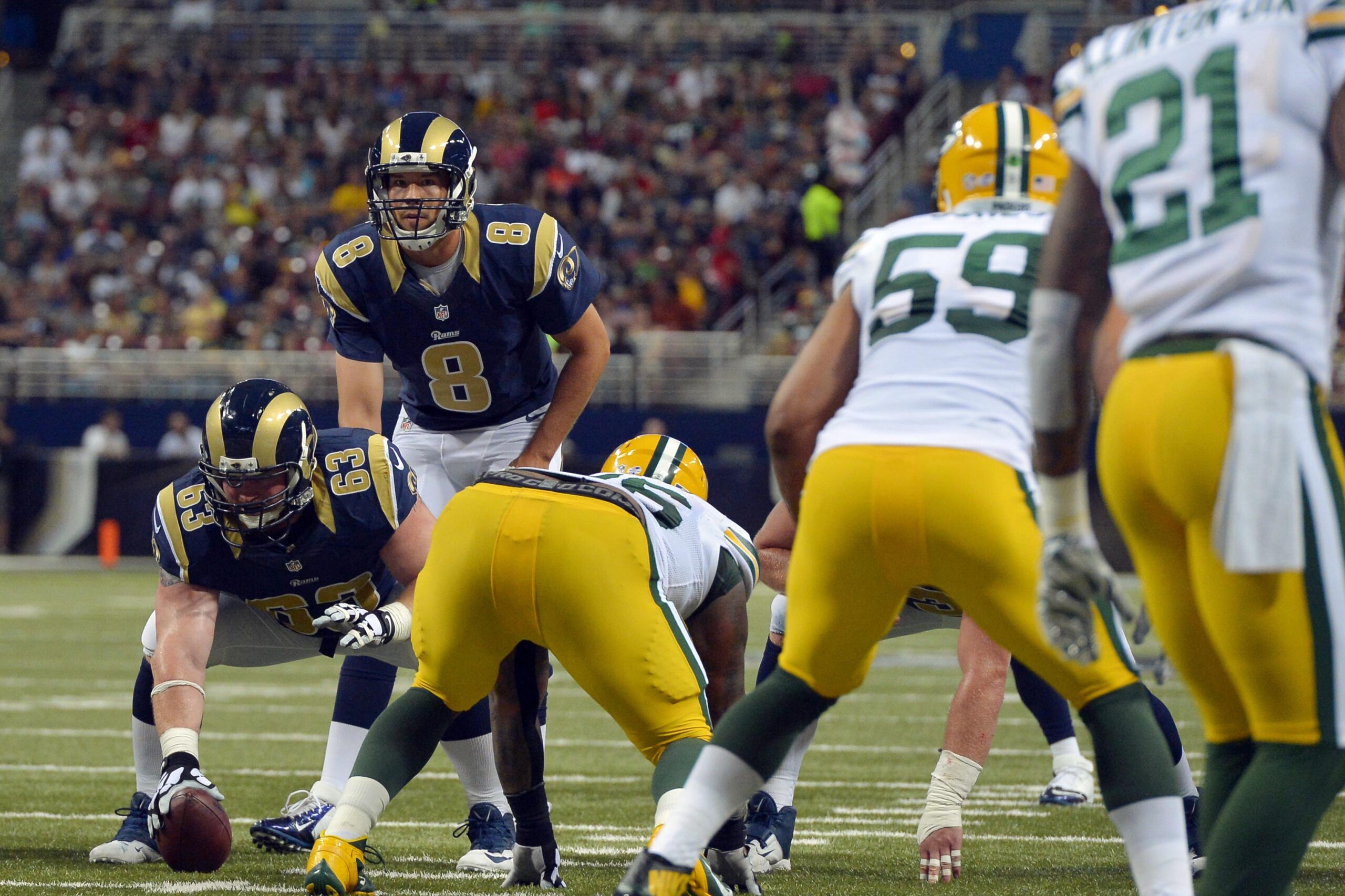
Aug 16, 2014; St. Louis, MO, USA; St. Louis Rams quarterback Sam Bradford (8) at the line of scrimmage against the Green Bay Packers during the first half at Edward Jones Dome. Mandatory Credit: Jasen Vinlove-Imagn Images
Having a player in the most expensive and most important position, earning a fraction of the cap, became a competitive advantage. While Cam Ward occupies only 3.18% of the Titans’ salary cap, and won’t exceed 5% in his rookie contract, Dak Prescott leads the QBs with an 18.10% cap hit this year. I’m not saying it guarantees success, but it gives the front office flexibility to improve the team around the QB.
However, with this flexibility comes the necessity to know if you have a franchise QB really fast. With the QB market at astronomical levels, non-elite QBs are earning enormous contracts. 12 quarterbacks are accounting for at least 20% of their team’s salary cap. Of the 12, two have won the Super Bowl (Mahomes and Hurts), and two have been MVPs (Mahomes and Jackson). Goff and Burrow are on the list and played in the Super Bowl, but on their rookie contracts. Most of the players on the list don’t even have a Pro Bowl appearance.
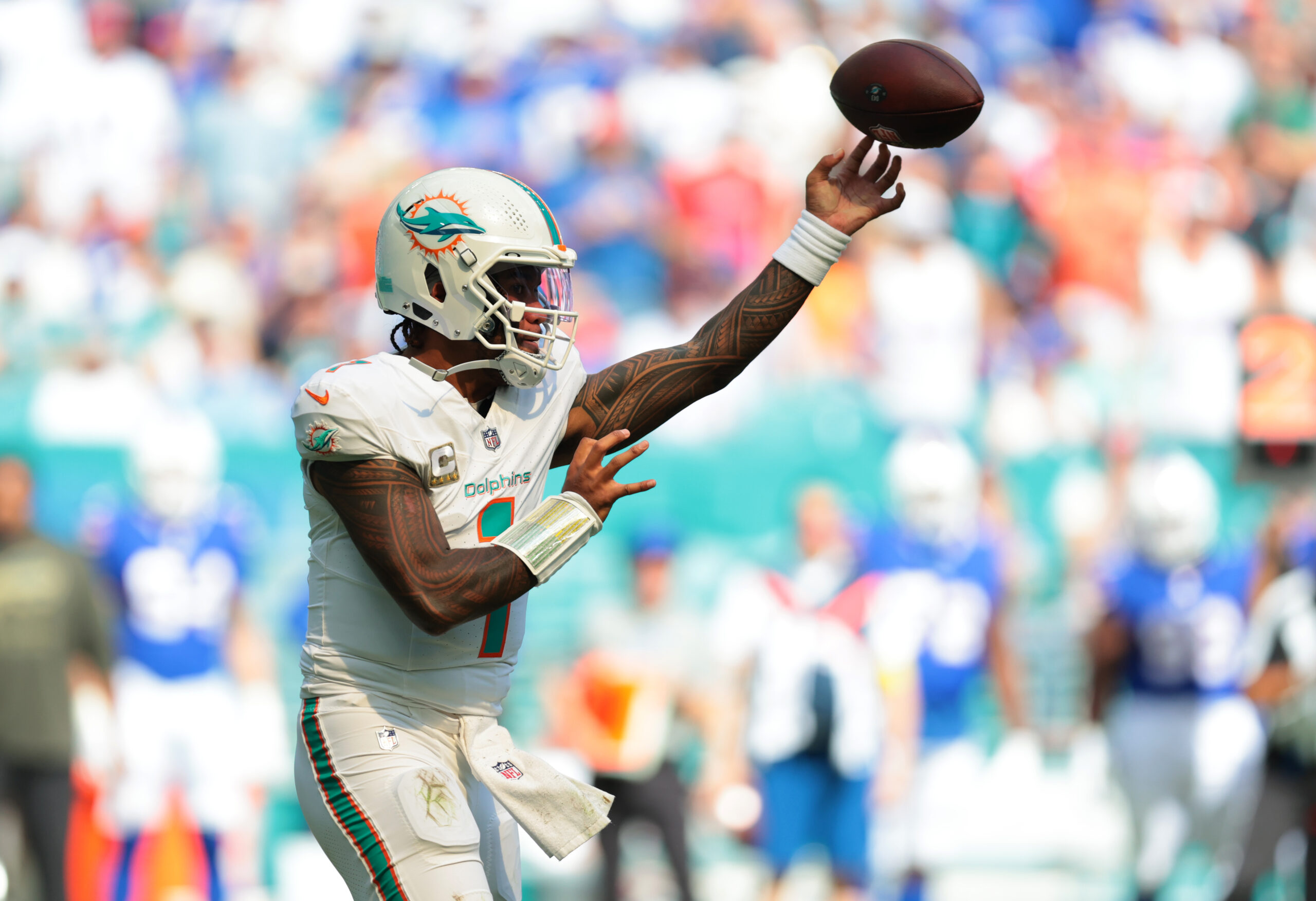
Nov 9, 2025; Miami Gardens, Florida, USA; Miami Dolphins quarterback Tua Tagovailoa (1) throws during the first half against the Buffalo Bills at Hard Rock Stadium. Mandatory Credit: Sam Navarro-Imagn Images
General managers and head coaches tie themselves to the QB they invest in. Of the players I mentioned, five were drafted in the top 5. Three others are first-round selections. One was traded for three first-round picks. The three remaining are Dak Prescott, Jalen Hurts, and Jared Goff. When a team invests in a QB, they usually pay him, even if he isn’t worth all that money. That’s because the GM and HC most likely have only one shot at investing in a QB, so they have to pay them to try and keep their jobs.
You must have a definitive answer on your quarterback in two years, at most three. This not only speeds up the entire evaluation process, but also ignores one crucial fact. Most of the players we’re talking about are 23 or 24 years old by their third season. No one is a finished project at that age. The NFL is a different game and much quicker than college, but they are also learning to be actual adults at that age.
Quarterbacks Flourishing Elsewhere
We’ve seen many QBs turn their careers around recently. Jared Goff went from a QB the Rams got rid of to an MVP candidate in Detroit. Baker Mayfield got kicked out of Cleveland and found a new home in Tampa Bay. Sam Darnold was a bust and played at a high level in Minnesota and Seattle. Bryce Young was benched, returned to the lineup due to an injury, and showed great improvement.
I’m not saying every quarterback would have or will have a turnaround as they have. But most of them aren’t even getting a fair shot. Josh Rosen was a promising player, went to the worst team in the league, didn’t play well, and got traded to a team that was investigated for tanking allegations. Would he be a good player? Can’t tell. Maybe he was just bad, and he did have a fair share of the blame. But he was also dealt a terrible hand and got penalized for something totally out of his control.
The Cleveland Browns would love to have Baker Mayfield back. The New York Jets would be a very good team with Sam Darnold under center. I’m sure the Panthers are happy Bryce Young had another opportunity. Maybe the only teams that don’t regret getting rid of their young quarterbacks are the Rams and Eagles.
Who Is Next?
As I said, a lack of patience is ruining many careers. Another aspect of this is not being ready to endure the process. The Colts drafted Anthony Richardson fourth overall in 2023. He had (and still has) an enormous ceiling. He also had a super-low floor. You either sign a veteran QB to give Richardson one or even two years to develop behind the curtains, or put him on the field knowing there will be bad moments. The Colts chose the latter. He got injured in Week 5, had problems as a sophomore, and is now a backup.
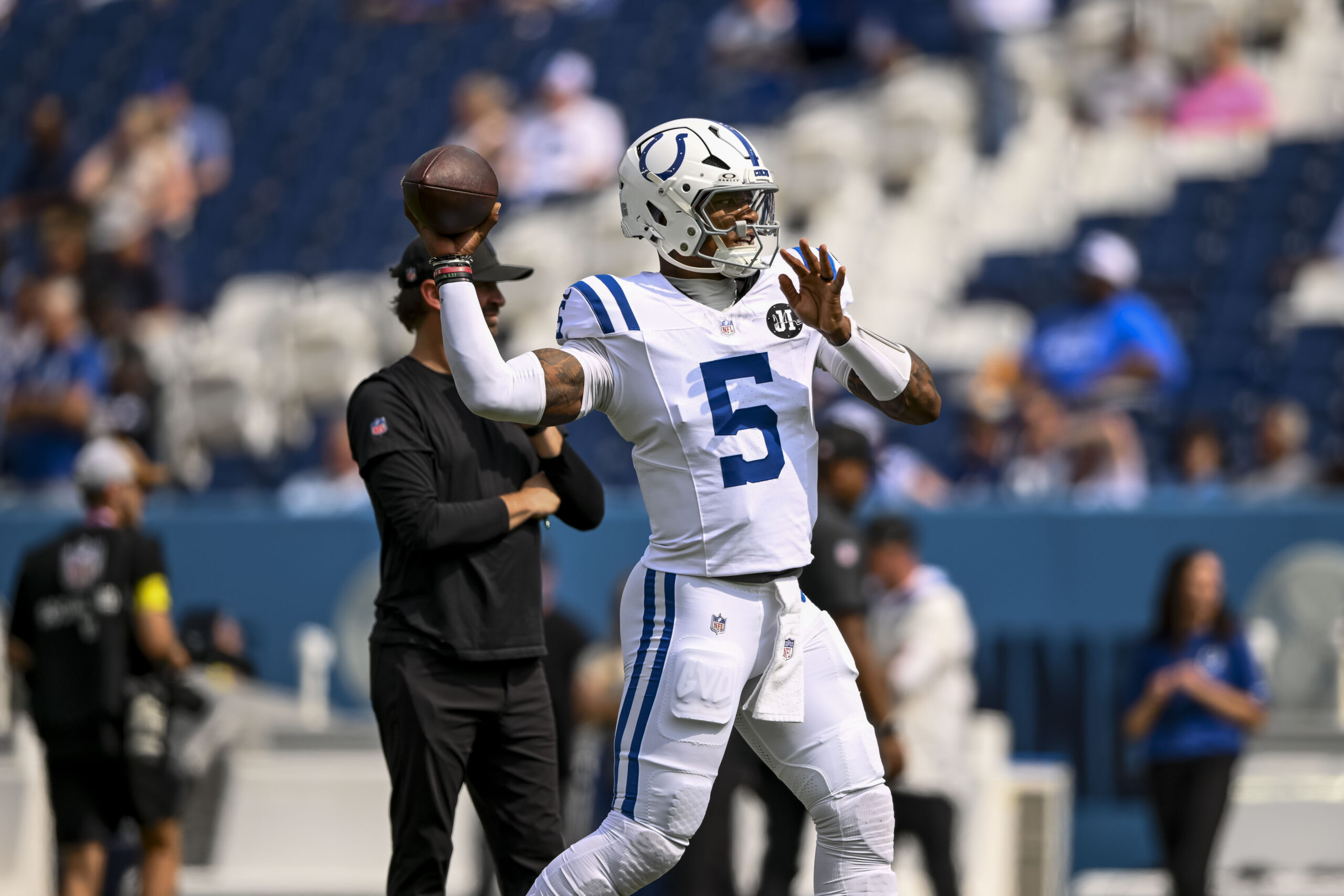
Sep 21, 2025; Nashville, Tennessee, USA; Indianapolis Colts quarterback Anthony Richardson (5) warms up before the match against the Tennessee Titans at Nissan Stadium. Mandatory Credit: Steve Roberts-Imagn Images
J.J. McCarthy is also facing a patience problem. He entered the league needing to better his mechanics and the touch on his passes. This was a known thing. He tore his meniscus before the season and wasn’t able to practice for 7-8 months. He also had to spend the offseason getting up to speed rather than focusing on his mechanics and the layering of his passes, so most of the problems remain.
Will Anthony Richardson and/or J.J. McCarthy fix their problems? We don’t know. But we also can’t know it yet. Maybe they are just bad, and their evaluation wasn’t properly made. Or maybe they just need more time to develop than what was anticipated. The problem is that, when everything has to be now, time is a luxury no one has. And this is something they can’t control.