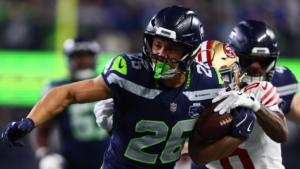

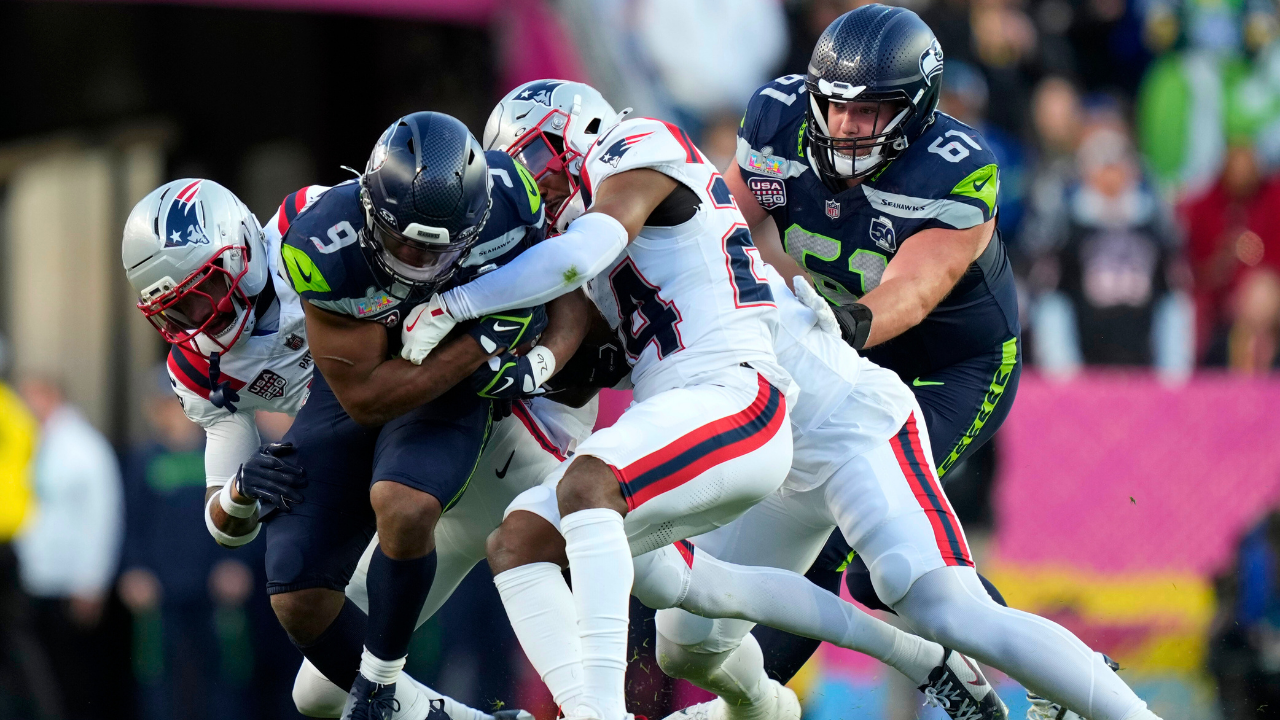
The Seattle Seahawks won Super Bowl LX with the NFL’s lowest-paid roster at just $186.6 million, a staggering $20 million below every other team. Super Bowl MVP Kenneth Walker III, cornerbacks Riq Woolen and Josh Jobe, safety Coby Bryant, and receiver Rashid Shaheed are all unrestricted free agents heading into March 9. GM John Schneider acknowledged the challenge at the NFL Combine, saying the team would do its best to “keep as many of them as we can while maintaining that collective 70.” These four moves are how Seattle solves it.
No. 1: Restructure Sam Darnold’s Contract
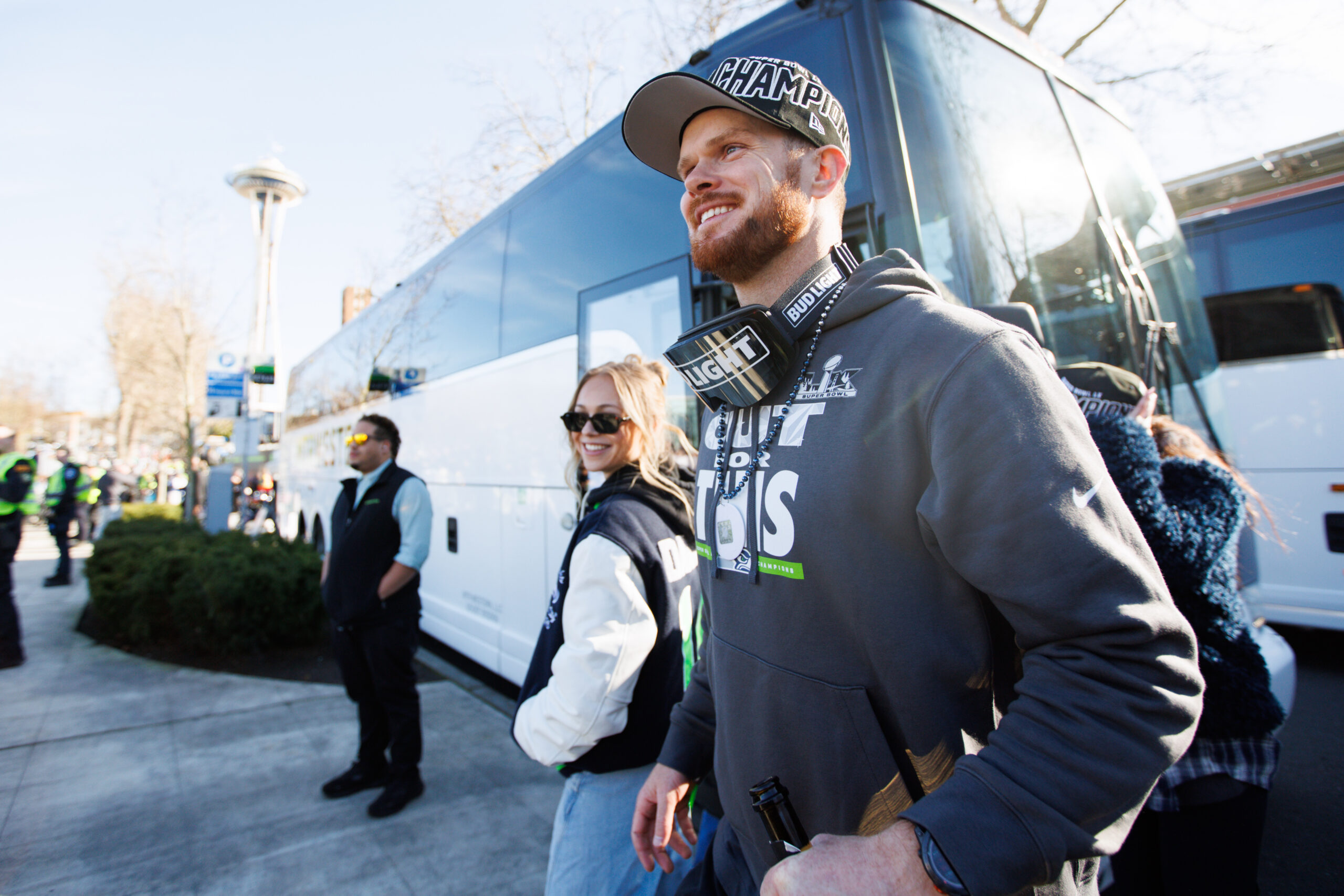
Feb 11, 2026; Seattle, WA, USA; Seattle Seahawks quarterback Sam Darnold (14) reacts during Seattle Seahawks Super Bowl LX parade. Mandatory Credit: Kevin Ng-Imagn Images
Sam Darnold’s $37.9 million cap hit is the single largest number on Seattle’s books. Converting a significant portion of his base salary into signing bonus money, spread across additional contract years, could reduce his 2026 cap hit by up to $21.9 million. At 28 years old with a Super Bowl ring, Darnold earns long-term security while freeing the space needed to retain everyone around him.
Why the Darnold Restructure Is Financially Essential
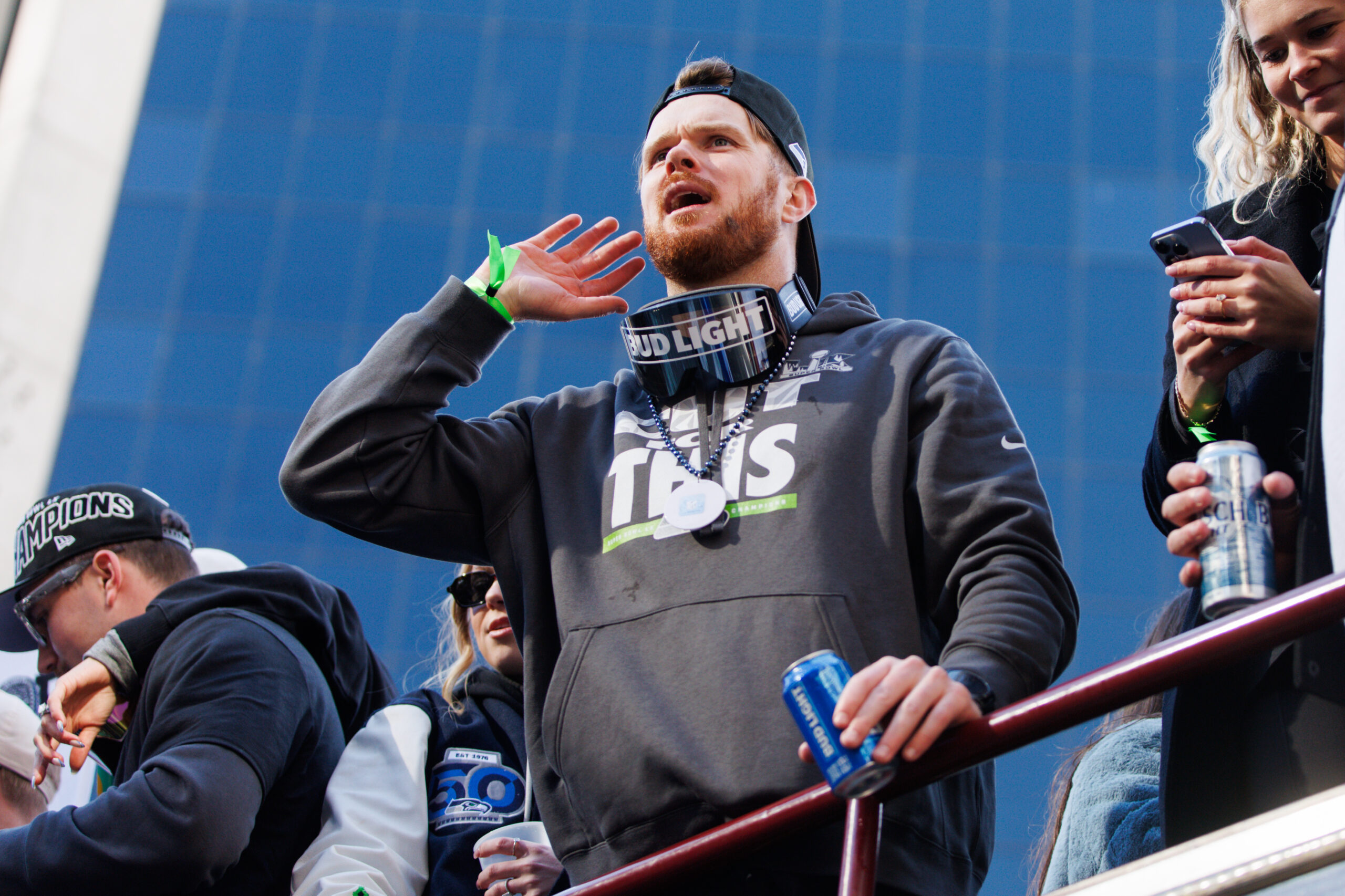
Feb 11, 2026; Seattle, WA, USA; Seattle Seahawks quarterback Sam Darnold (14) reacts during the Super Bowl LX parade. Mandatory Credit: Kevin Ng-Imagn Images
Without addressing Darnold’s cap number, Jaxon Smith-Njigba’s extension becomes nearly impossible to fund. Smith-Njigba won Offensive Player of the Year and has already signaled his market expectations: “I believe I deserve to be the highest paid at my position,” he said publicly. With Ja’Marr Chase’s extension setting the wide receiver ceiling at $40.3 million per year, signing Smith-Njigba alone could consume most of Seattle’s available cap room. A Darnold restructure is not a luxury; it is the financial prerequisite for every other move on this list.
No. 2: Release or Extend Uchenna Nwosu
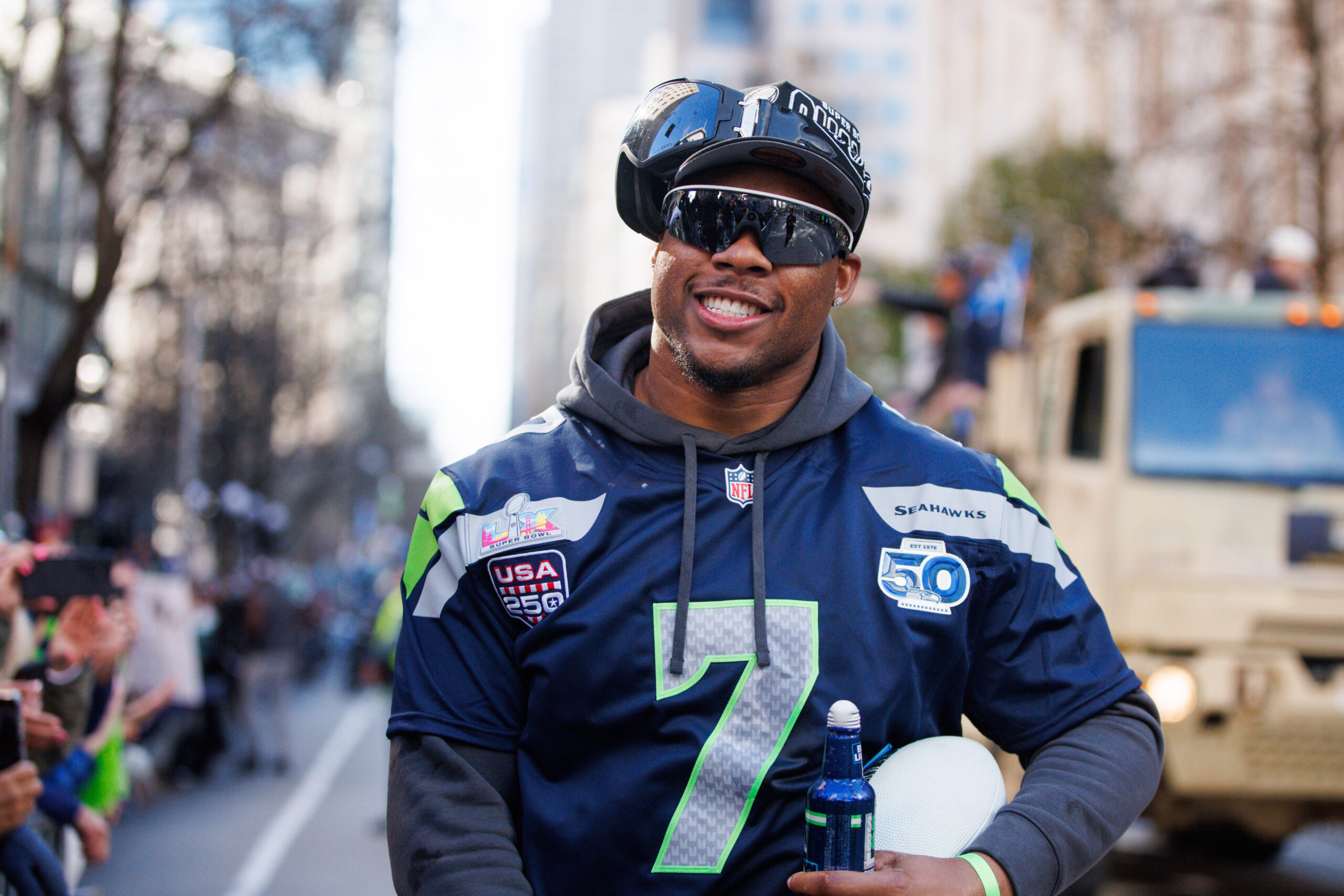
Feb 11, 2026; Seattle, WA, USA; Seattle Seahawks linebacker Uchenna Nwosu (7) looks on during the Super Bowl LX parade. Mandatory Credit: Kevin Ng-Imagn Images
Nwosu carries a $19.988 million cap hit in 2026, yet injuries have reduced his role as younger pass rushers like Derick Hall ascend. Schneider has two paths: release Nwosu outright for $11.51 million in savings, or negotiate a reduced extension, similar to the pay cut Nwosu accepted ahead of the 2025 season, to save approximately $7.7 million while retaining a veteran presence. The $3.8 million gap between those two options could mean the difference between re-signing one additional free agent or losing him entirely to the open market.
No. 3: Extend Leonard Williams Before the Market Opens
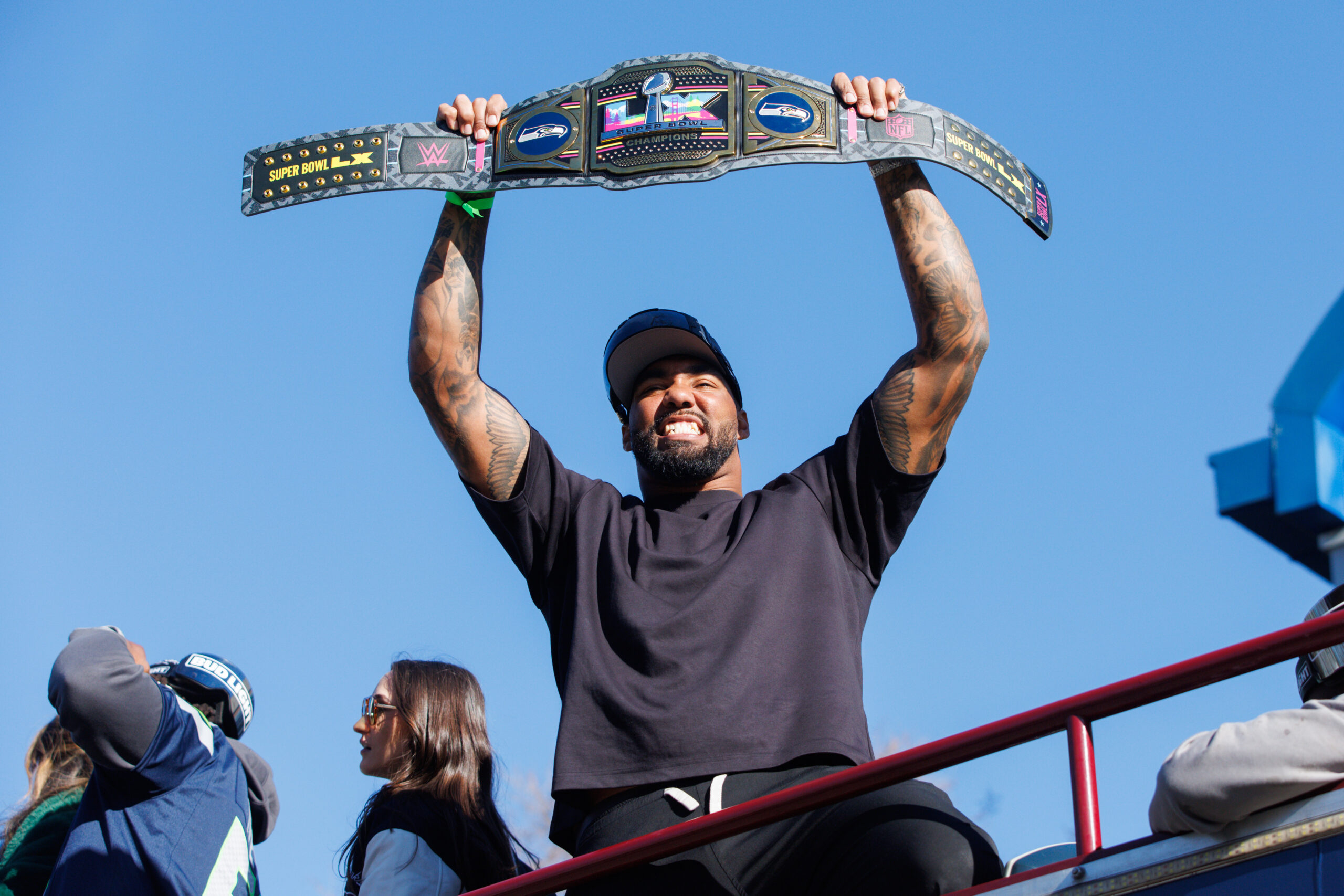
Feb 11, 2026; Seattle, WA, USA; Seattle Seahawks defensive end Leonard Williams (99) reacts during the Super Bowl LX parade. Mandatory Credit: Kevin Ng-Imagn Images
Leonard Williams is the anchor of Mike Macdonald’s championship defense, yet he enters 2026 carrying a $29.636 million cap hit in the final year of his contract. A two- or three-year extension pushing guaranteed money into 2027 and 2028 could reduce his 2026 cap number by approximately $10 million. Williams has publicly stated his desire to finish his career in Seattle. Schneider’s general policy of not negotiating with players who have more than one year remaining means the window to act opens right now, before free agency pricing sets the market.
Why the Williams Extension Matters Beyond the Money
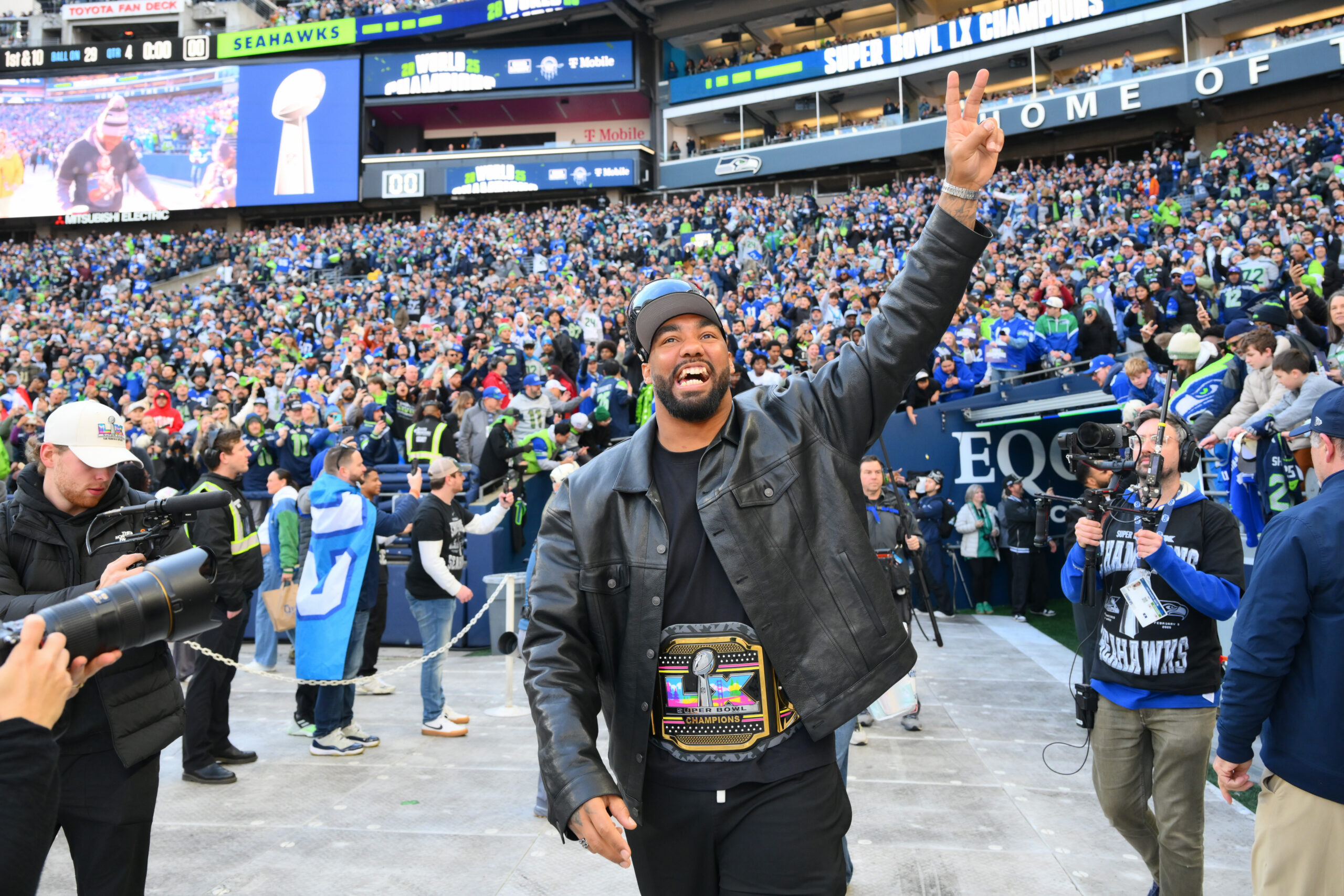
Feb 11, 2026; Seattle, WA, USA; Seattle Seahawks defensive end Leonard Williams (99) before the Super Bowl LX trophy presentation at Lumen Field. Mandatory Credit: Steven Bisig-Imagn Images
Losing Williams to free agency would force Seattle into an expensive open-market search for interior defensive talent, a notoriously inefficient spending category. The “Dark Side” defense, which surrendered a league-low 17.2 points per game, is already losing cornerbacks Riq Woolen and Josh Jobe plus safety Coby Bryant to free agency simultaneously. Williams’ extension stabilizes the one position where Seattle cannot afford a reset. As Sports Illustrated noted, the Seahawks’ defensive front “will take hits in free agency,” and Williams is the one hit they cannot absorb.
No. 4: Restructure Cooper Kupp’s Deal
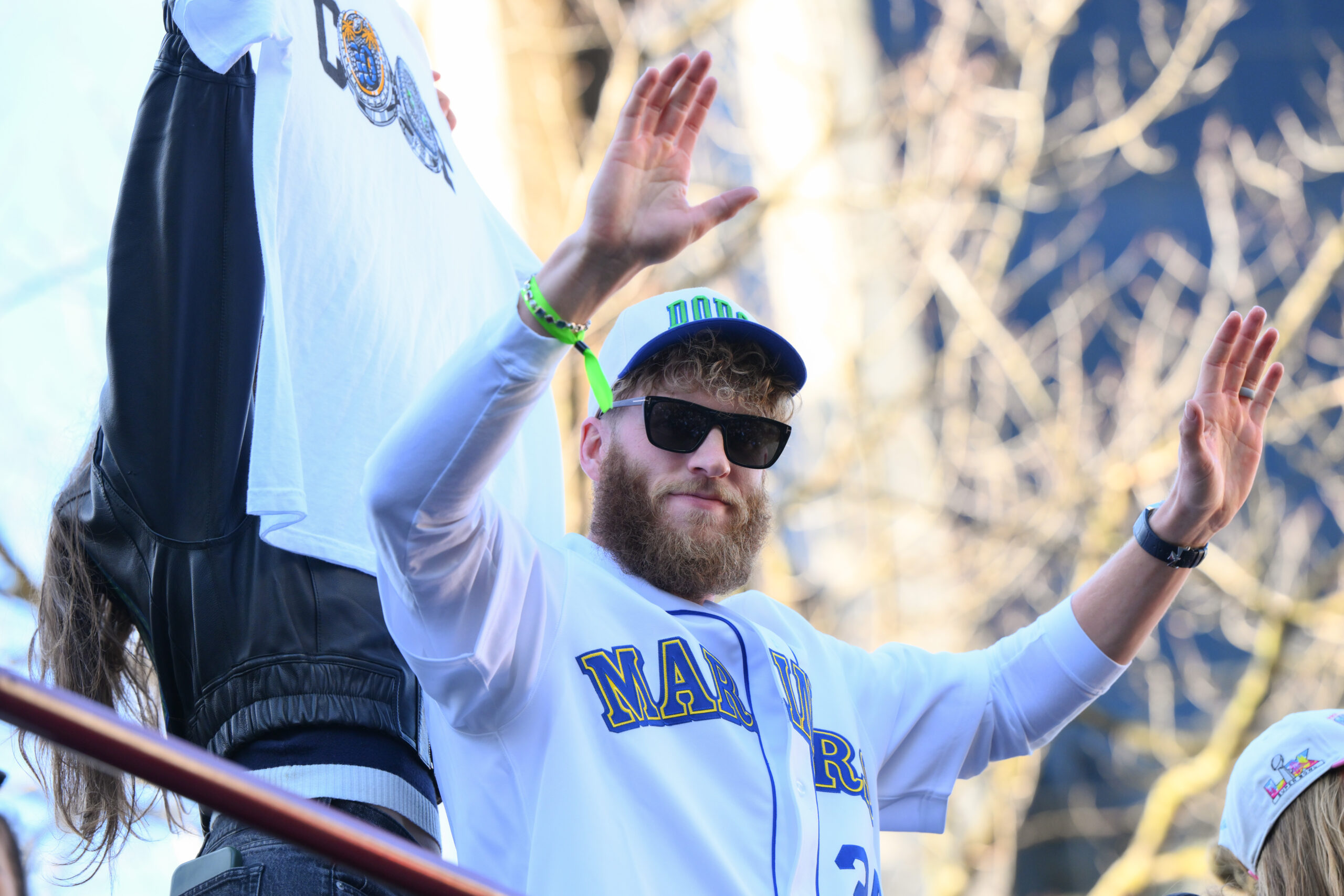
Feb 11, 2026; Seattle, WA, USA; Seattle Seahawks wide receiver Cooper Kupp (10) interacts with fans during the Super Bowl LX World Champions parade in downtown Seattle. Mandatory Credit: Steven Bisig-Imagn Images
Cooper Kupp arrived in Seattle ahead of the 2025 playoff run and delivered veteran clutch production that freed Jaxon Smith-Njigba to dominate. At 33, Kupp carries a $17.47 million cap hit, expensive for a clear No. 2 receiver. Converting roster bonuses into signing bonus money could save approximately $5.8 million in 2026. Seattle’s February 13 guarantee date passed without a release, confirming the team intends to keep him, meaning a restructure is now the only logical path to making his presence financially sustainable heading into a new offensive era.
The Kubiak Departure Has Been Addressed, But Uncertainty Remains
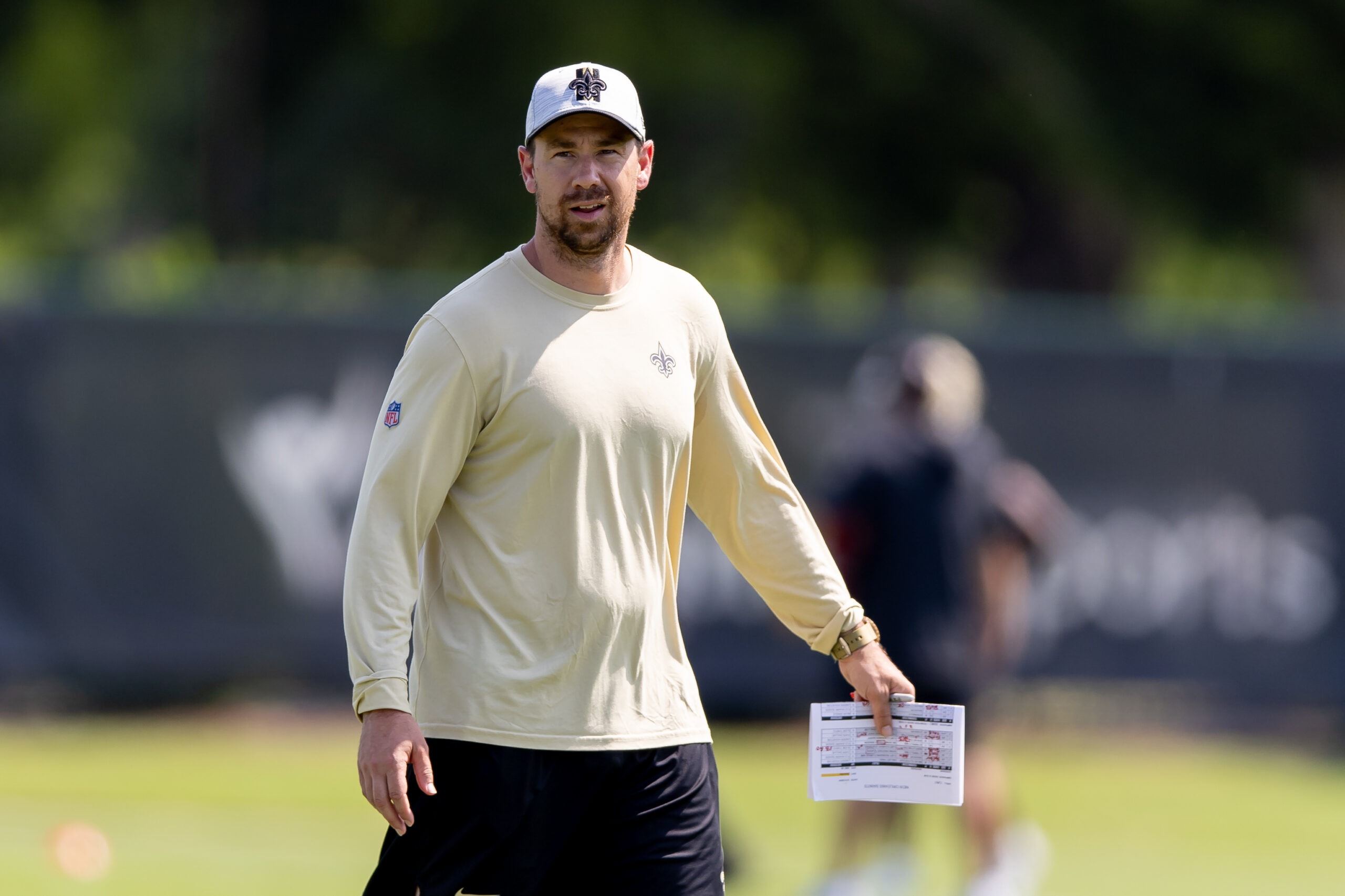
May 11, 2024; New Orleans, LA, USA; New Orleans Saints offensive coordinator Klint Kubiak looks on during the rookie minicamp at the Ochsner Sports Performance Center. Mandatory Credit: Stephen Lew-Imagn Images
Just hours after Super Bowl LX ended, offensive coordinator Klint Kubiak confirmed he was leaving Seattle to become the Las Vegas Raiders’ new head coach. Kubiak had engineered the NFL’s third-ranked scoring offense in his single season as coordinator, averaging 28.4 points per game. Seattle moved quickly, hiring former 49ers tight ends coach Brian Fleury as offensive coordinator on February 19, with Fleury stating his goal is to maintain the continuity of what Kubiak built. Every cap decision still carries an additional layer of scheme uncertainty as Fleury installs his system, making it even more critical to retain the offensive weapons that made Seattle’s attack elite.
The Math: $35M to $49M Without Cutting a Single Starter
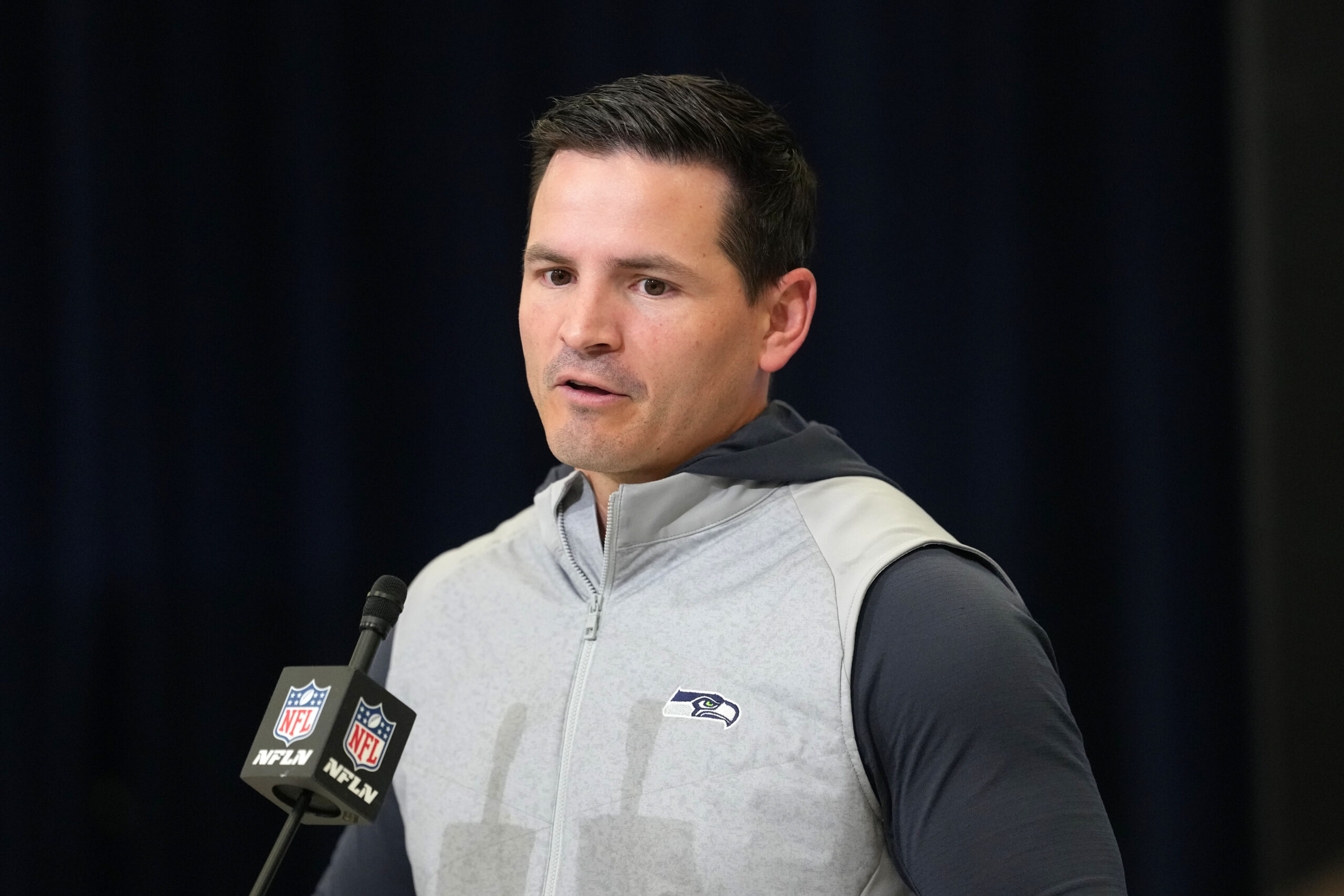
Feb 25, 2026; Indianapolis, IN, USA; Seattle Seahawks coach Mike Macdonald speaks during the NFL Scouting Combine at the Indiana Convention Center. Mandatory Credit: Kirby Lee-Imagn Images
Combined, these four moves could generate between $35 million and $49 million in additional cap space without releasing any current starter. The Seahawks are also required by the NFL’s CBA minimum spending rules to commit approximately $45 million this offseason regardless of preference. That mandate removes any temptation to simply hoard space and wait. Every dollar freed through smart restructuring becomes a dollar immediately redirected toward re-signing Walker, Woolen, and the defensive secondary depth that defined Seattle’s championship run.
The Championship Window Is Open, But Only Just
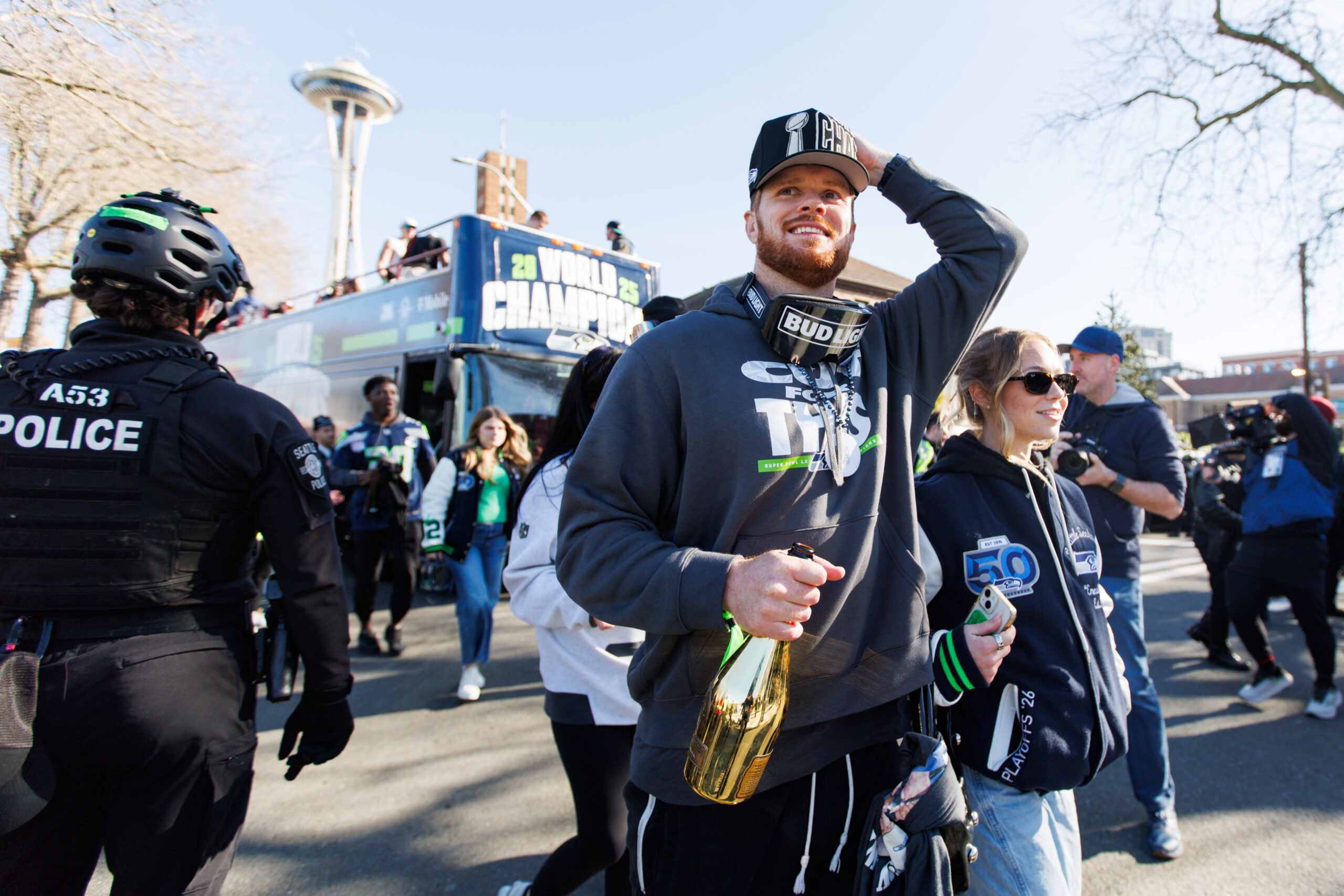
Feb 11, 2026; Seattle, WA, USA; Seattle Seahawks quarterback Sam Darnold (14) reacts during the Super Bowl LX parade. Mandatory Credit: Kevin Ng-Imagn Images
The Seahawks hold four draft picks in 2026, among their fewest in recent memory, severely limiting their ability to replace departing veterans organically. These four restructures are not luxury moves. They are the financial floor beneath which a repeat championship becomes mathematically impossible. Execute them, and the window stays open. Ignore them, and the cheapest Super Bowl roster in NFL history becomes a one-year wonder.
If you enjoyed this article please like and follow us here on MSN! Thank you for reading and have a great day!
Sources:
“Seahawks Have the Lowest-Paid Roster in the NFL.” Seaside Joe / Over the Cap, Feb 2026.
“Seahawks’ Schneider: ‘Business as Usual’ With Team for Sale.” ESPN, 24 Feb 2026.
“Seahawks Start Work on Keeping Their Free Agent Class at NFL Combine.” The Seattle Times, 24 Feb 2026.
“4 Moves Seahawks Must Make to Clear Salary Cap Space in 2026 NFL Offseason.” ClutchPoints / Yahoo Sports, 22 Feb 2026.ve to Be NFL’s Highest-Paid Wide Receiver.” ESPN, 21 Feb 2026.