
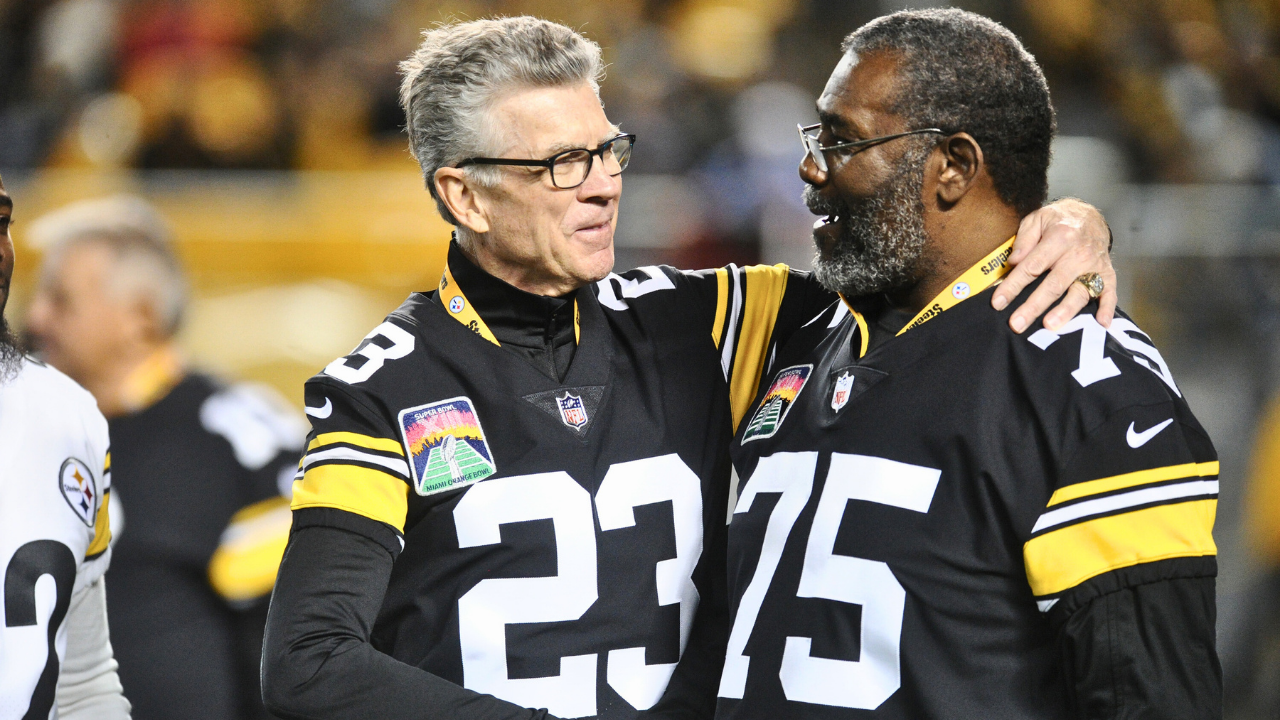
Mike Wagner never looked like a future NFL star. He wasn’t a top draft pick, and no college even tried to recruit him out of high school. But Wagner went on to become the secret mastermind behind the Pittsburgh Steelers’ Steel Curtain—one of the greatest defenses the NFL has ever seen. Wagner passed away on February 18, 2026, at the age of 76, after quietly battling pancreatic cancer for six years. He left behind four Super Bowl rings, 36 interceptions, and a legacy most fans never fully understood.
The Kid Nobody Wanted
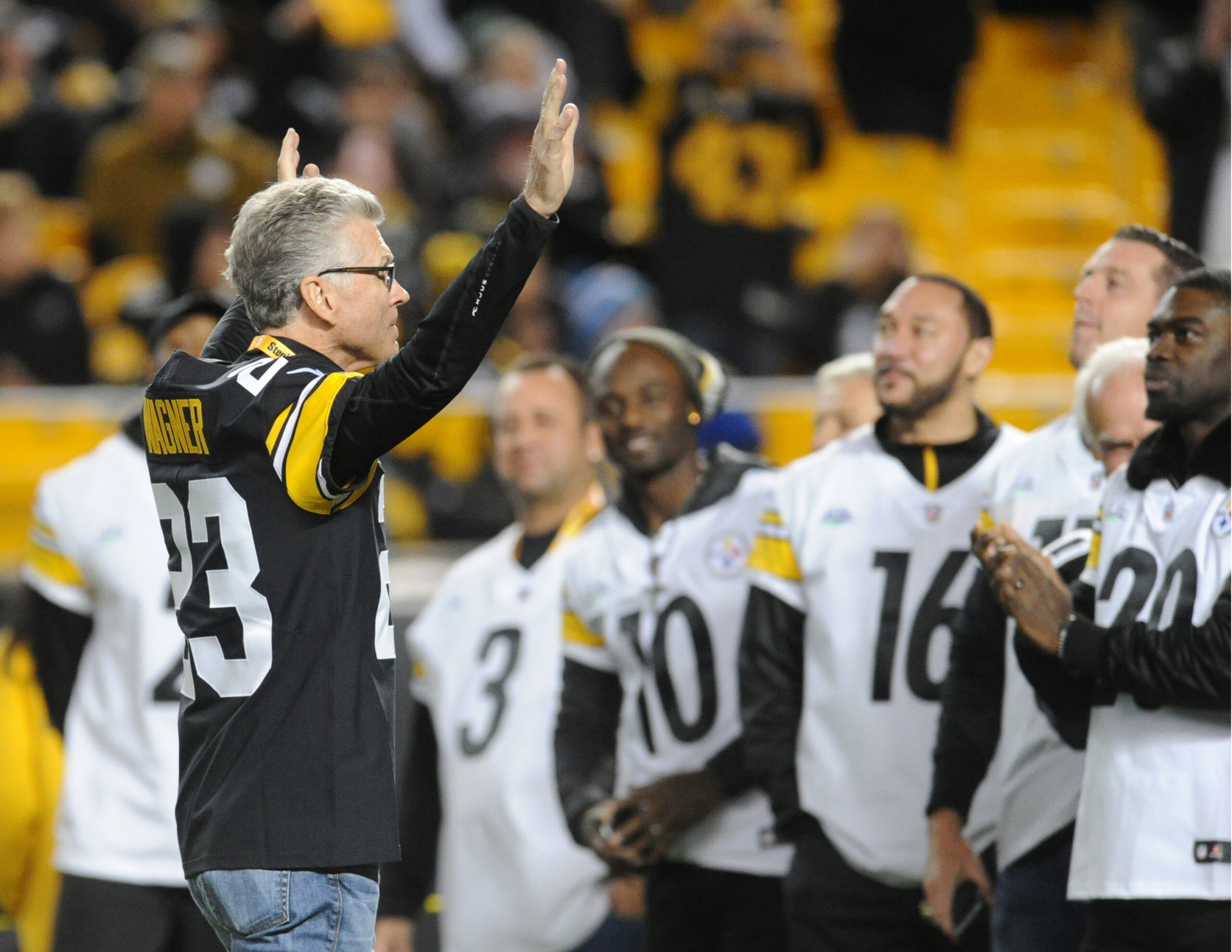
Dec 2, 2018; Pittsburgh, PA, USA; Pittsburgh Steelers former safety Mike Wagner (23) during a recognition of the Super Bowl XIII team during halftime of the Steelers and Los Angeles Chargers game at Heinz Field. Mandatory Credit: Philip G. Pavely-Imagn Images
Mike Wagner grew up in Waukegan, Illinois, graduated from Carmel Catholic High School in 1967, and got exactly zero college scholarship offers. So he enrolled at Western Illinois University, planning to study accounting. One day, he walked past football practice and asked the head coach for a tryout. He made the team as a walk-on—no scholarship, no guarantees, just guts. He played two full years before the school even gave him financial help.
He Had To Threaten To Transfer Just To Get A Scholarship
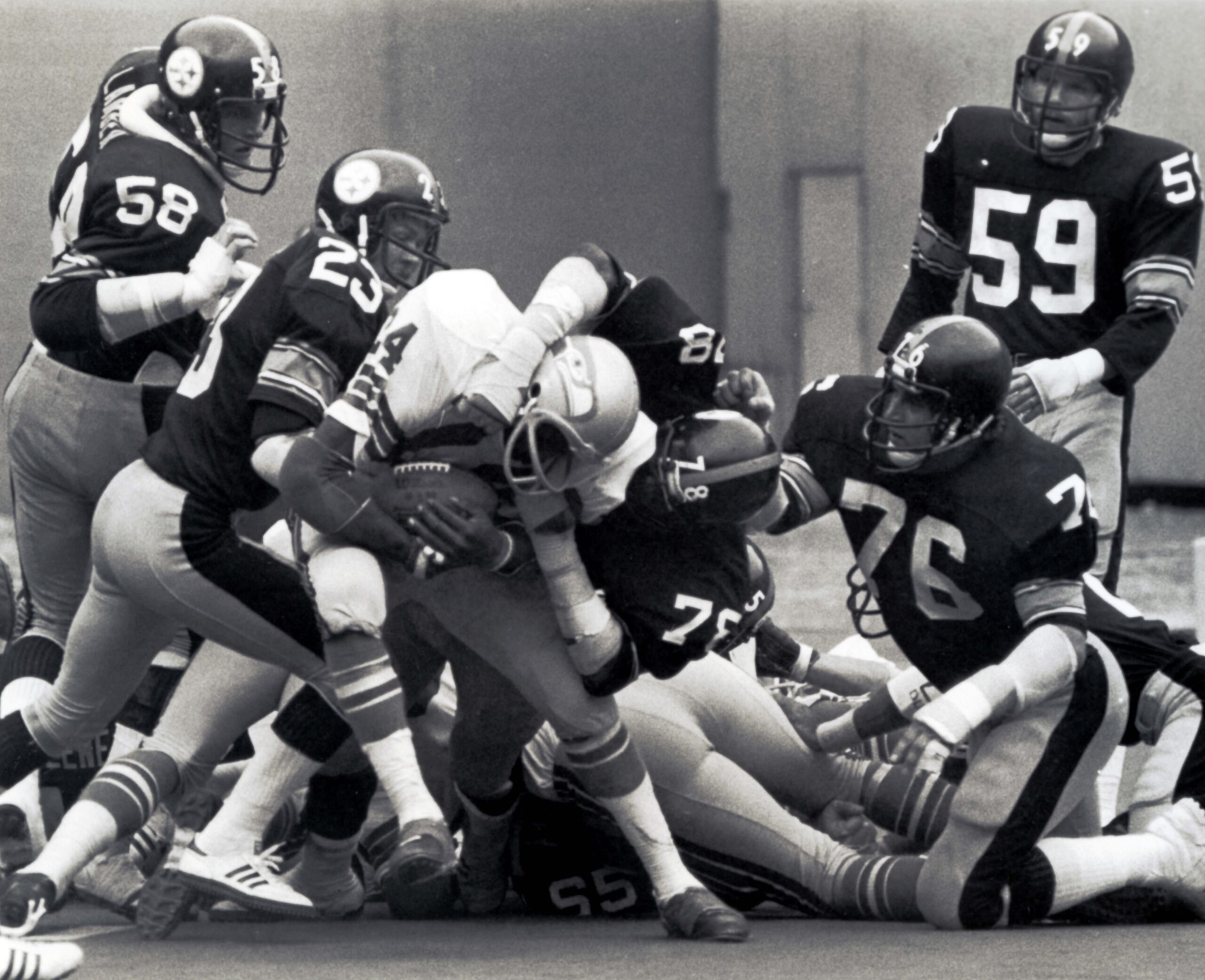
Dec 4, 1977; Pittsburgh, PA, USA; FILE PHOTO; Pittsburgh Steelers defensive end Dwight White (78) linebacker Jack Lambert (58) and defensive back Mike Wagner (23) tackle Seattle Seahawks running back Al Hunter (24) at Three Rivers Stadium. Mandatory Credit: Malcolm Emmons-Imagn Images
When new head coach Darrell Mudra took over in 1969, Wagner asked for a scholarship. Mudra said no—he wanted to use it on a recruit. Wagner told him his dad was a factory worker with two more sons to raise, and his mom had taken a job just to help cover tuition. Mudra still wouldn’t budge. So Wagner threatened to transfer. “That’s what it took,” he later said. He earned NAIA All-American honors that same season.
Drafted 268th Overall
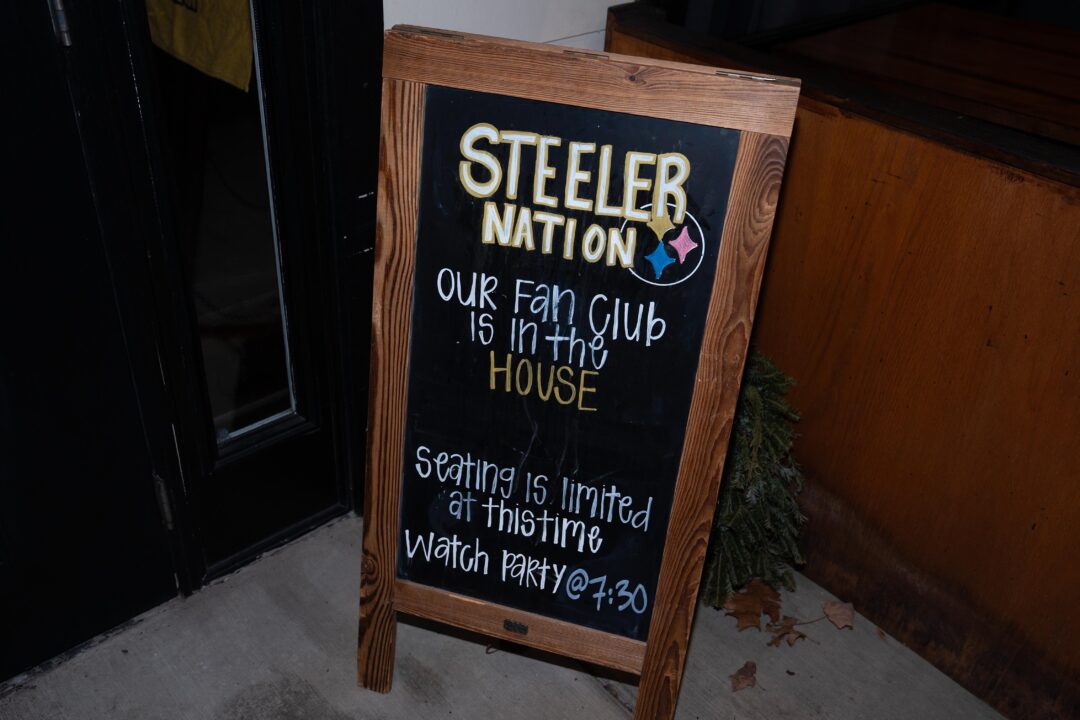
The Steelers grabbed Wagner in the 11th round of the 1971 draft, pick number 268. An injury ahead of him on the depth chart cracked the door open, and he walked through it permanently. Wagner earned a starting role almost immediately as a rookie and kept starting for the next decade. By 1973, he tied for the NFL lead with eight interceptions and earned first-team All-Pro honors. The walk-on was now the best ball-hawk in professional football.
Mel Blount Called Him “Our Quarterback In The Secondary”
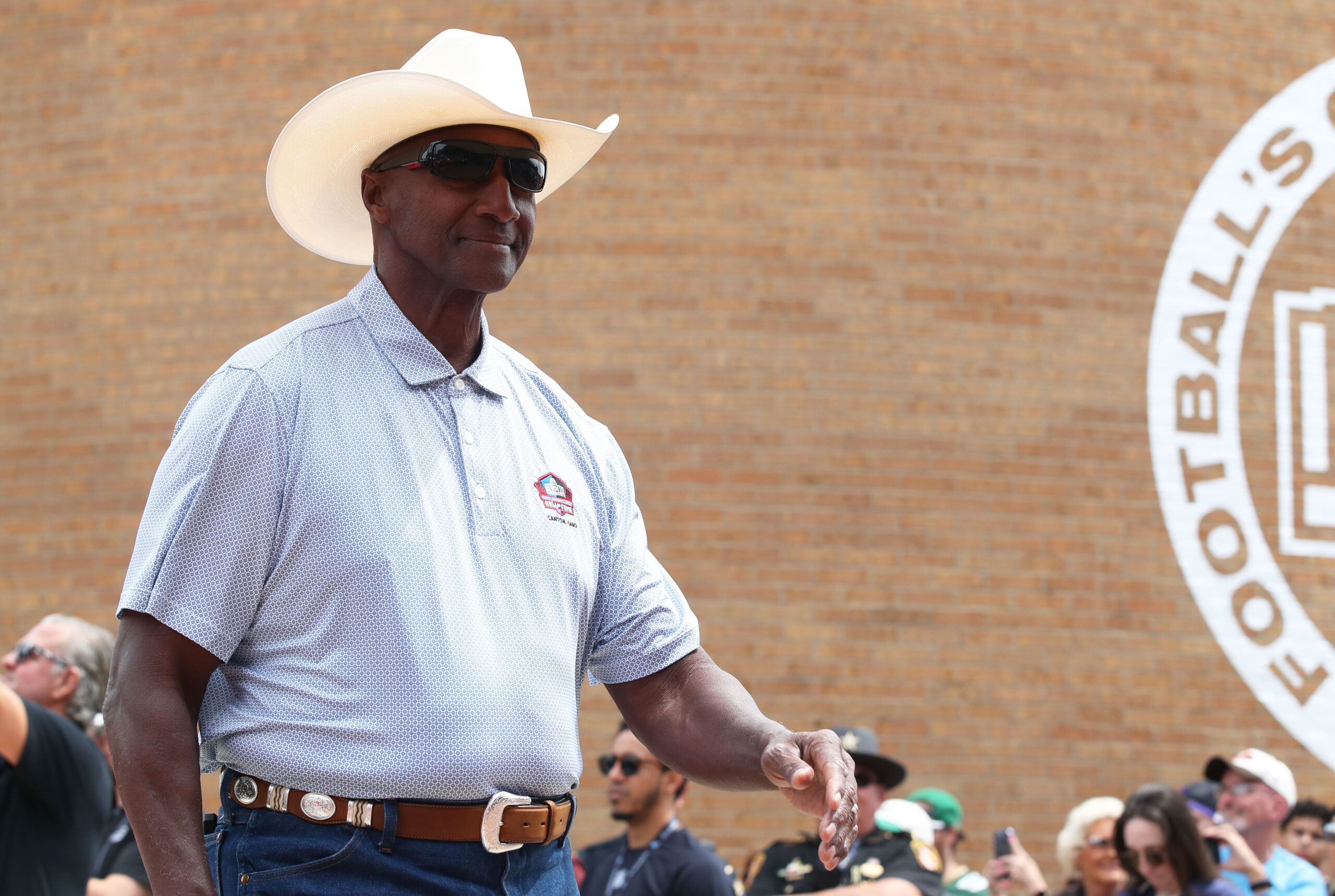
Aug 2, 2025; Canton, OH, USA; Hall of Fame member Mel Blount enters the ceremonies at the Pro Football Hall of Fame-Class of 2025 enshrinement ceremonies at Tom Benson Hall of Fame Stadium. Mandatory Credit: Charles LeClaire-Imagn Images
Hall of Famer Mel Blount played right alongside Wagner for years, and here’s what he said: “Mike was our quarterback in the secondary. I don’t know if the fans really knew what an intricate part of that defense he was. He directed what we were doing back in the secondary, and at the same time made plays himself.” The lowest-drafted starter on the field was quietly running the whole show behind a defense packed with future Hall of Famers.
Four Super Bowl Rings In Six Years
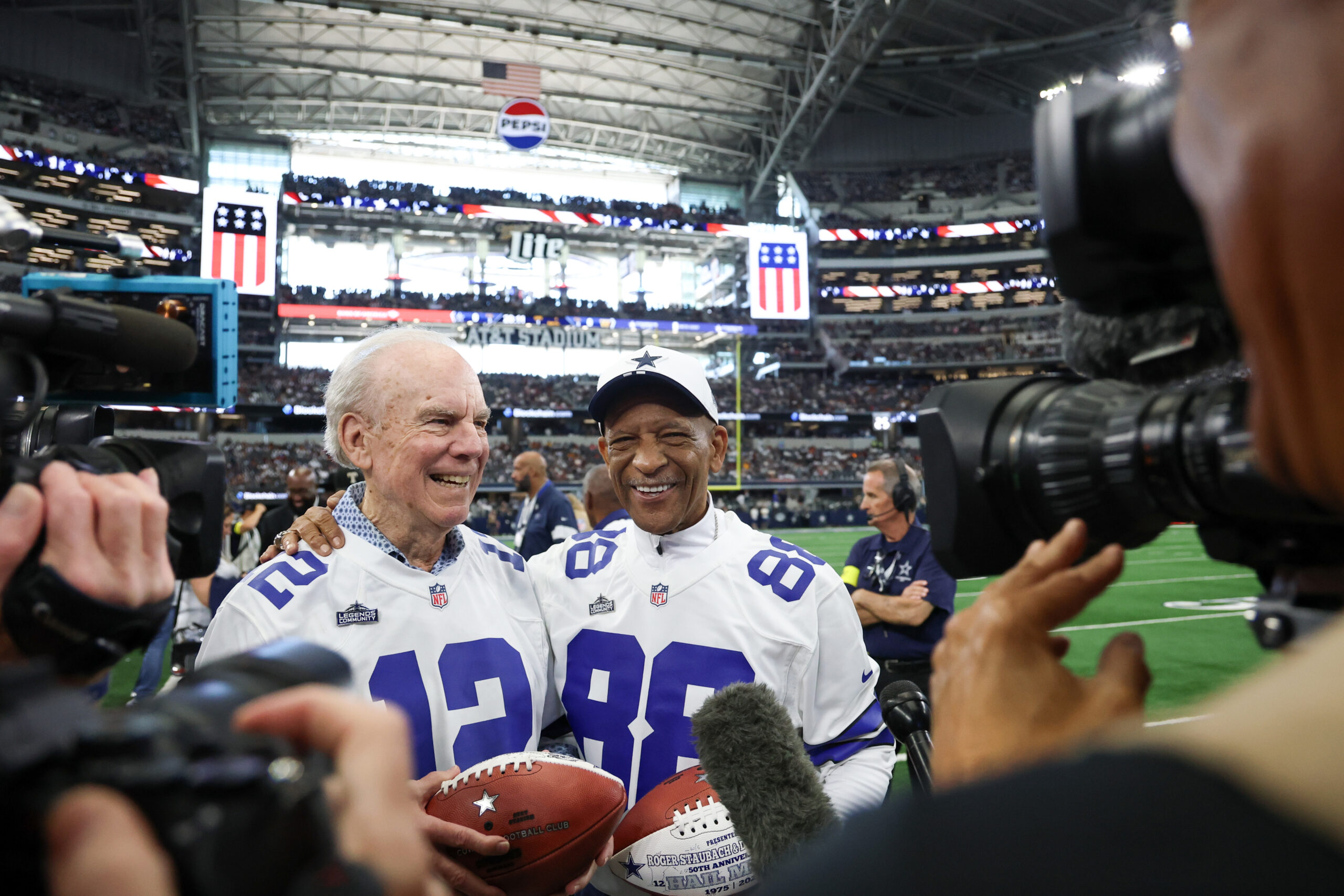
Oct 19, 2025; Arlington, Texas, USA; Dallas Cowboys former players Roger Staubach and Drew Pearson speak to the media prior to the game between the Dallas Cowboys and the Washington Commanders at AT&T Stadium. Mandatory Credit: Kevin Jairaj-Imagn Images
Wagner showed up when it mattered most. In Super Bowl IX, he picked off Fran Tarkenton in a 16–6 win over the Vikings. In Super Bowl X, he intercepted Roger Staubach and returned it 19 yards to set up a field goal in the 21–17 victory over Dallas. In Super Bowl XIII, he registered three tackles in a 35–31 win over the Cowboys. He earned a fourth ring in Super Bowl XIV against the Rams, though injuries kept him off the field that day.
The Play That Sealed Super Bowl X
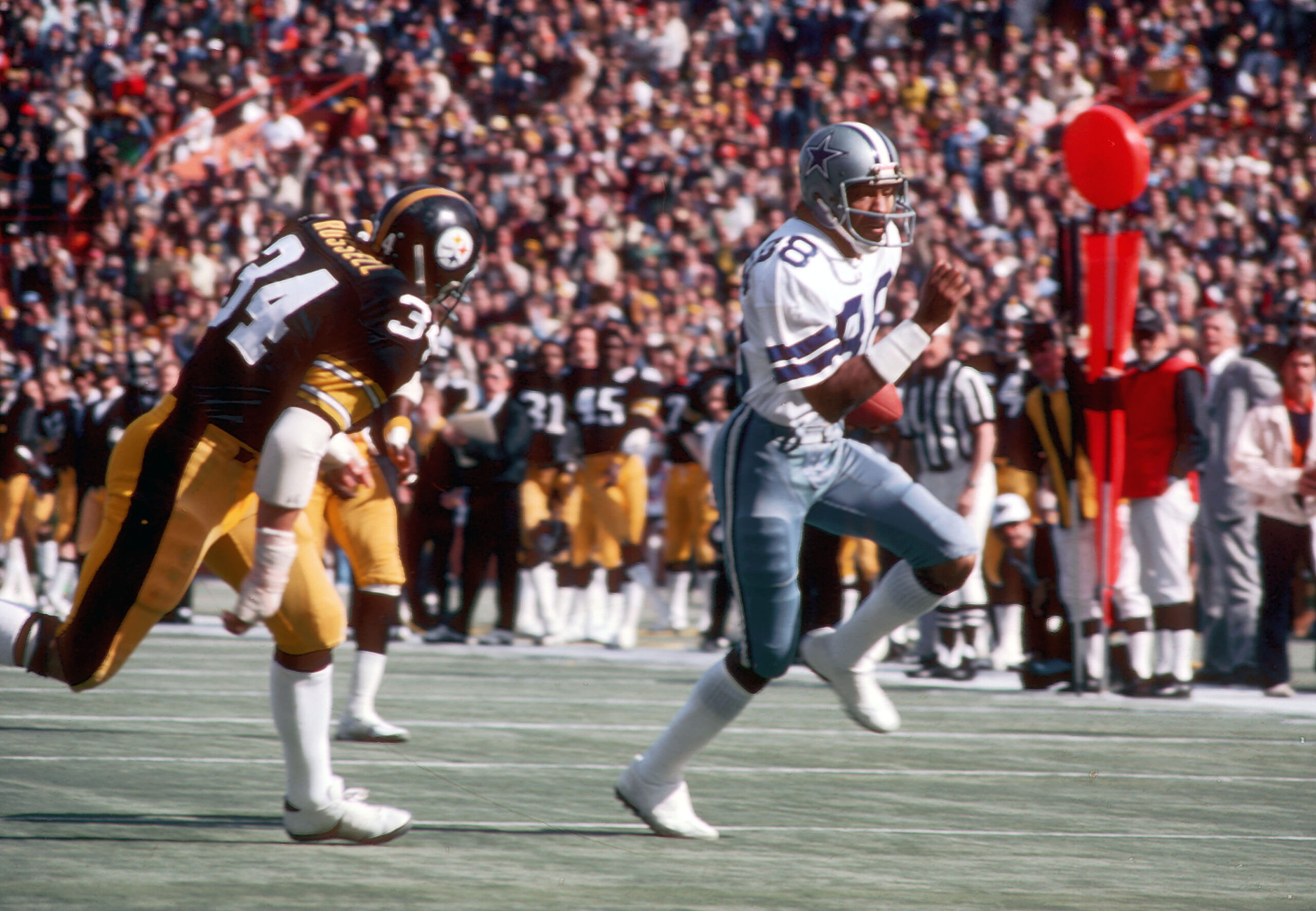
Jan 18, 1976; Miami, FL, USA; FILE PHOTO; Dallas Cowboys receiver Drew Pearson (88) is chased by Pittsburgh Steelers linebacker Andy Russell (34) during Super Bowl X at the Orange Bowl. The Steelers defeated the Cowboys 21-17 to win consecutive Super Bowl championships. Mandatory Credit: Tony Tomsic-Imagn Images
This is the play most fans don’t remember. With just three seconds on the clock and Dallas losing 21–17, Roger Staubach threw a desperate Hail Mary pass toward the end zone. Wagner got a hand on the ball and knocked it away. The deflection dropped right into teammate Glen Edwards’ hands for the interception that sealed the Steelers’ Super Bowl X victory. Earlier in the fourth quarter, Wagner had already picked off Staubach by reading the exact play pre-snap—positioning himself in front of Drew Pearson before the ball was even thrown. That’s not athleticism. That’s a chess player on a football field.
The 1971 Draft Class That Changed Everything
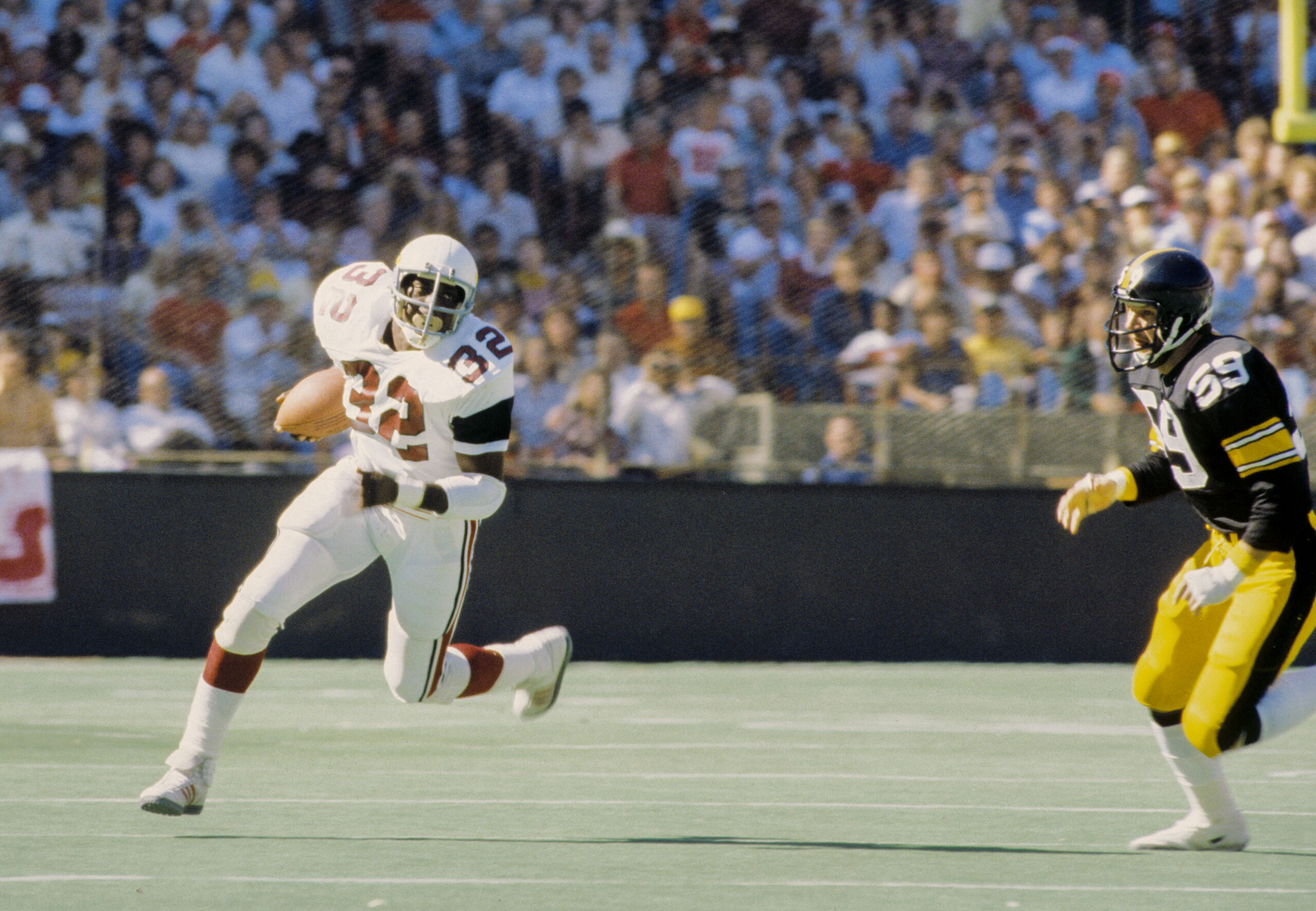
Sep 16, 1979; St. Louis, MO, USA; FILE PHOTO; St. Louis Cardinals running back Ottis Anderson (32) carries the ball against Pittsburgh Steelers linebacker Jack Ham (59) at Busch Stadium. Mandatory Credit Herb Weitman-Imagn Images
Wagner’s draft class was stacked. The Steelers picked Jack Ham, Dwight White, Ernie Holmes, Frank Lewis, Gerry Mullins, Larry Brown, and Wagner dead last in the 11th round. That single class built the foundation for four Super Bowl championships. After going 6–8 in 1971, Pittsburgh rattled off nine straight winning seasons. In 1976, eight Steelers defenders made the Pro Bowl. That’s not a team—that’s a historical event.
After Football, He Stayed Quiet
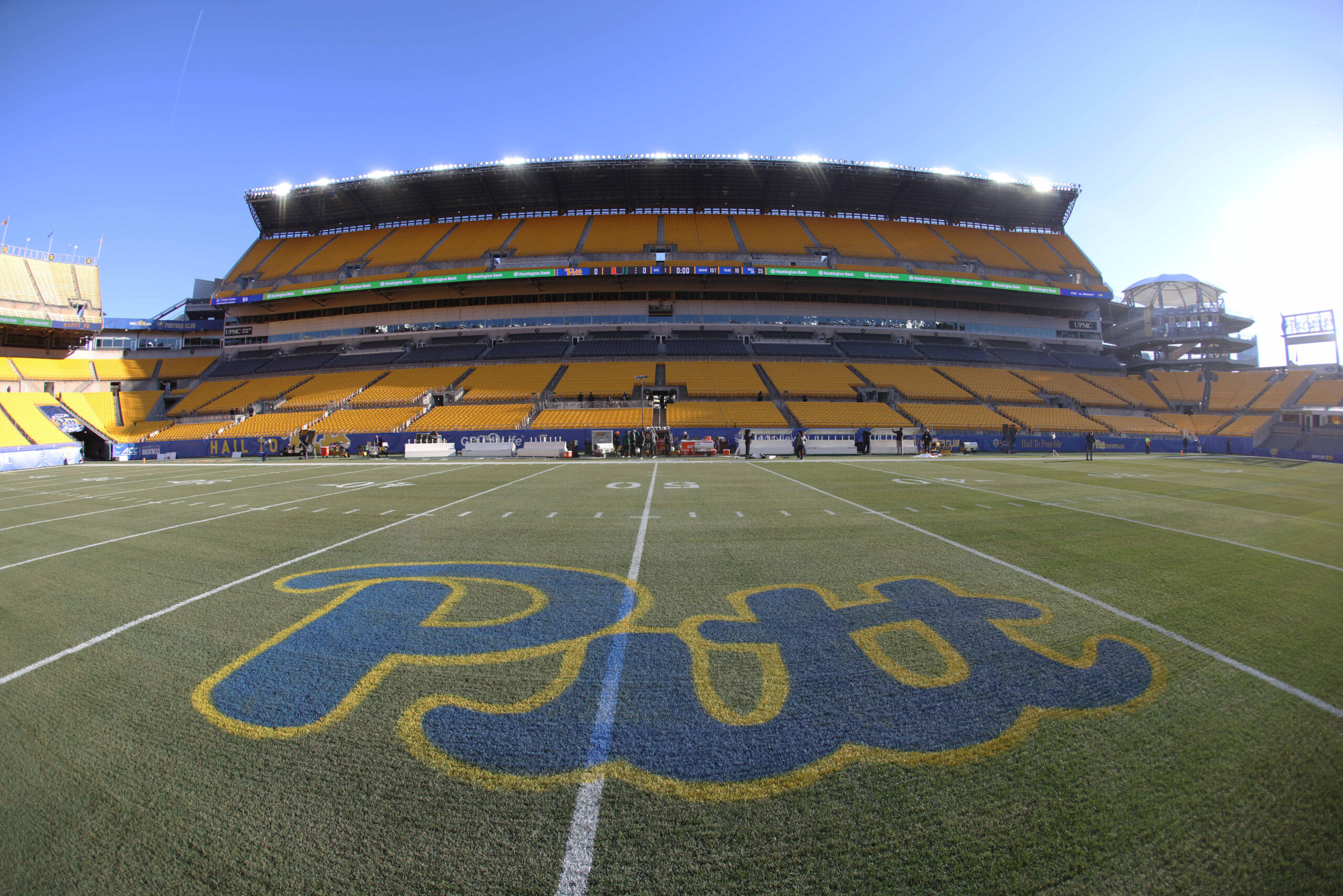
Nov 29, 2025; Pittsburgh, Pennsylvania, USA; University of Pittsburgh Panthers logo at mid-field before the game against the Miami Hurricanes at Acrisure Stadium. Mandatory Credit: Charles LeClaire-Imagn Images
Wagner retired after the 1980 season and earned an MBA from the University of Pittsburgh. He became a vice president at a Pittsburgh bank and later coached defensive backs at Pine-Richland High School. In 2020, he was inducted into the Steelers Hall of Honor. That same summer, he was diagnosed with pancreatic cancer—a disease that typically kills within one to two years. Wagner fought it privately for nearly six years before passing on February 18, 2026.
The Invisible Architect Is Gone
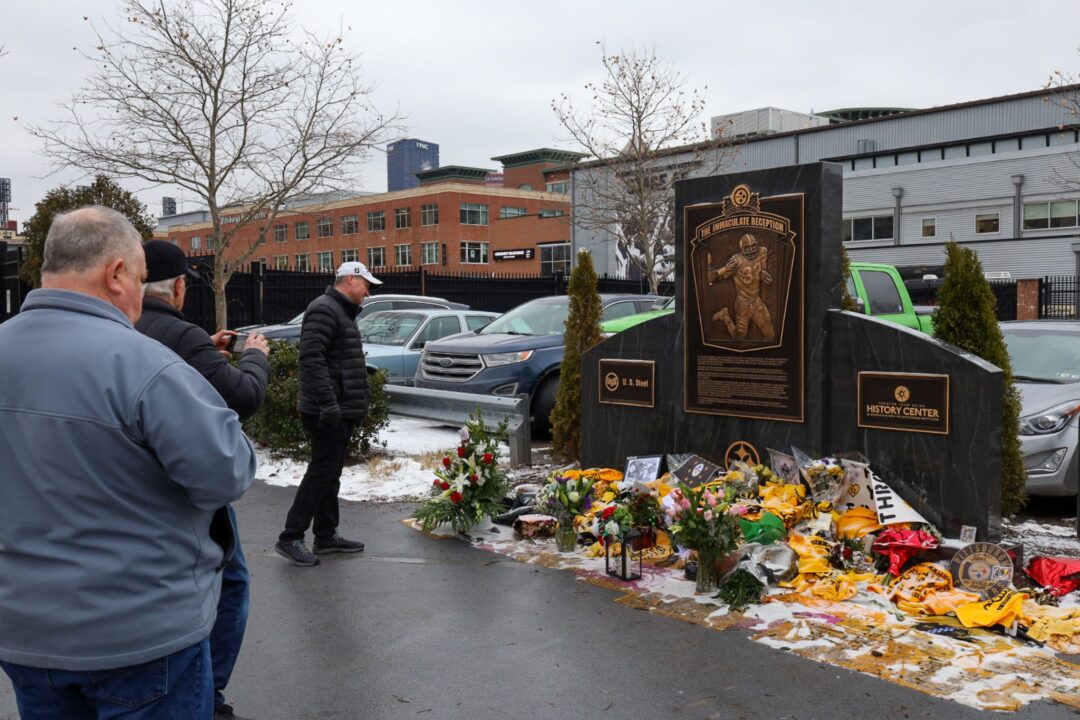
Franco Harris died in December 2022. Now Mike Wagner is gone, too. The men who built the 1970s Steelers dynasty are disappearing. Steelers president Art Rooney II said it plainly: “His toughness and consistency were paramount to our secondary. It was his steady presence and team-first mentality that truly defined him.” The 268th pick. The walk-on nobody recruited. The quarterback of the secondary nobody knew, commanded the defense. Four rings. Thirty-six interceptions. Gone at 76.
If you enjoyed this article, please like and follow us here on MSN! Thank you for reading, and have a great day!
Sources:
NFL.com, “Steel Curtain safety, four-time Super Bowl winner Mike Wagner dies at 76,” February 18, 2026
CBS Sports, “Mike Wagner, key member of Pittsburgh’s legendary ‘Steel Curtain’ defense, dies,” February 18, 2026
Fox News, “Steelers Super Bowl champion Mike Wagner dead at 76,” February 18, 2026
Prairie State Pigskin, “Western Illinois Hall of Famer Mike Wagner passes away at age 76,” February 19, 2026
Boston 25 News, “Mike Wagner, Steelers DB who won 4 Super Bowls, dies at 76,” February 18, 2026
Steelers Depot, “Ken Anderson: Mel Blount, Mike Wagner were two of the best players he played against,” April 19, 2024