
Somewhere between Springfield and Chicago, the Bears’ story stopped adding up. While Illinois lawmakers worked late nights hammering out a megaprojects bill tailored to keep the franchise in-state, team executives sat across from those legislators and painted a simple picture: Chicago wasn’t really in play. The lakefront was a dead end. Arlington Heights or bust. That framing shaped every dollar on the table. And public records now show it was built on a foundation that crumbled the moment reporters started pulling calendars and emails.
The $855 Million Ask Nobody Questioned

May 8, 2026; Lake Forest, IL, USA; Chicago Bears offensive lineman Logan Jones (54) speaks during Rookie Minicamp at Halas Hall. Mandatory Credit: Kamil Krzaczynski-Imagn Images
The Bears walked into Springfield seeking more than $855 million in publicly funded infrastructure support for a proposed $2 billion stadium in Arlington Heights, part of a roughly $5 billion stadium and mixed-use development. For a franchise valued at approximately $8.9 billion, the ask landed on taxpayers like a freight train. Roads, utilities, site prep. All publicly financed. All for a team that has pledged to fund the stadium itself. Lawmakers treated the request as urgent because the Bears kept waving a single threat behind every conversation.
Indiana as the Loaded Gun

Mar 30, 2026; Phoenix, AZ, USA; Chicago Bears president Kevin Warren during the 2026 NFL Annual League Meeting at the Arizona Biltmore. Mandatory Credit: Mark J. Rebilas-Imagn Images
That threat was Hammond, Indiana. Bears president Kevin Warren and other executives made clear the team would “critically evaluate” Northwest Indiana if Springfield failed to deliver supportive legislation. Two options, lawmakers were told. Arlington Heights or out of state. No middle ground. That binary framing compressed every negotiation into a single pressure point: give us the tax package or lose the Bears entirely. It worked for a while. The megaprojects bill cleared the Illinois House with provisions practically custom-built for one franchise, and legislators felt they had little room to push back.
The Meetings That Weren’t Supposed to Exist

Mar 30, 2026; Phoenix, AZ, USA; Chicago Bears head coach Ben Johnson (center) speaks to the media during the 2026 NFL Annual League Meeting at the Arizona Biltmore. Mandatory Credit: Mark J. Rebilas-Imagn Images
Public records show what the Bears told lawmakers simply wasn’t true. Mayor Brandon Johnson’s administration had been in renewed talks with the team about a lakefront stadium. Not casual coffee. Sustained negotiations. Senator Bill Cunningham called it a “bombshell”: the Bears had met repeatedly with Chicago officials over several months, in previously undisclosed meetings. Calendars confirmed it. Emails confirmed it. The city was very much in the mix. Lawmakers were making billion-dollar decisions based on stadium options that turned out to be incomplete. Two options became three. The leverage was a lie.
How the Hidden Card Changed the Deck

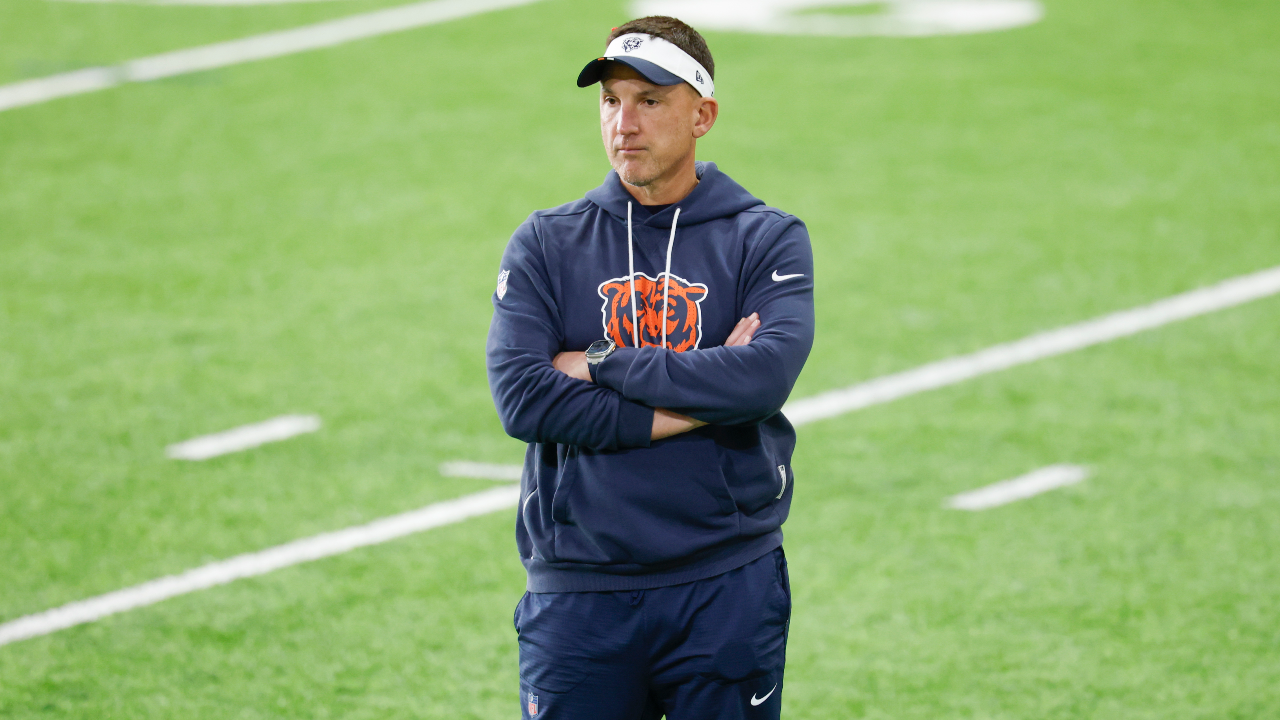
May 8, 2026; Lake Forest, IL, USA; Chicago Bears defensive coordinator Dennis Allen walks on the field during Rookie Minicamp at Halas Hall. Mandatory Credit: Kamil Krzaczynski-Imagn Images
Think of it like buying a house. The seller swears there are no other offers. You stretch your budget, waive inspections, bend over backward. Then you find out the seller had a second buyer the whole time. That’s what Springfield experienced. By hiding the Chicago option, the Bears manufactured artificial urgency. Legislators who might have negotiated harder, demanded more accountability, or trimmed the subsidy package instead raced to close a deal against a phantom deadline. The team’s silence about Chicago functioned as a negotiating weapon aimed directly at taxpayers.
$39 Million a Year, Every Year

Feb 24, 2026; Indianapolis, IN, USA; Chicago Bears coach Ben Johnson speaks at the NFL Scouting Combine at the Indiana Convention Center. Mandatory Credit: Kirby Lee-Imagn Images
The megaprojects bill would freeze the assessed value of the Bears’ stadium property for 25 years and let the franchise negotiate its own property tax payments for up to 40 years. Cook County Treasurer Maria Pappas ran the numbers: roughly $39 million in annual property tax savings. Over four decades, that totals more than $1.5 billion in tax relief for a single private entity. Stack that on top of the $855 million infrastructure package, and the public contribution dwarfs anything a normal business would receive. Lawmakers might call it “tax certainty.” For residents footing the bill, it functions as an extraordinary tax break.
Who Pays When the Bears Don’t

May 22, 2026; Chicago, Illinois, USA; Chicago Bears head coach Ben Johnson jokes with Chicago Bears first-round draft pick Dillon Thieneman before a baseball game between the Chicago Cubs and Houston Astros at Wrigley Field. Mandatory Credit: Kamil Krzaczynski-Imagn Images
Every dollar the Bears save on property taxes is a dollar local governments, school districts, and fire departments don’t collect. That $39 million annual gap doesn’t vanish. It shifts onto neighboring property owners or forces service cuts. The infrastructure money comes from tax-backed bonds that Illinois taxpayers ultimately guarantee. For everyday residents, the distinction between “asking” and “demanding” $855 million is academic when the team’s future presence serves as the bargaining chip. The ripple reaches every homeowner in the taxing district, whether they watch football or not.
The Precedent Nobody’s Discussing

Mar 30, 2026; Phoenix, AZ, USA; Chicago Bears head coach Ben Johnson during the 2026 NFL Annual League Meeting at the Arizona Biltmore. Mandatory Credit: Mark J. Rebilas-Imagn Images
Had the megaprojects bill passed with the Bears’ provisions intact, it would have established a template. Any franchise, any developer with enough leverage could walk into Springfield, misrepresent their options, and extract a custom tax regime lasting decades. The bill wasn’t written for megaprojects in general. It was engineered around one team’s financial wish list. Once you see that, the stadium fight stops being about football. It becomes a test of whether Illinois will let private entities design their own tax code, and whether lying to get there carries any consequence at all.
The Trust Deficit Grows

Mar 30, 2026; Phoenix, AZ, USA; Arizona Cardinals owner Michael Bidwill (left) with Chicago Bears vice president Patrick McCaskey during the 2026 NFL Annual League Meeting at the Arizona Biltmore. Mandatory Credit: Mark J. Rebilas-Imagn Images
Senator Cunningham’s revelation didn’t just embarrass the Bears. It poisoned the well for every claim the franchise makes going forward. If the team misrepresented something as basic as whether it was talking to Chicago, what else in the proposal deserves a second look? Cost projections. Job creation estimates. Timeline commitments. The credibility gap now hangs over every number the Bears put on paper. Lawmakers who felt rushed before now have political cover to slow down, and the Bears’ own conduct handed it to them on a silver platter.
The Bill Taxpayers Can’t Unsee

Jan 18, 2026; Chicago, IL, USA; Los Angeles Rams linebackers Josaiah Stewart (10) and Byron Young (0) leave the field after an NFC Divisional Round game against the Chicago Bears Soldier Field. Mandatory Credit: Matt Marton-Imagn Images
In the end, Springfield never passed the megaprojects bill. The Illinois Senate approved an amended, last-minute alternative around 3:30 a.m. on the session’s final day, but the House adjourned without taking it up, and the original PILOT-based megaprojects plan died for lack of Senate support. Indiana still lurks, with a standing offer to build a publicly owned stadium near Wolf Lake in Hammond. Chicago is now publicly back at the table. Three competing options, not two, and every legislator now knows the team played them once already. The franchise that told lawmakers it had nowhere else to go turned out to have a backup plan all along. For taxpayers watching an $8.9 billion organization ask their neighbors to cover $855 million in costs, the real question isn’t where the Bears build. It’s why anyone would take their word for it. Should an $8.9 billion franchise get a dime of public money after misleading the lawmakers writing the check? Tell us where you land in the comments.