
Cleveland’s front office didn’t hold a press conference about its quarterback future. It didn’t leak a preference to a reporter over dinner. The Browns did something louder: they committed up to $58 million in potential extension value — on a deal officially worth $52.5 million over three new years — with a total remaining commitment in the mid‑$60 million range once you fold in Jerry Jeudy’s existing year. Jerry Jeudy, acquired from Denver, signed an extension with an average annual value of roughly $17.5 million. In the NFL, contracts don’t just buy players. They broadcast priorities. And this priority had nothing to do with the quarterback position, which made the message deafening.
Draft Season Pressure
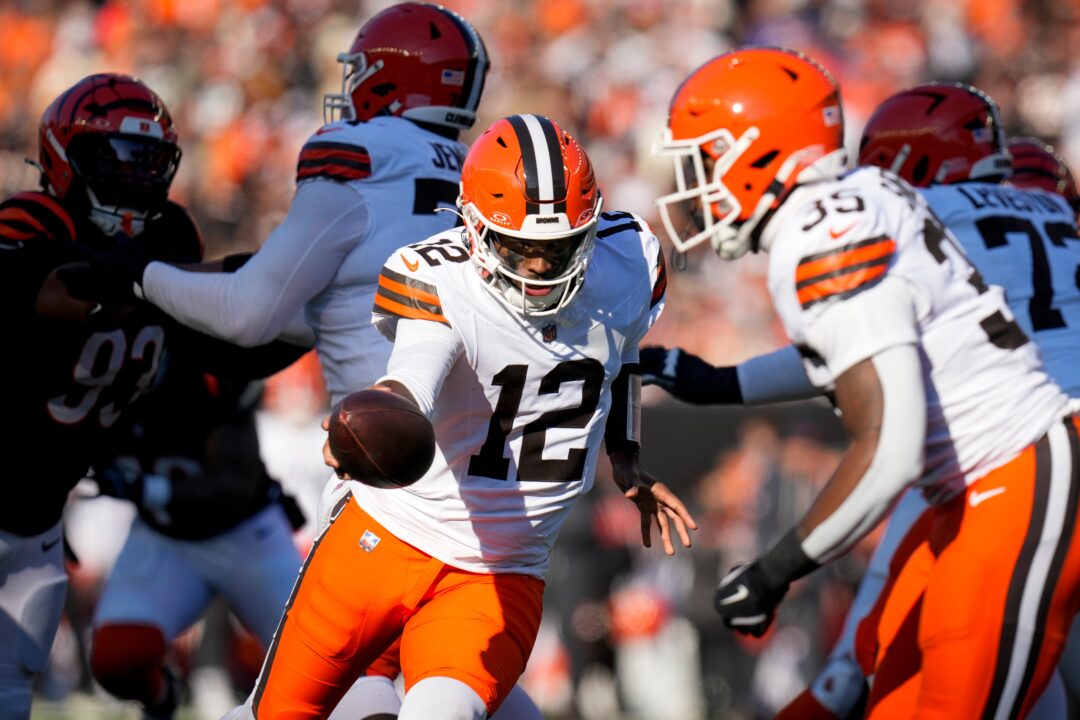
For a rookie-entrant quarterback like Shedeur Sanders, runway is everything. During the 2025 draft cycle, every roster transaction became a tea leaf. Teams adding weapons, signing veterans, restructuring deals: all of it was decoded by agents, scouts, and prospects trying to map where opportunity lived. Cleveland sat in a fascinating position, holding draft capital and cap flexibility, with a quarterback room that screamed transition. Sanders and his camp had reason to watch every move the Browns made, and those moves ultimately became the backdrop for Cleveland selecting him in the fifth round of the 2025 NFL Draft with the No. 144 pick. The Jeudy extension was the first domino.
The Myth Starts To Crack
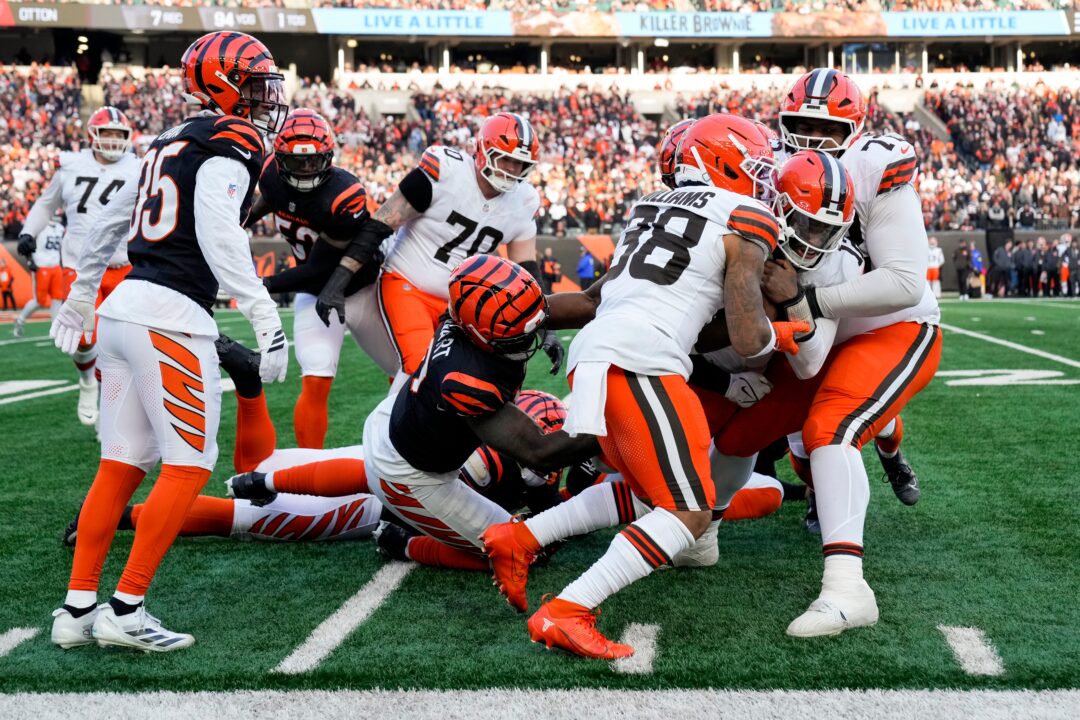
Most fans assume teams reveal their quarterback plans through quarterback moves. A blockbuster trade up. A franchise tag. A splashy free-agent signing. That assumption feels logical, but Cleveland’s sequence of decisions that culminated in drafting Sanders helped crack it. The Browns’ loudest early roster statement arrived through a position that doesn’t take snaps. Paying Jeudy top‑20 wide receiver money, with up to $58 million on the table and a multi‑year commitment, signaled the organization was investing in pass-game infrastructure regardless of who threw the ball. That wasn’t a direct quarterback endorsement. It was a team buying optionality, and optionality is often the enemy of a rookie’s fast track — even when that rookie eventually becomes the one they draft.
The Hidden Mechanism At Work
Cap allocation and depth-chart bottlenecks quietly decide who gets a runway. That’s the system nobody talks about on draft night. Cleveland didn’t need to call Sanders to explain that; the roster spoke. A receiver commitment with a base of $52.5 million in new money — and total remaining obligation in the mid‑$60 million range once you add in what was already on the books for Jeudy — meant the passing game was getting built now, not later. A relatively cheap veteran quarterback meant the team could afford patience at the position. Patience was wonderful for the front office. For the incoming rookie who would eventually arrive — Sanders — patience looked like walking into a room where the chairs were already occupied.
A Door That Seemed To Close — Until Draft Day
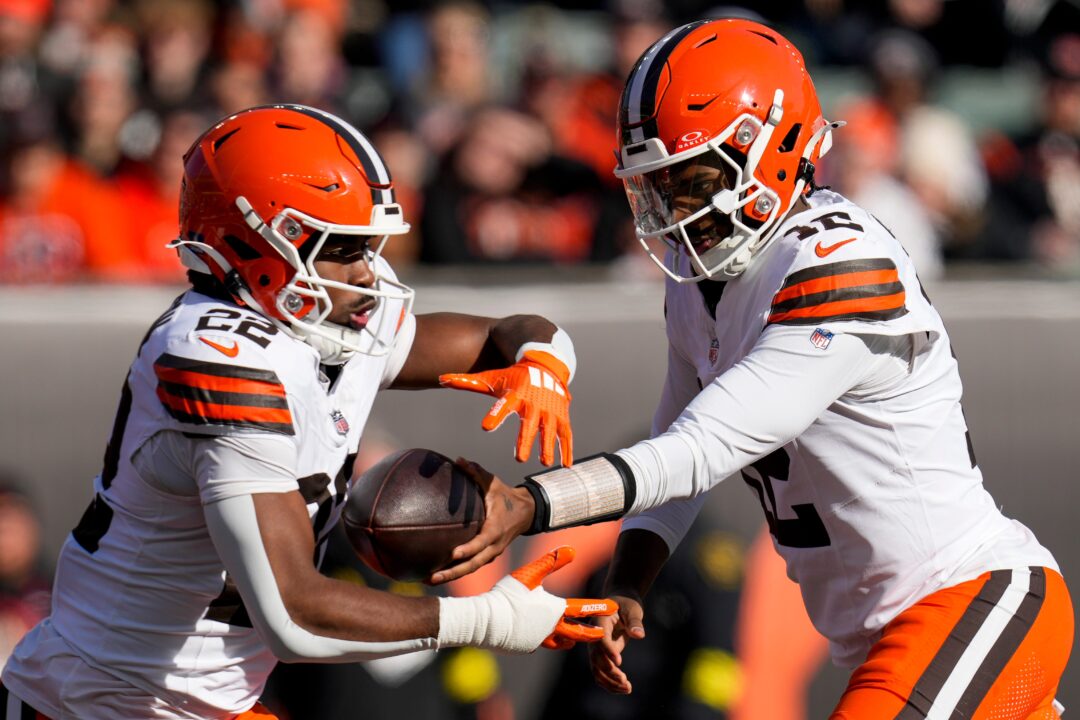
Then came the second move. Cleveland signed Joe Flacco to a one-year base deal worth $4 million, with incentives pushing the total to up to $13 million. A Super Bowl XLVII MVP. A veteran who had started across multiple teams and seasons. The Browns committed top‑end wide receiver money to Jeudy across one offseason, then added a proven quarterback for a fraction of that the following spring. Veteran depth without long-term commitment. At the time, the depth-chart math made the message to any rookie quarterback prospect — including Sanders — feel clear, even if nobody said it out loud.
When The Numbers Talk
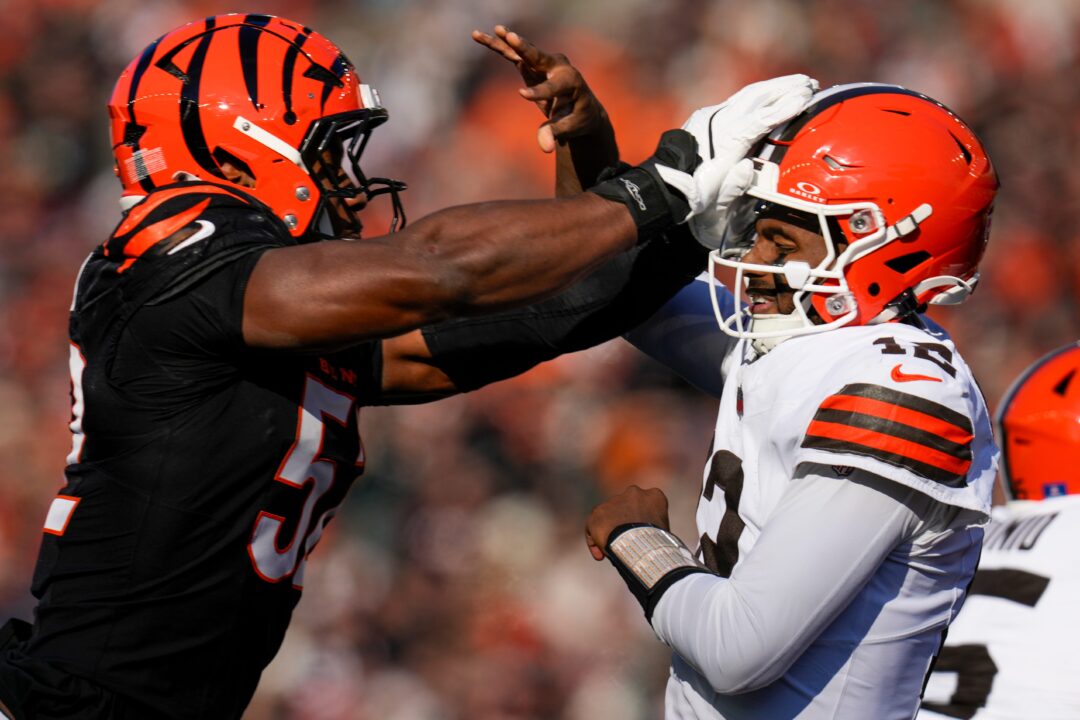
Consider the raw contrast. Jeudy: a three-year, $52.5 million extension (up to $58 million with incentives) on top of his existing year, putting the total remaining financial commitment into the mid‑$60 million range. Flacco: a one-year deal with $4 million base and up to $13 million in incentives. One player got franchise-level commitment. The other got an extended warranty. Both moves arrived across consecutive offseasons, both confirmed through official team channels, and both pointed in the same direction: Cleveland was building a roster that could function with any quarterback, which reduced the urgency to hand keys to a first-year signal-caller. That disproportion between the two deals became the blueprint Sanders walked into after being drafted.
Ripple Effects Around The League
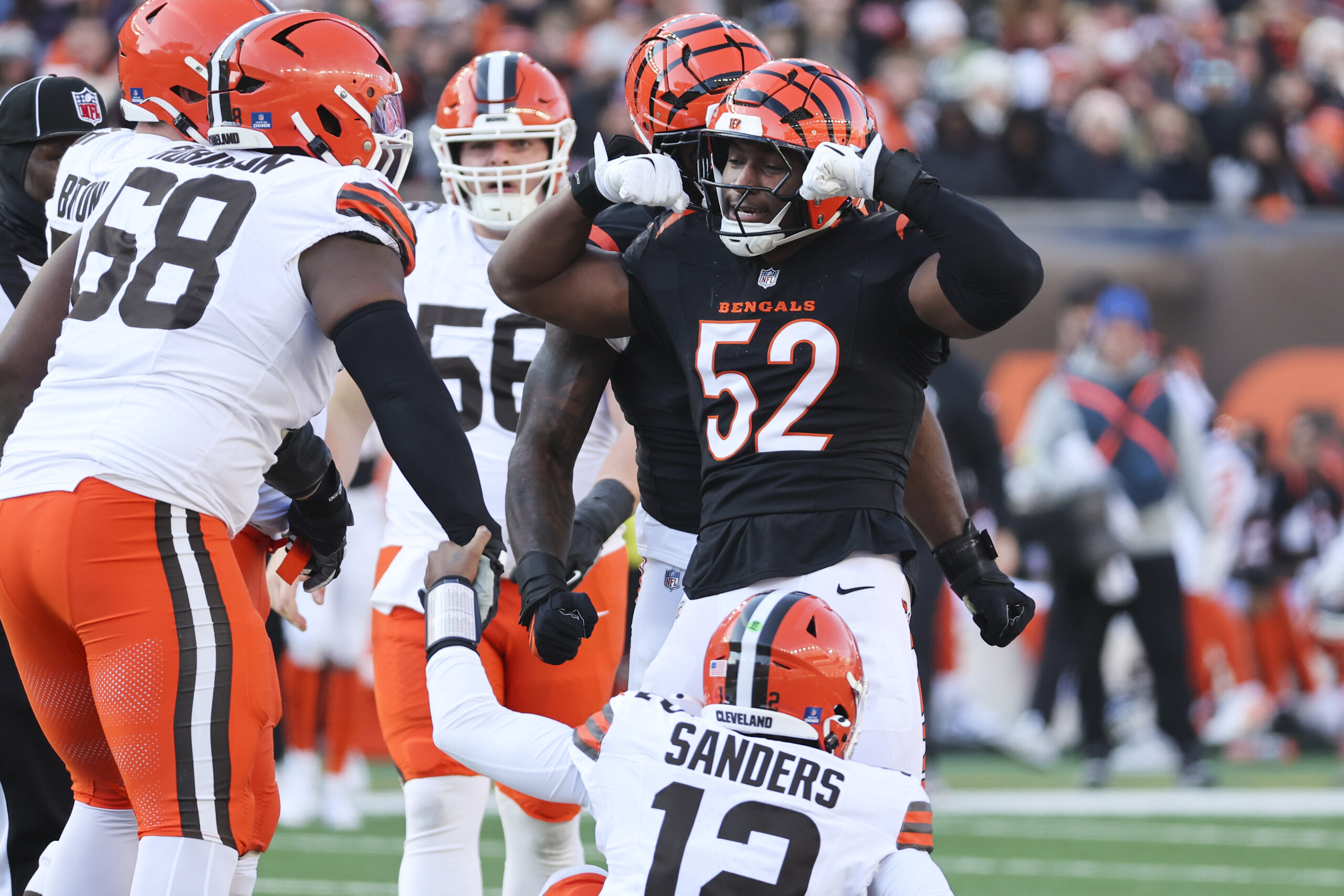
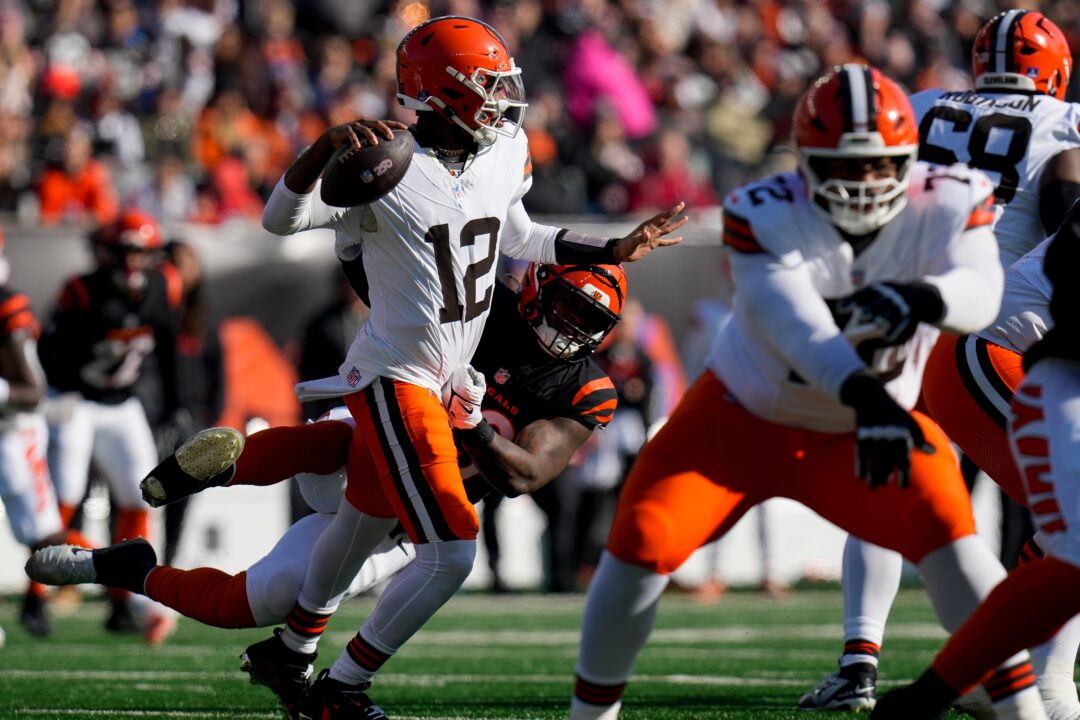
Jan 4, 2026; Cincinnati, Ohio, USA; Cincinnati Bengals defensive end Cedric Johnson (52) celebrates after sacking Cleveland Browns quarterback Shedeur Sanders (12) during the second quarter at Paycor Stadium. Mandatory Credit: Joseph Maiorana-Imagn Images
The consequences stretched beyond Cleveland. Other teams watched the Browns add weapons and veteran depth simultaneously, a hedge strategy that let a franchise compete now while keeping its quarterback options open. Big receiver extensions reset internal pay hierarchies and future cap choices across the league. Fringe quarterbacks and developmental prospects competing for limited backup slots felt the squeeze too. One front office’s checkbook decision created a template: buy the infrastructure first, let the quarterback question answer itself later — even if the answer ultimately includes drafting a player like Sanders.
A New Unspoken Rule
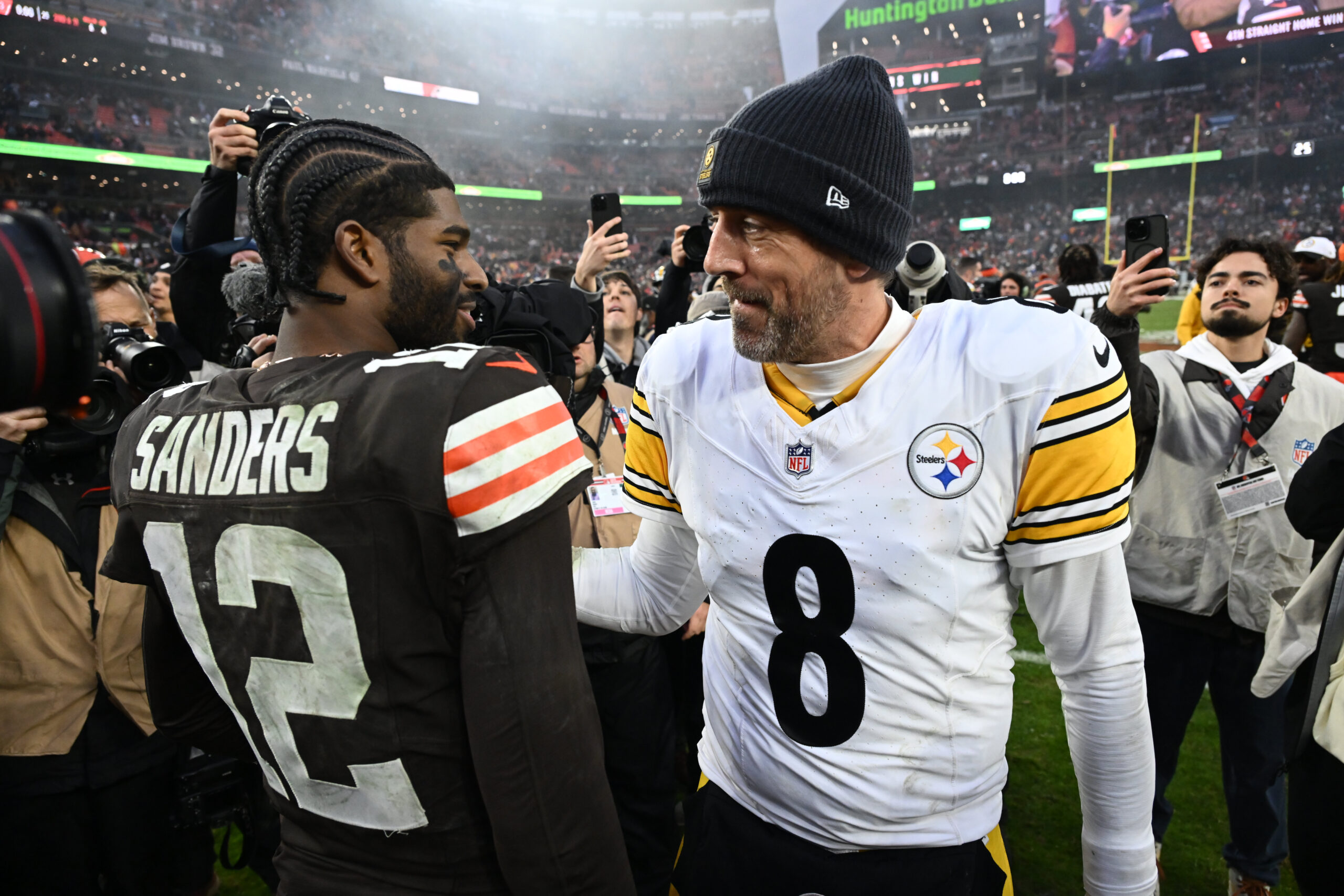
Dec 28, 2025; Cleveland, Ohio, USA; Pittsburgh Steelers quarterback Aaron Rodgers (8) and Cleveland Browns quarterback Shedeur Sanders (12) hug after the game at Huntington Bank Field. Mandatory Credit: Ken Blaze-Imagn Images
This wasn’t an exception. It was a precedent. The old belief held that teams telegraph quarterback intentions through quarterback transactions. Cleveland showed that the loudest signal is where the guaranteed money goes. Draft “fit” turned out to be less about talent and more about whether a team could afford patience. Once you see roster construction through that lens, every offseason move reads differently. The Browns didn’t just build a roster. They built a waiting room, then handed one of the numbers to Sanders when they selected him in the fifth round.
An Unresolved Future, Now Partly Answered
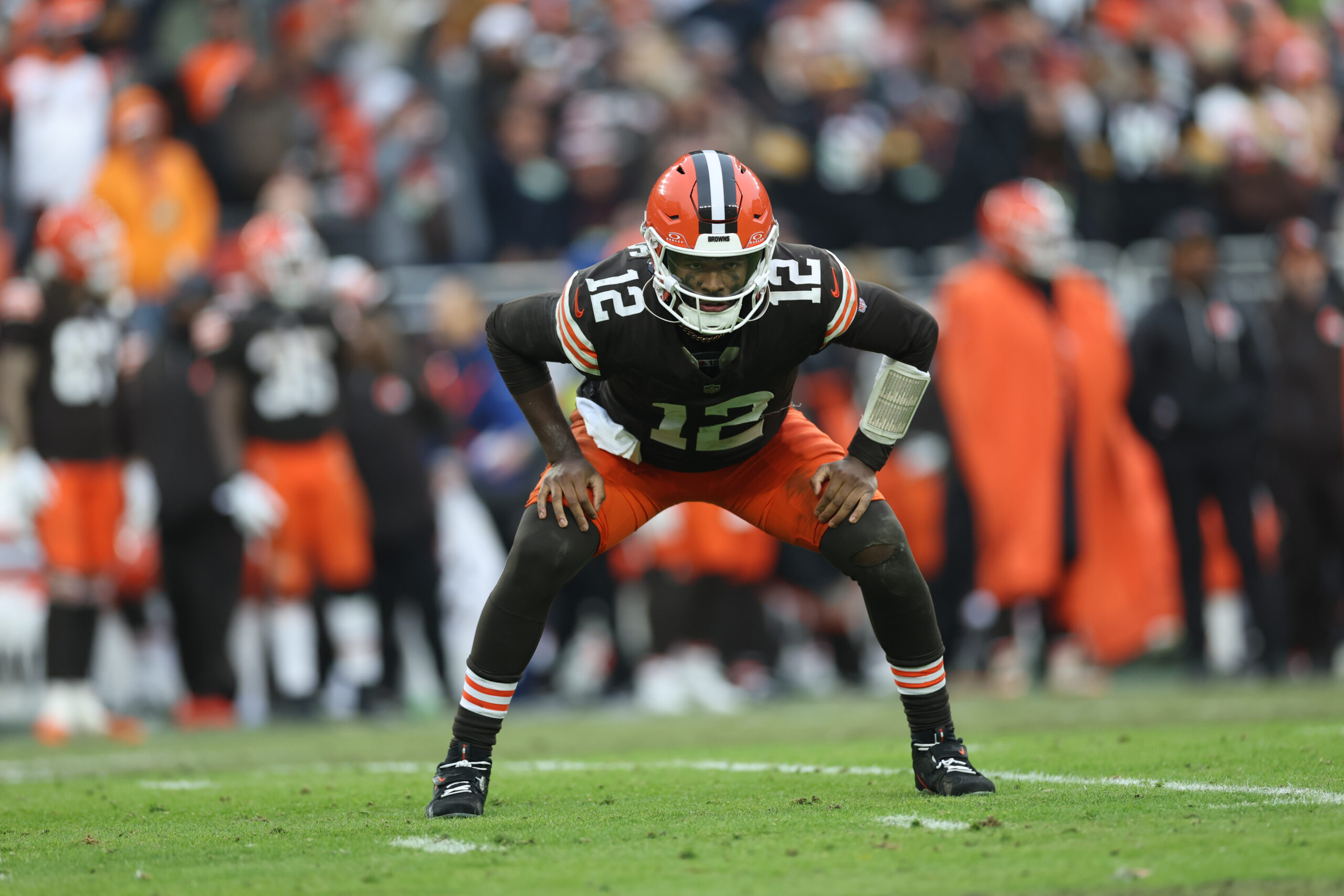
Dec 28, 2025; Cleveland, Ohio, USA; Cleveland Browns quarterback Shedeur Sanders (12) stretches during a time out in the fourth quarter against the Pittsburgh Steelers at Huntington Bank Field. Mandatory Credit: Scott Galvin-Imagn Images
Quarterback uncertainty did persist in Cleveland into the 2025 draft. The Flacco deal carried zero long-term risk, meaning the team could pivot without cap consequences. The Browns chose to add more competition through the draft, trading up to select Sanders at No. 144 overall. Meanwhile, prospects and agents had already been steering narratives toward teams with clearer depth charts, places where a young quarterback could see daylight from day one — but Sanders’ landing spot proved that patience and infrastructure can coexist with a rookie opportunity, even if that opportunity isn’t immediate.
Learning To Read The Money
The next time a front office holds a press conference about its quarterback plans, ignore the words. Open the cap sheet. Cleveland reached a three-year, $52.5 million extension with Jerry Jeudy, worth up to $58 million with incentives and putting the total remaining receiver commitment into the mid‑$60 million range once you factor in his existing year, plus a base of $4 million — up to $13 million — to a Super Bowl MVP quarterback across back-to-back offseasons. That ratio told Sanders and the rest of the league more than any press conference ever could. Most fans debated arm strength and draft boards all spring. The people who followed how Cleveland handled Jeudy, Flacco, and ultimately Sanders understood something different: the real draft board is a spreadsheet, and Sanders ended up learning to read it from the inside.
Sources:
“Browns sign WR Jerry Jeudy to 3-year, $58M extension.” ESPN, 18 Mar 2024.
“Broncos officially trade WR Jerry Jeudy to Browns for late-round picks.” Yahoo Sports, 13 Mar 2024.
“QB Joe Flacco, Browns reuniting on one-year deal, agent says.” ESPN, 11 Apr 2025.
“2025 NFL Draft: Browns trade up to select Colorado QB Shedeur Sanders with No. 144 overall pick.” NFL.com, 25 Apr 2025.