
The 2026 NFL Draft pulled 805,000 fans to Pittsburgh across three days, shattering Detroit’s 2024 record of 775,000. Fanatics, in its first year as the league’s retail partner, broke every merchandise sales benchmark set in Green Bay the year before. Topps Chrome trading cards flew off shelves. And Round 1 viewership? It declined. 13.2 million viewers tuned in, down 3% from 2025’s 13.6 million. Record crowds, record spending, fewer people watching from home. That split tells a bigger story than any single pick.
The Pick That Set the Tone
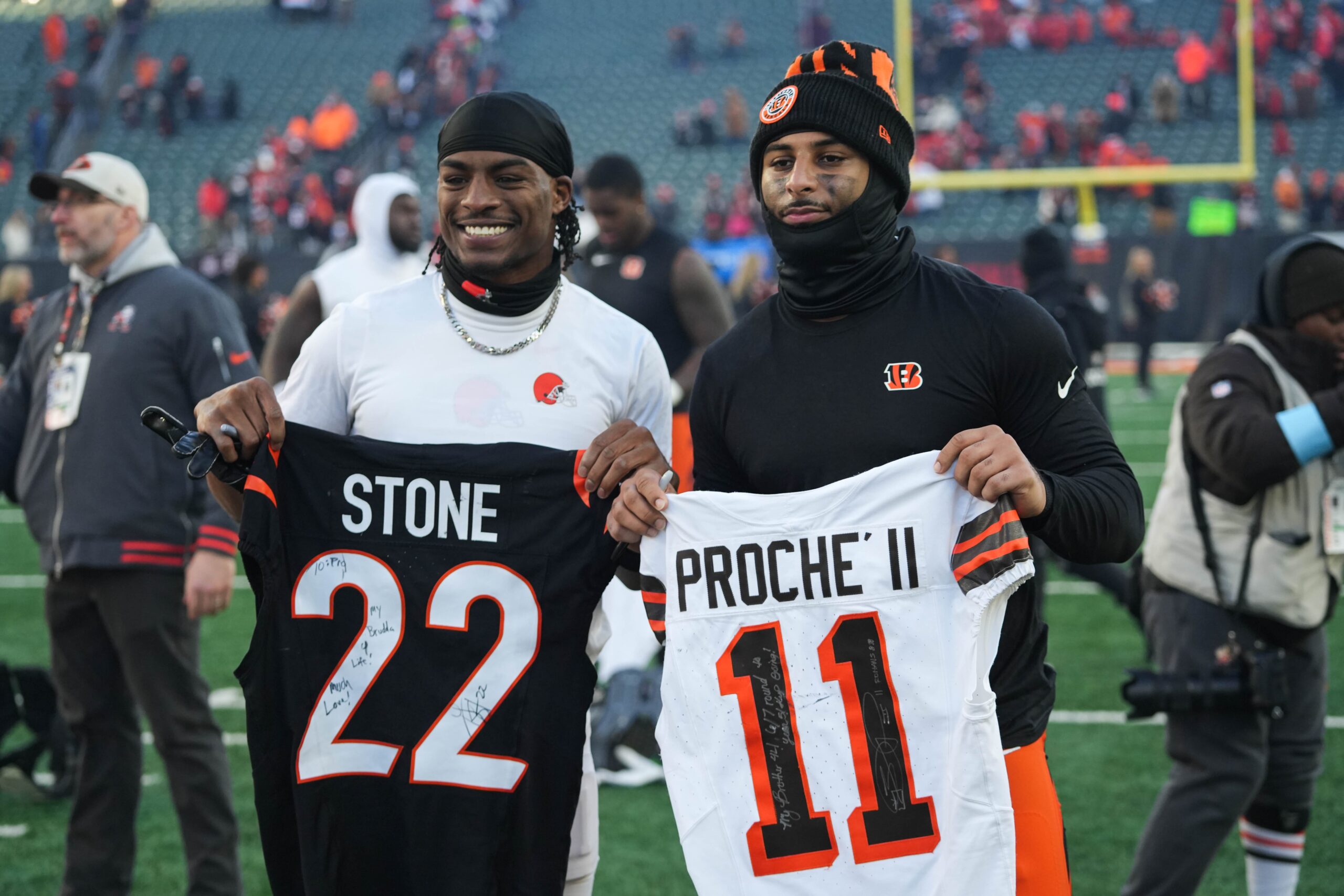
The Bengals and Browns meet up after the game to talk, swap jerseys, pray and celebrate at Paycor Stadium on Sunday December 22, 2024. The Bengals won the game with a final score of 24-6.
The No. 1 overall selection anchored the weekend’s merchandise spike, as it does every year. First-overall jerseys historically drive the biggest single-SKU sales burst of draft weekend, a pattern the NFL Shop has tracked since the Fanatics partnership took effect in 2025. The pick also sets search volume for the broadcast window. Even with a marquee name at the top of the board, Round 1 viewership still slipped, which tells you the decline is not about star power. It is about access.
Why the Fix Already Failed
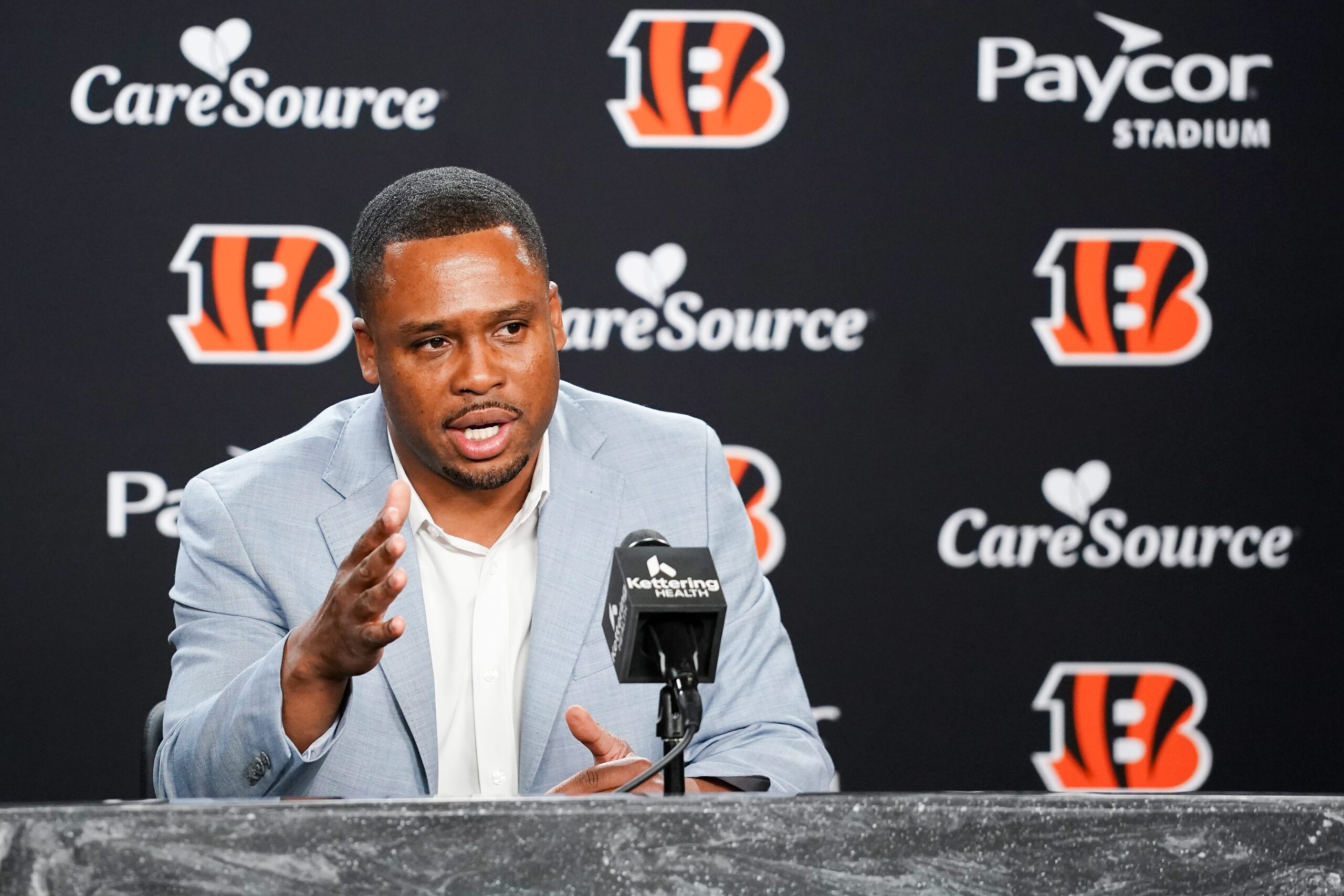
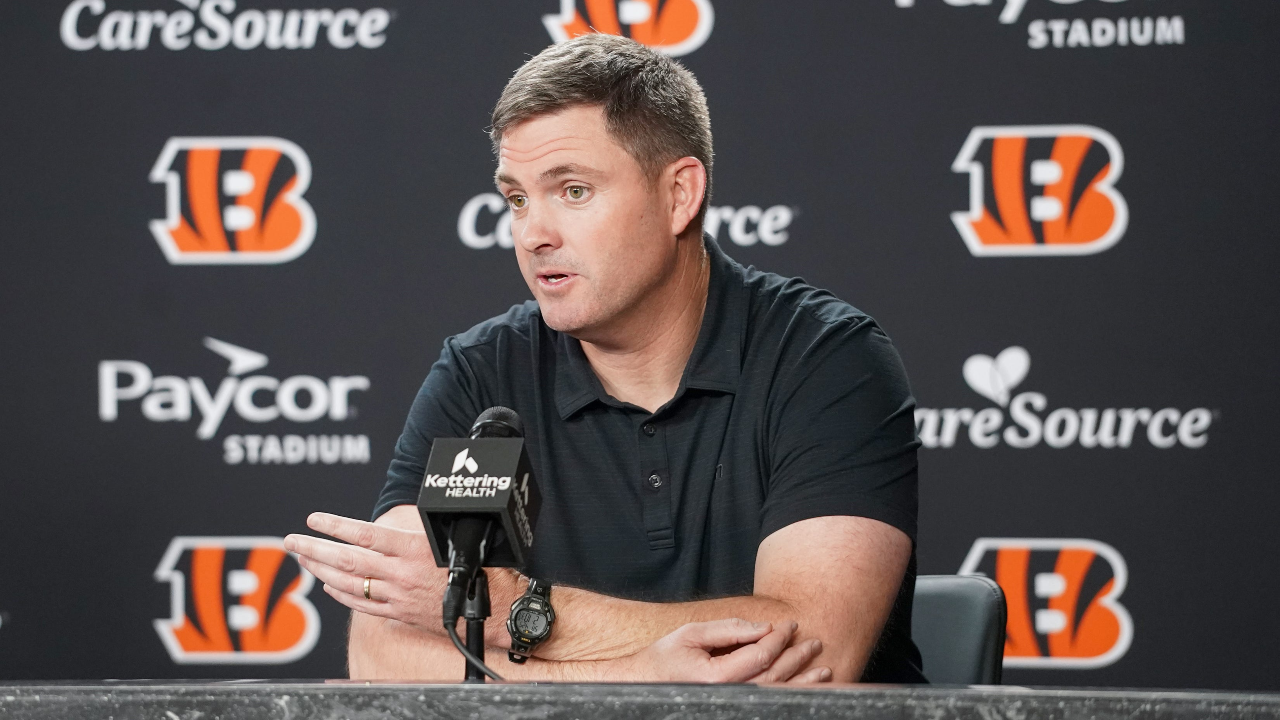
Cincinnati Bengals Assistant General Manager Trey Brown speaks with media at a press conference during the 2026 NFL Draft, Friday, April 24, 2026, at Paycor Stadium in downtown Cincinnati.
The NFL saw this coming. For the first time since 2008, the league shortened the first-round pick clock from 10 minutes to 8, specifically to tighten pacing for television. Faster picks, less dead air, more momentum. The format was, by every internal measure, optimized for the home viewer. Viewership dropped anyway. That failure matters because it eliminates the easiest explanation. The problem with the draft broadcast is not tempo, production quality, or content. The problem is structural, and it starts with 77.2 million American households that no longer subscribe to cable.
Eleven Apps, One Event
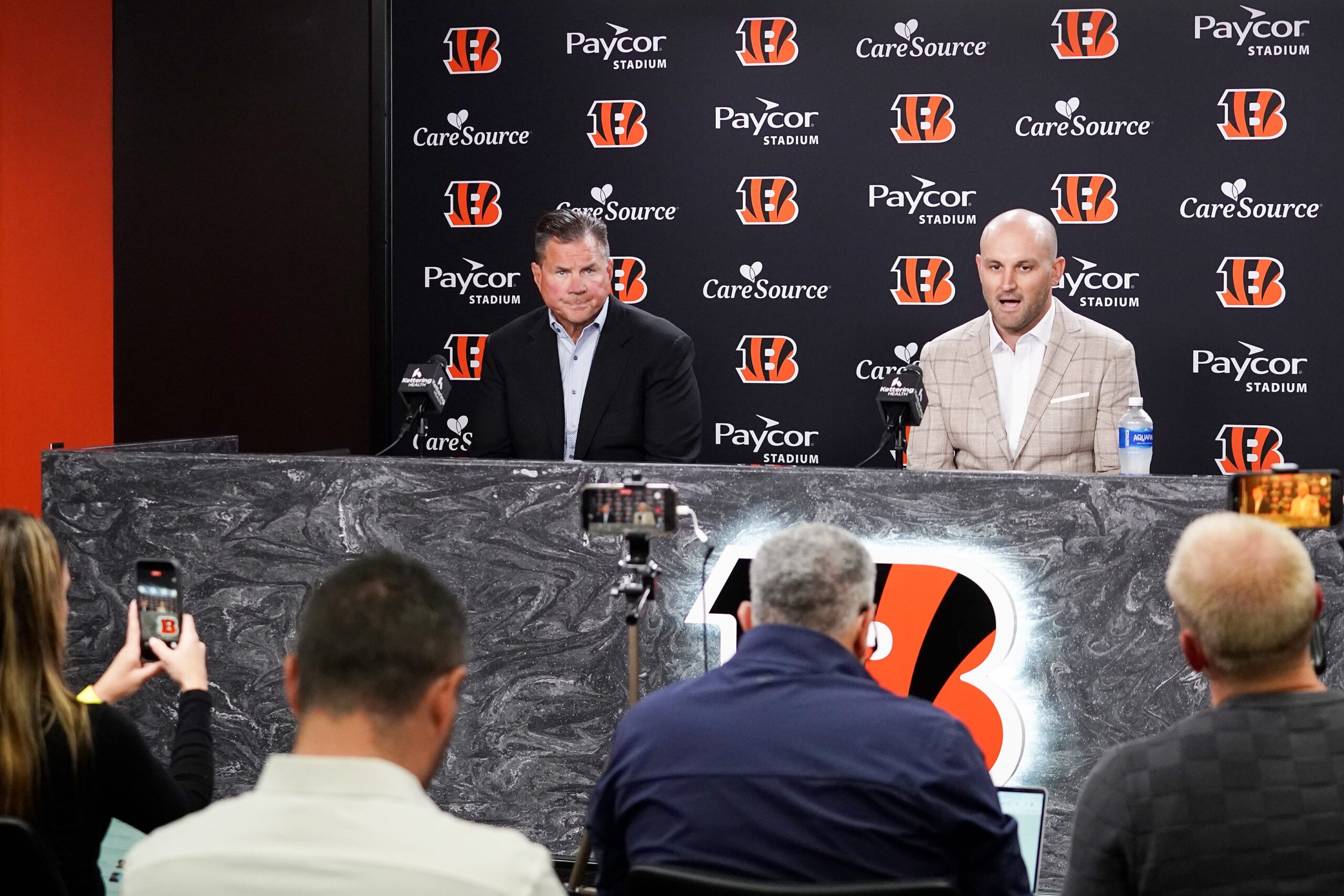
Cincinnati Bengals Defensive Coodinator Al Golden, left, and Assistant General Manager Mike Potts, right, speak with media during the 2026 NFL Draft, Friday, April 24, 2026, at Paycor Stadium in downtown Cincinnati.
Round 1 aired across 11 platforms: ESPN, ABC, NFL Network, ESPN Deportes, Disney+, Hulu, the ESPN App, NFL+, YouTube, TikTok, and X. Eleven services for one event. Streaming now accounts for 47.5% of all U.S. television viewing as of December 2025, nearly double cable’s 24.1% share. The casual fan who once flipped to ABC now needs to figure out which app, which subscription, which login. That friction kills impulse viewing. The 3% decline represents the fans who shrugged and checked scores on their phone instead.
The Subscription Math for One Weekend
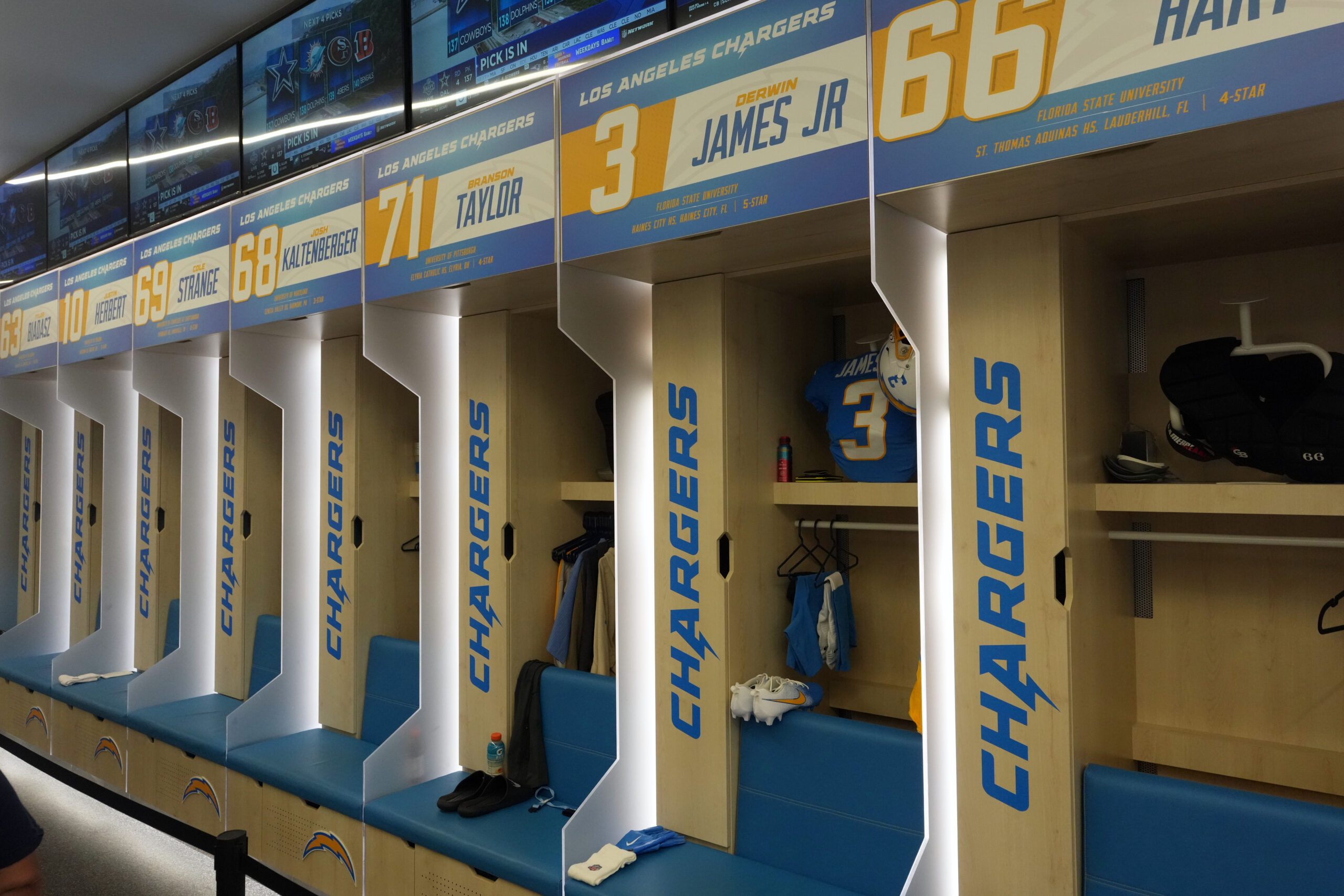
Apr 25, 2026; El Segundo, CA, USA; The lockers of Los Angeles Chargers quarterback Justin Herbert (10), guard Cole Strange (69), center Josh Kaltenberger (68), guard Branson Taylor (71) and safety Derwin James. Jr. (3) at The Bolt. Mandatory Credit: Kirby Lee-Imagn Images
To watch every official Round 1 feed in 2026, a cord-cutter needs access to ABC (broadcast or a live-TV skinny bundle), ESPN and ESPN Deportes (cable or the ESPN App via a pay-TV login), NFL Network (NFL+ or a pay-TV login), plus Disney+ and Hulu for simulcasts. The free tiers on YouTube, TikTok, and X covered highlights but not full linear feeds. Stack the paid layers and a viewer without traditional cable is looking at three separate subscriptions to get what one ABC channel used to deliver. That is not a tempo problem. That is a billing problem.
The Advertisers Do the Math
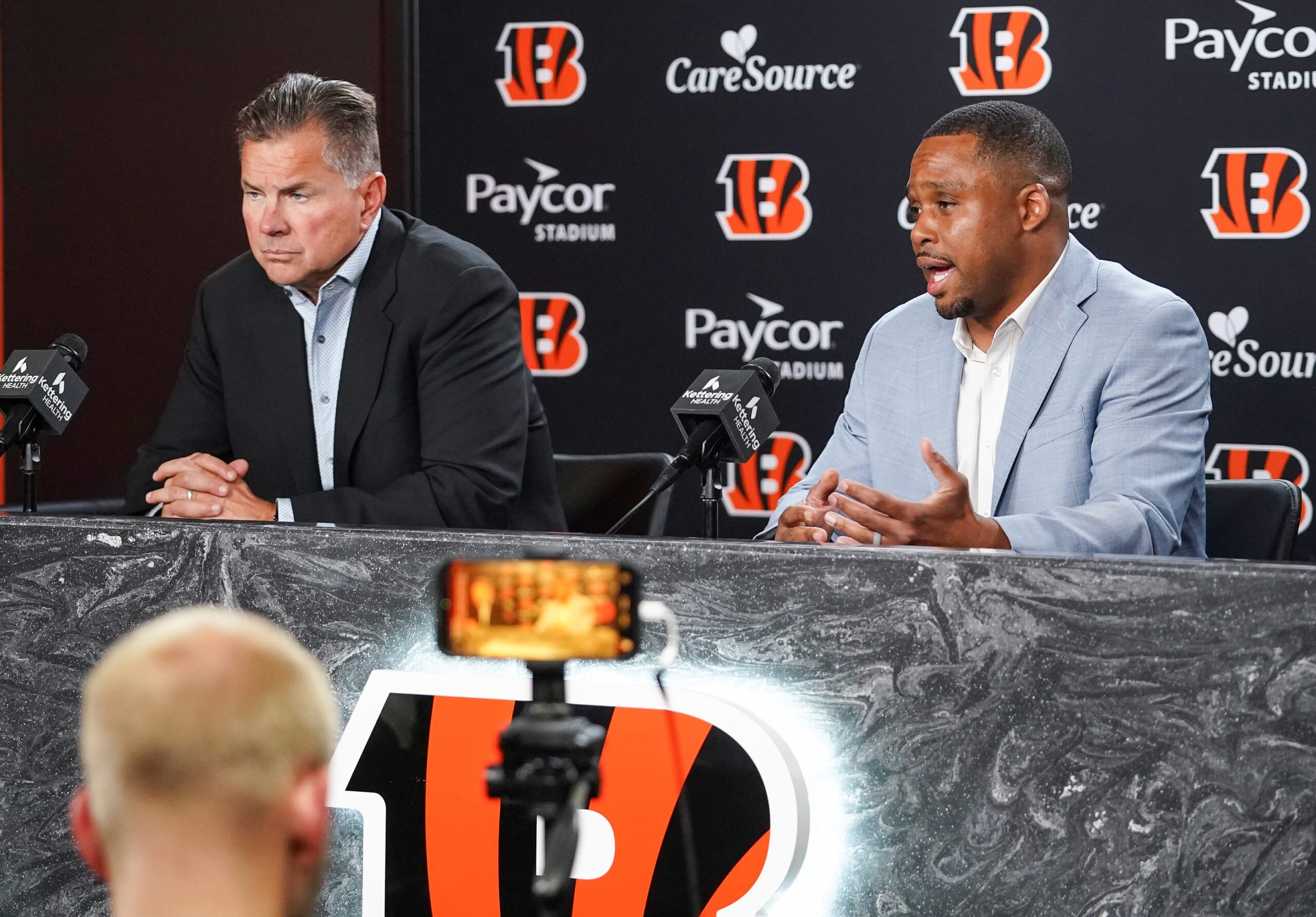
Cincinnati Bengals Defensive Coordinator Al Golden, left, and Assistant General Manager Trey Brown speak to media during the 2026 NFL Draft, Friday, April 24, 2026, at Paycor Stadium in downtown Cincinnati.
Regular-season NFL games averaged 18.7 million viewers in 2025-2026, the second-best mark on record. Thursday Night Football pulled 17.76 million for a single September game. The draft’s 13.2 million falls over 5 million short of a regular-season average and 2.5 million below a random Thursday night game. Advertisers paying premium sports rates notice that gap. If the draft trends downward while the regular season trends up, ad dollars follow the eyeballs. The NFL’s offseason showcase is becoming a mid-tier broadcast event by the league’s own standards.
Where the Money Actually Went
Apr 25, 2026; El Segundo, CA, USA; The Los Angeles Chargers logo on a video board in the lobby of The Bolt. Mandatory Credit: Kirby Lee-Imagn Images
Here is the part that should unsettle every broadcast executive. Pittsburgh drew 320,000 fans on Thursday alone. Fanatics built a retail tent 60% larger than the prior year and still set sales records. Fans chose to spend money in person rather than watch from home for free. The draft is becoming a concert tour: venue tickets sell out, but radio play drops because listeners scattered across 11 different apps. Fan demand did not decline. It migrated. And it migrated away from the screen.
Pittsburgh’s Economic Haul
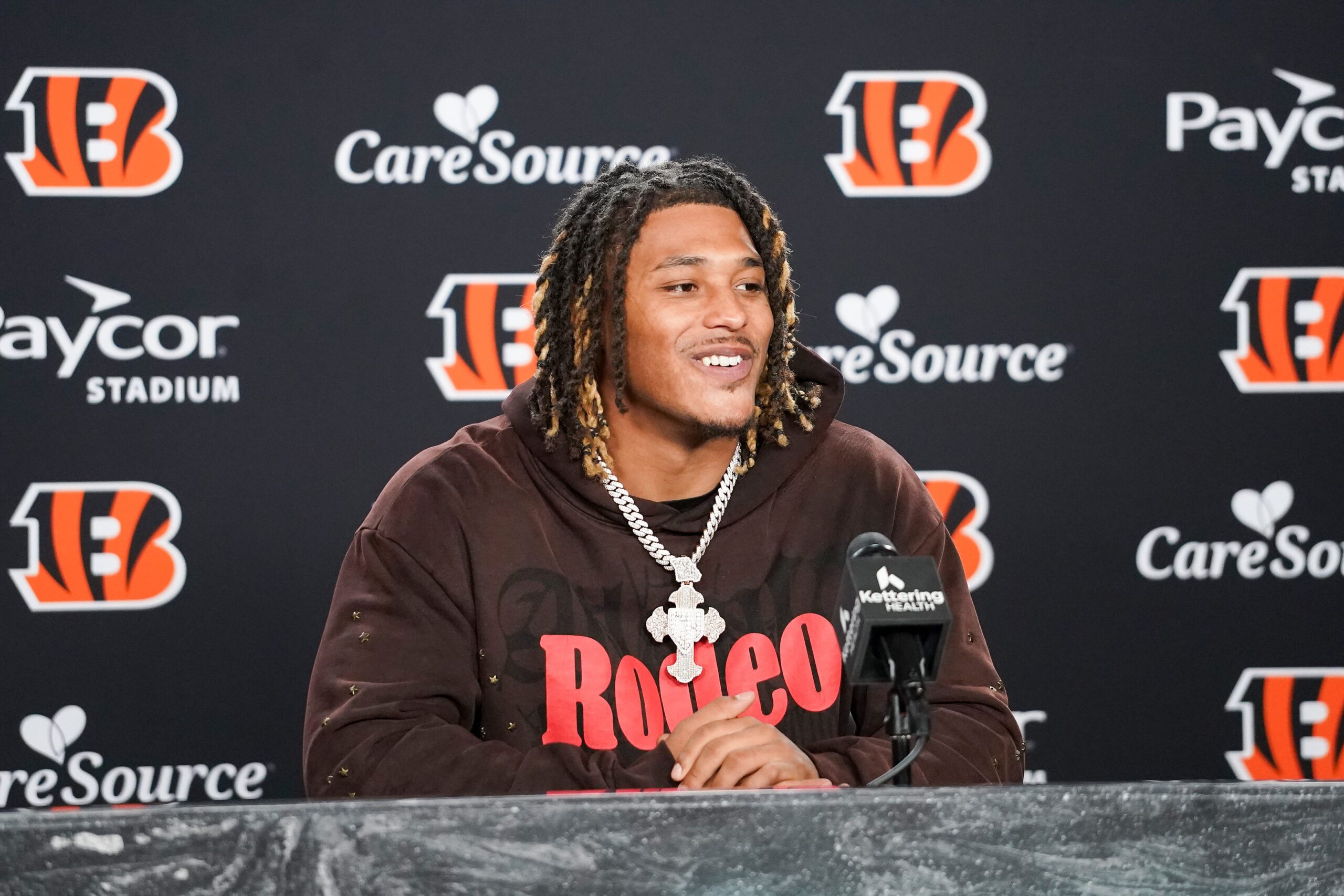
Cincinnati Bengals second round pick Cashius Howell speaks with media during the 2026 NFL Draft, Saturday, April 25, 2026, at Paycor Stadium in downtown Cincinnati.
For context on the scale, the 2017 Philadelphia draft drew roughly 250,000 fans and set the attendance bar at the time. Pittsburgh more than tripled that figure across three days. Host-city economics follow attendance more tightly than television ratings, which is why cities keep bidding. Hotel occupancy, restaurant receipts, and rideshare volume all peak during draft weekend, and Pittsburgh’s three-day footprint along the Point gave visitors a walkable spend zone. The venue model rewards host cities even as the broadcast model struggles.
Fanatics’ First NFL Draft
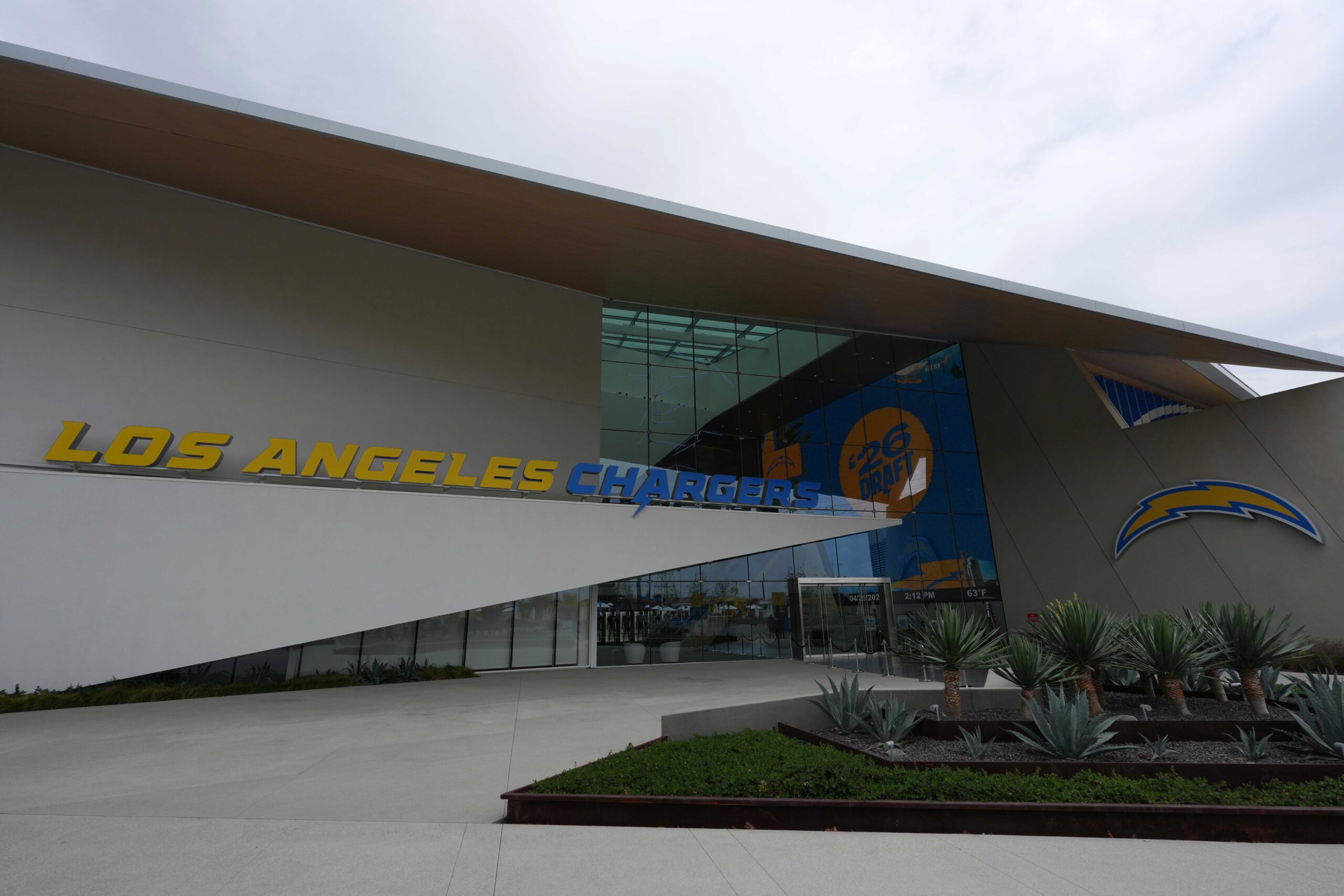
Apr 25, 2026; El Segundo, CA, USA; A general overall view of the Los Angeles Chargers headquarters and training facility at The Bolt. Mandatory Credit: Kirby Lee-Imagn Images
Fanatics took over NFL retail in 2025 from Legends, the prior partner that had itself lifted Detroit 2024 merch sales 45% year-over-year. That is the baseline the 2026 numbers just cleared. Fanatics also owns Topps, which explains why Topps Chrome trading card inventory sold through at the venue. Consolidating jerseys, caps, and cards under one roof is a structural merchandising advantage that the old partnership did not have. The record was not an accident. It was the design.
How Other Sports Drafts Compare
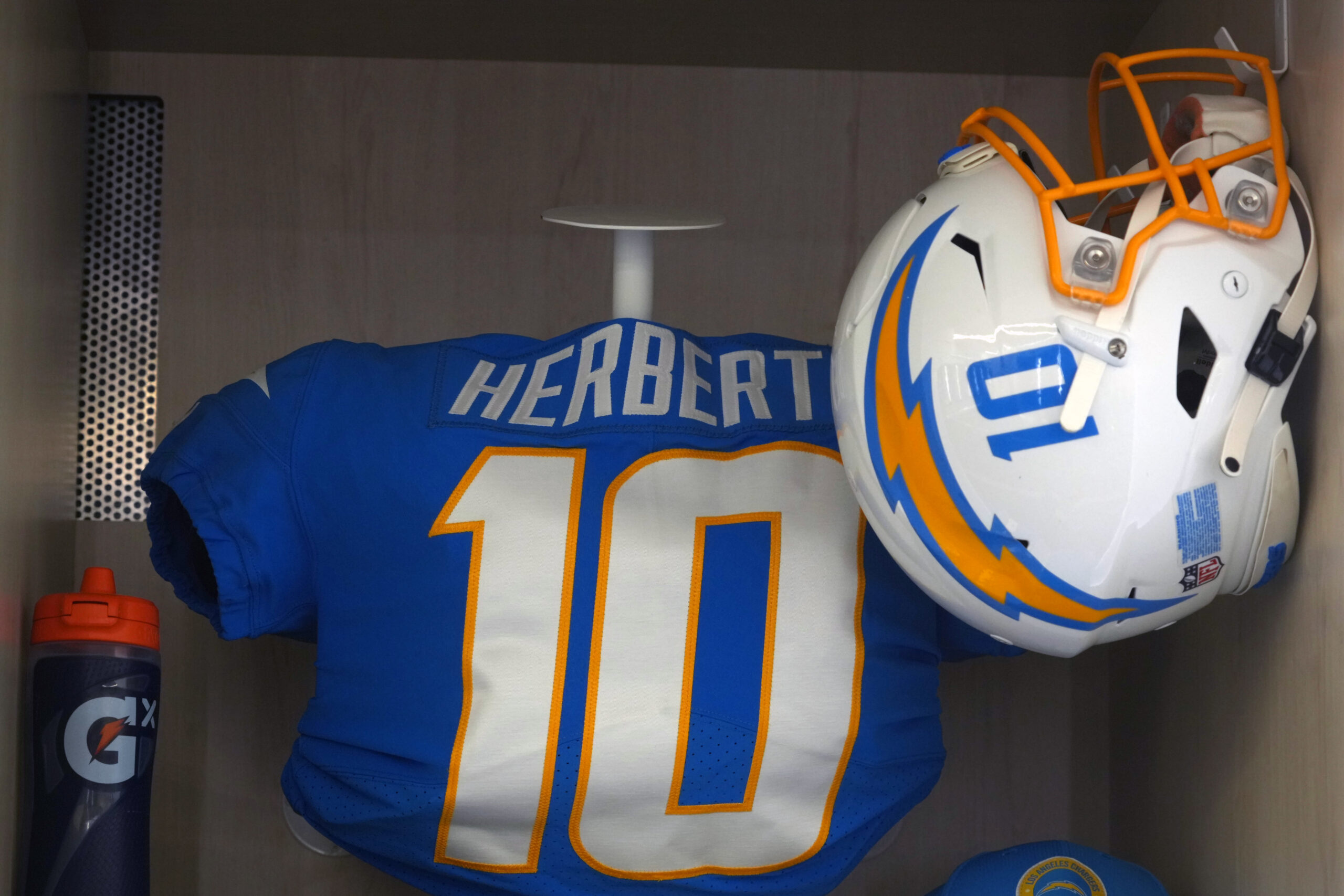
Apr 25, 2026; El Segundo, CA, USA; The jersey and helmet of Los Angeles Chargers quarterback Justin Herbert in the locker room at The Bolt. Mandatory Credit: Kirby Lee-Imagn Images
The NFL is the biggest draft by every measure, but the pattern is league-agnostic. The 2024 WNBA Draft drew a record 2.45 million viewers on ESPN behind Caitlin Clark, and her Indiana Fever jersey became the top-selling draft-night pick in Fanatics history across any sport. The 2025 NBA Draft averaged just under 2.6 million viewers across ESPN and ABC over two nights, down 5% year-over-year and among the lowest NBA Draft audiences on record. The 2024 MLB Draft pulled 863,000 viewers across MLB Network and ESPN for its first night. Venue and merchandise demand can spike anywhere a star enters the league, but unified linear audiences are shrinking across every sport’s draft. The NFL is simply the loudest example of a trend that reaches the WNBA, NBA, and MLB in equal measure.
The Machine Behind the Split
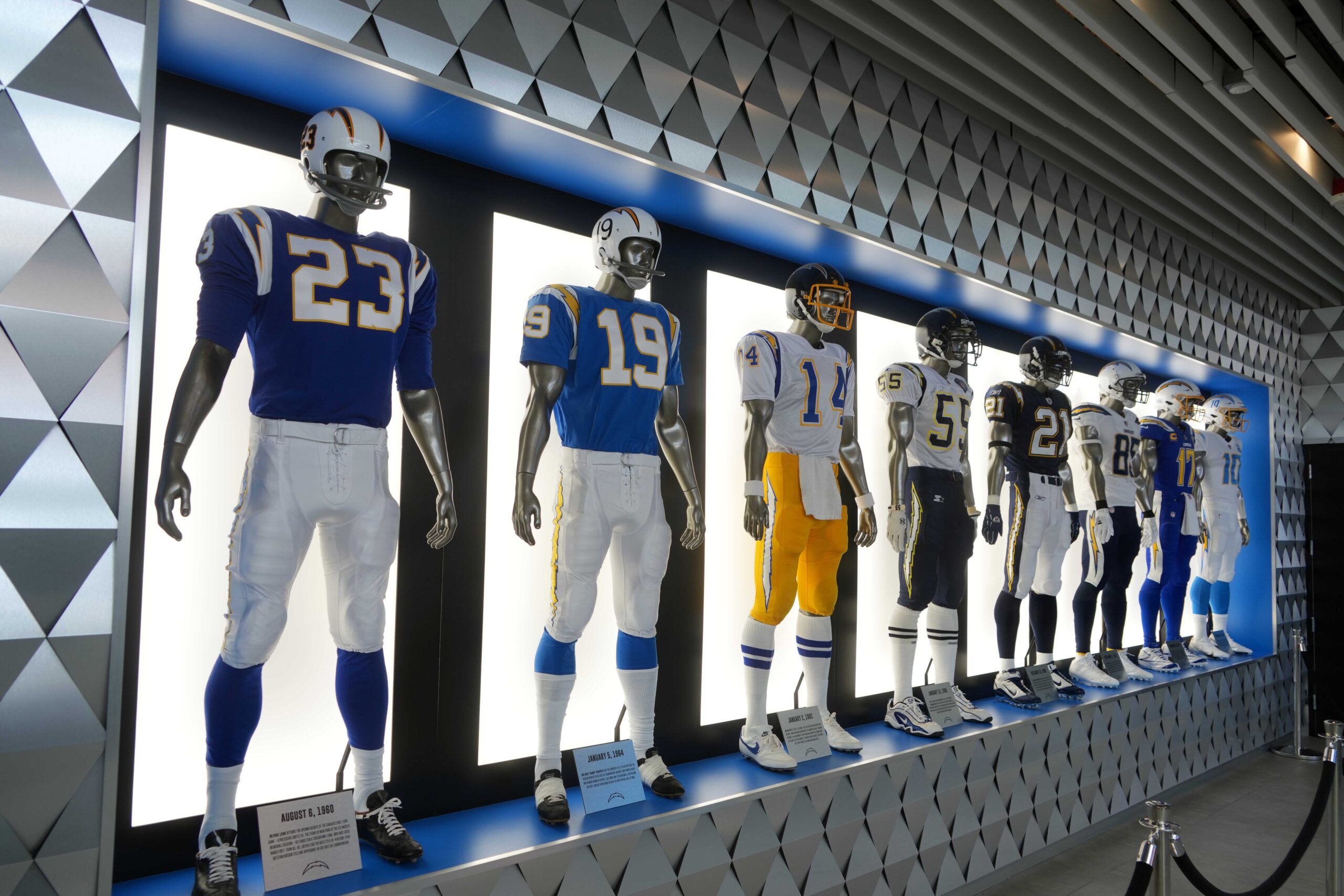
Apr 25, 2026; El Segundo, CA, USA; The uniforms and helmets of San Diego and Los Angeles Chargers players, Paul Lowe (23), Lance Alworth (19), Dan Fouts (14), Junior Seau (55), LaDainian Tomlinson (21), Antonio Gates (85), Philip Rivers (17) and Justin Herbert (10) at The Bolt. Mandatory Credit: Kirby Lee-Imagn Images
Cable subscribers dropped 35% between 2010 and 2025, from 105 million households to 68.7 million. Cord-cutting roughly doubled from 37.3 million households in 2018 to 77.2 million. That is the engine driving every ripple. Fewer cable homes means fewer casual viewers. More platforms means more friction. More friction means attendance and merchandise become the path of least resistance. One structural shift. Eleven platforms fragmenting the audience. Record crowds at the venue. Declining numbers on the screen. Same mechanism, same result, accelerating every year.
The Voice From Inside the Numbers
A Peacock sideline reporter holds a microphone with the NBC Peacock logo during Michigan State’s football game against Washington on Saturday, Sept. 16, 2023 at Spartan Stadium in East Lansing, Michigan.
NBC Sports captured the split plainly, noting that attendance at the draft is on the rise while viewership from home is on the decline. That assessment lands harder when you see the full picture. The Pat McAfee Show Draft Spectacular generated 54 million minutes consumed and 2.2 million views across YouTube, TikTok, X, and ESPN’s app on Day 1 alone. Digital engagement is exploding in fragments. None of those fragments add up to a unified broadcast audience that advertisers can price with confidence.
Washington Is Already Watching
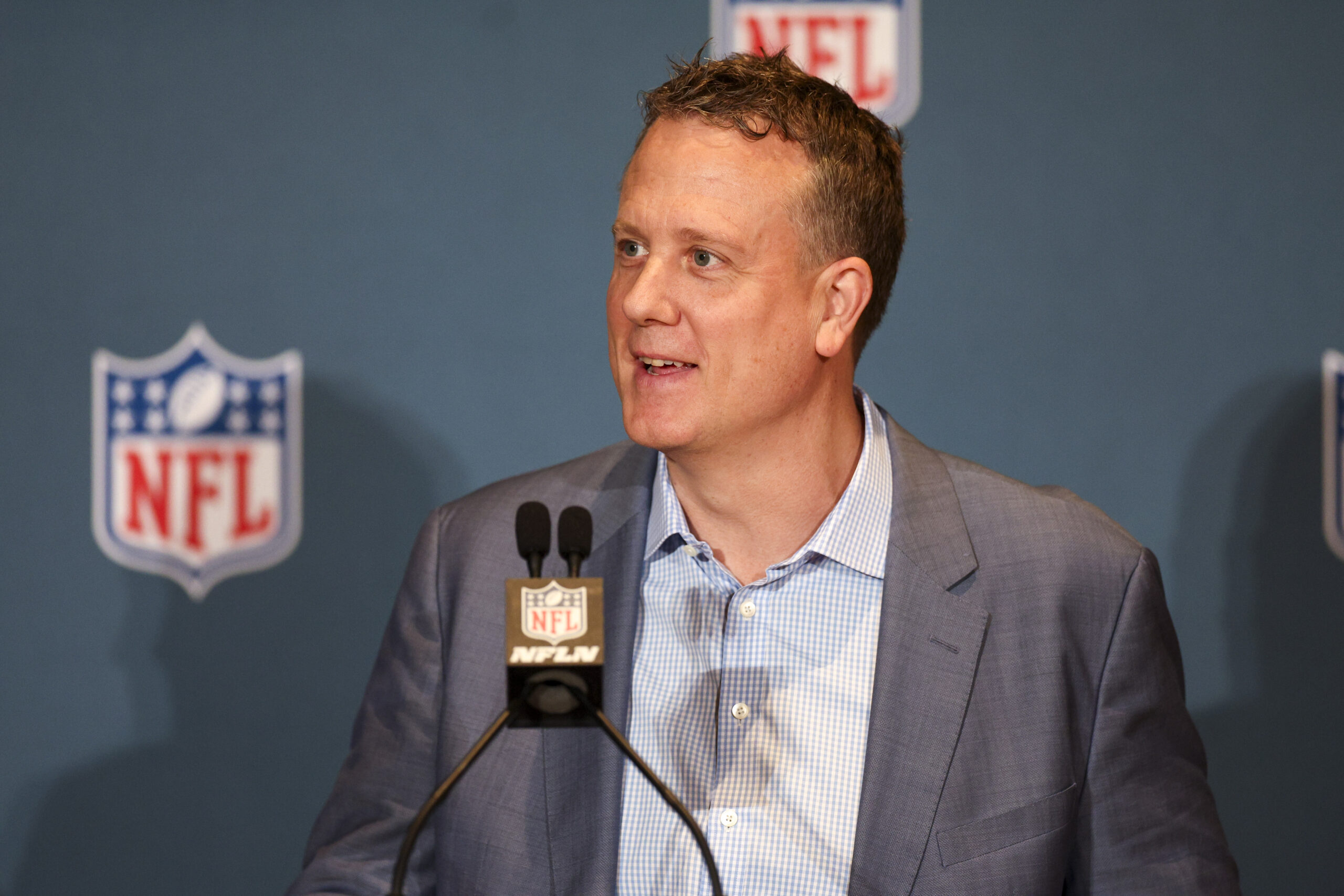
Mar 26, 2024; Orlando, FL, USA; NFL executive vice president of media distribution Hans Schroeder speaks to media during the annual league meetings at the JW Marriott. Mandatory Credit: Nathan Ray Seebeck-Imagn Images
The Federal Communications Commission met with NFL EVP Hans Schroeder in April 2026 about the league’s fragmented media distribution strategy, with the NFL defending its approach in a presentation to FCC officials. Separately, the Department of Justice’s Antitrust Division opened a formal inquiry into whether the NFL’s media rights model forces consumers to pay excessive subscription fees. Two federal agencies, both scrutinizing the same structural problem the viewership numbers just exposed. The NFL built a distribution model that scatters one event across 11 services. Regulators now question whether that model harms consumer access. The 2020 draft peak of 15.5 million viewers came when everyone was locked at home with cable. That world is gone.
Who Wins and Who Pays
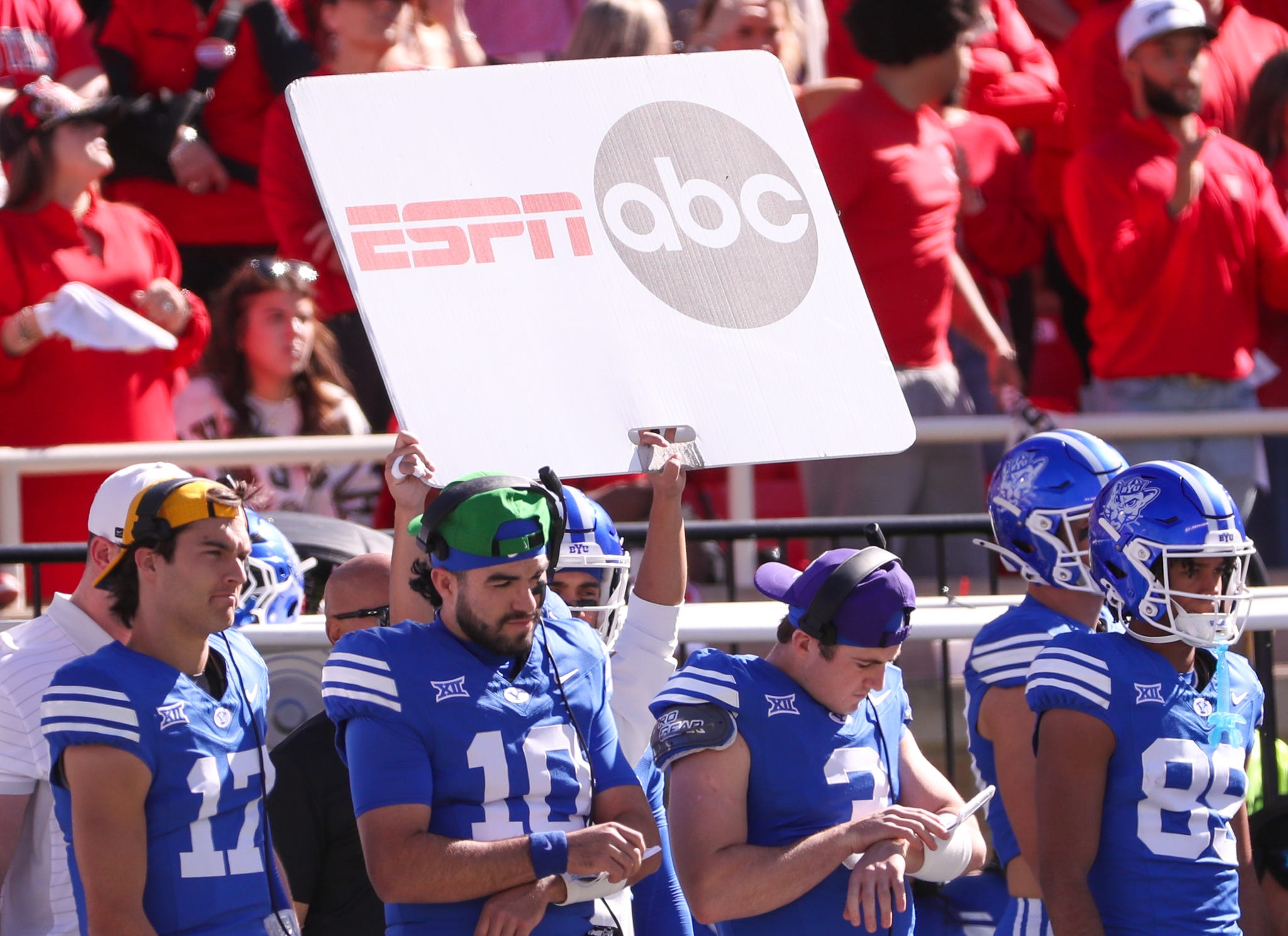
A sign depicting logos of ESPN and ABC is seen on the BYU sideline during a Big 12 Conference football game, Saturday, Nov. 8, 2025, at Jones AT&T Stadium.
Fanatics wins. Venue operators win. Host cities collecting hotel taxes and restaurant revenue win. ESPN and ABC, the linear broadcast partners, lose leverage if this 3% decline becomes a trend. Advertisers paying premium rates for a shrinking audience lose confidence. And the casual fan at home, the one who used to flip channels and land on the draft by accident, loses access entirely. The NFL touted 13.2 million as the third-most-watched Round 1 ever. They omitted that the trajectory points down from last year’s record, not up.
What Washington 2027 Has to Prove
Feb 24, 2026; Indianapolis, IN, USA; Washington Commanders coach Dan Quinn speaks at the NFL Scouting Combine at the Indiana Convention Center. Mandatory Credit: Kirby Lee-Imagn Images
The 2027 draft heads to Washington, D.C., with a stated attendance target of one million fans, a 24% jump from Pittsburgh. The Mall-adjacent footprint gives the league the physical space to hit that mark, and the host committee has already signaled it will build retail capacity to match. The stakes are clear. If Washington sets another attendance record while Round 1 viewership slips again, the venue-over-broadcast thesis hardens into policy. The NFL would be telling advertisers and networks that the offseason showcase is a live event first and a television product second.
The Cascade Is Just Starting
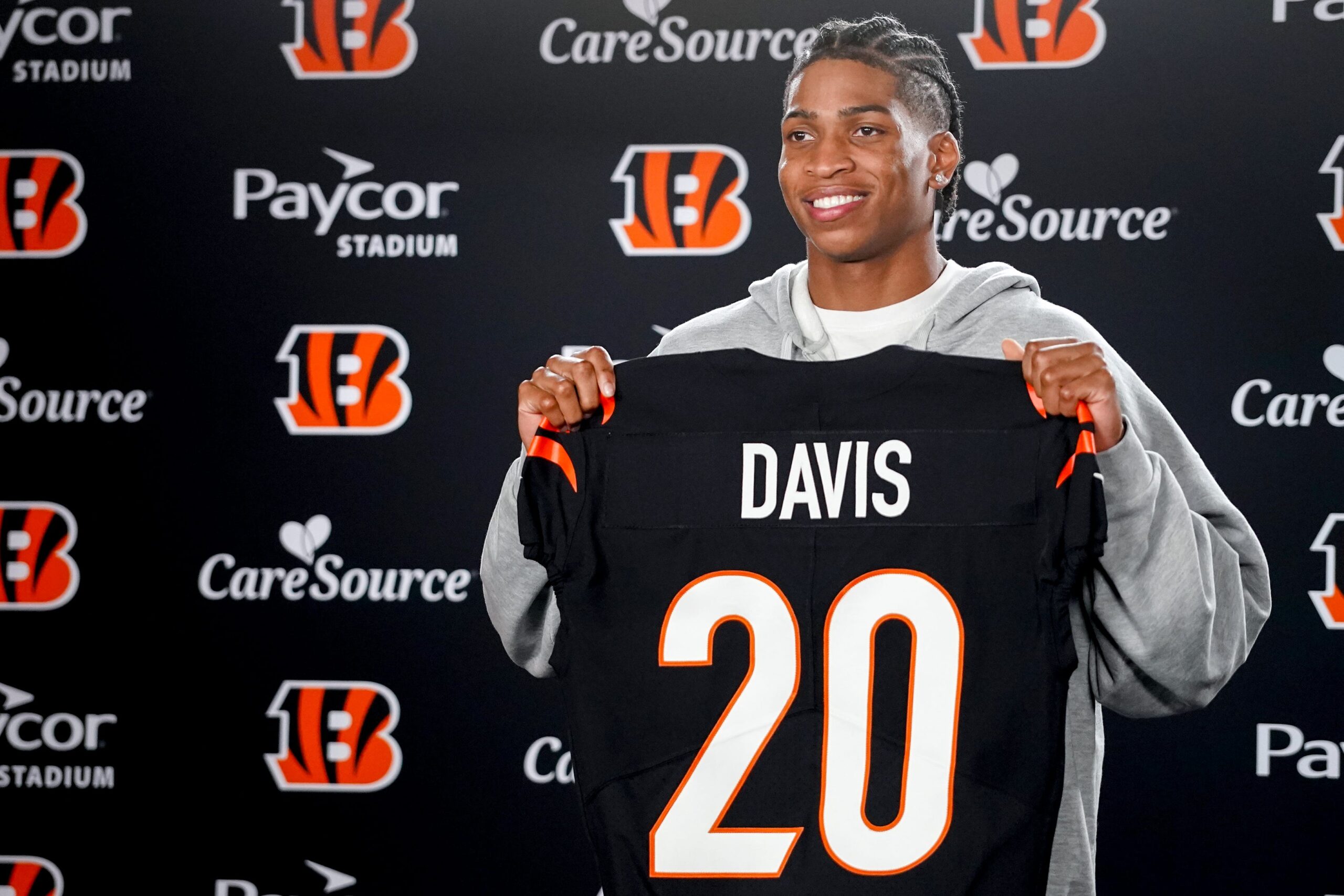
Cincinnati Bengals third round pick Tacario Davis holds his jersey at a press conference during the 2026 NFL Draft, Saturday, April 25, 2026, at Paycor Stadium in downtown Cincinnati.
The league is betting on venues and retail because the broadcast math no longer works the way it used to. Every offseason sports event, from the WNBA Draft to the NBA Draft, faces the same cord-cutting headwind. The unified television audience that built American sports into a $100-billion industry is fragmenting in real time. The NFL saw it first because the NFL is biggest. Everyone else is next.
Are you still watching the draft on TV, or did you cut the cord years ago? Tell us in the comments how you followed Round 1 this year.
Sources:
NFL, “First round of 2026 NFL Draft delivers 13.2 million viewers across ESPN platforms, generates third-most watched Day 1 ever,” NFL.com, April 27, 2026.
ESPN, “NFL says draft in Pittsburgh set attendance record,” ESPN.com, April 25, 2026.
Nielsen, “Streaming Shatters Multiple Records in December 2025 with 47.5 Percent of TV Viewing,” Nielsen News Center, January 19, 2026.
CNBC, “DOJ investigating NFL over media rights and antitrust concerns,” CNBC.com, April 9, 2026.
Awful Announcing, “NFL meets with FCC to address regulatory scrutiny,” AwfulAnnouncing.com, April 21, 2026.
Sports Business Journal, “Record crowd at NFL Draft in Detroit helps boost merch sales 45 percent,” SportsBusinessJournal.com, April 30, 2024.