

Draft night, and the New York Jets kept doing something strange. Pick No. 2: not a quarterback. Pick No. 16: not a quarterback. Pick No. 30: still not a quarterback. Three first-round selections, zero spent on the most important position in professional sports. A franchise that has cycled through quarterbacks like rental cars just watched the entire first round pass without addressing the one hole everybody assumed they’d fill. Then, deep in the fourth round, they traded up 18 spots for a Clemson signal-caller nobody expected.
The Bridge Nobody Believes In
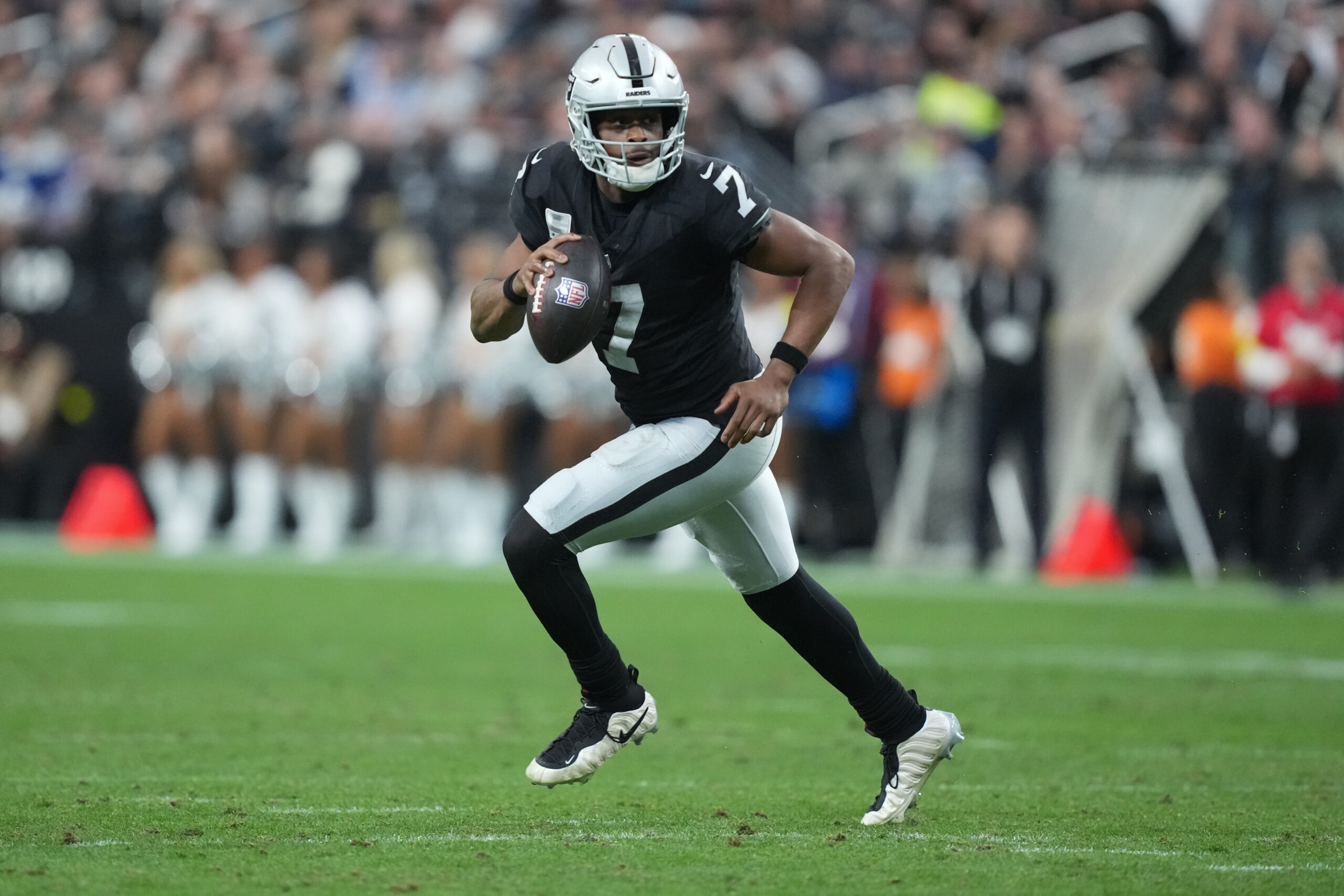
Dec 28, 2025; Paradise, Nevada, USA; Las Vegas Raiders quarterback Geno Smith (7) looks to throw in the third quarter against the New York Giants at Allegiant Stadium. Mandatory Credit: Kirby Lee-Imagn Images
Geno Smith, 35 years old, coming off a down year with the Las Vegas Raiders, is set to start for the Jets on a one-year arrangement. One year. Not two, not three. Aaron Glenn stood at the podium and publicly stated he would not cap how many years Smith can play. That sounds like commitment. But a one-year window is the organizational equivalent of a month-to-month lease. The Jets brought in an edge rusher, a tight end, and a wide receiver with their premium picks. They built a house around an empty room.
Three Years of Saying No
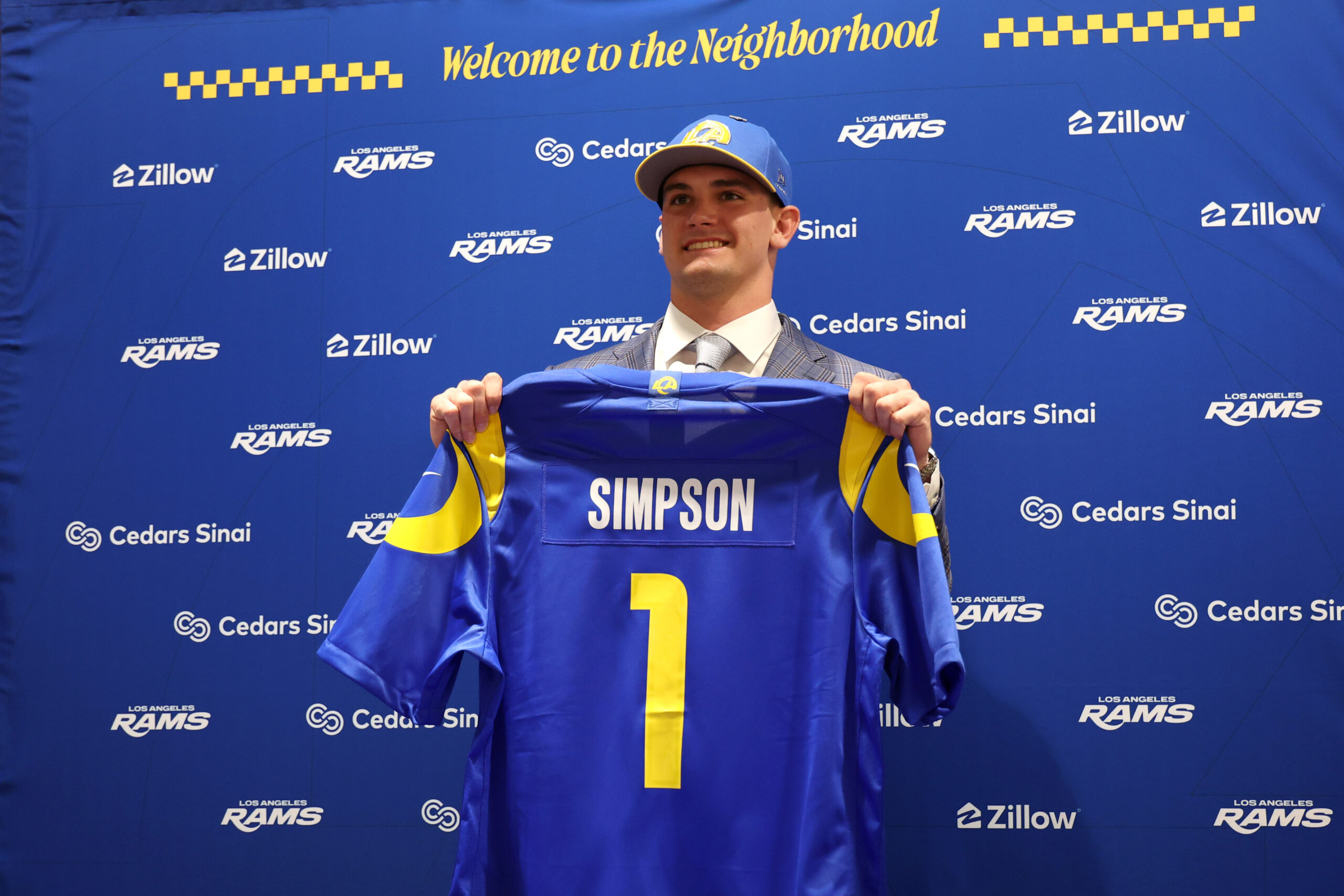
Apr 24, 2026; Inglewood, CA, USA; Los Angeles Rams first-round draft pick Ty Simpson poses with his jersey during a press conference at Code Next at Hollywood Park. Mandatory Credit: Kiyoshi Mio-Imagn Images
The Jets avoided selecting a quarterback in their top-50 picks across the 2024, 2025, and 2026 drafts. Three consecutive years. The Rams grabbed Ty Simpson at No. 13 in a weak 2026 class, earlier than analysts projected, and the Jets sat at No. 16 and let him pass. Glenn said publicly the team does not reach for players. Sounds principled. But the pattern reveals something deeper: the Jets weren’t confused about quarterback. They had already decided 2026 wasn’t the year.
The Invisible Timeline
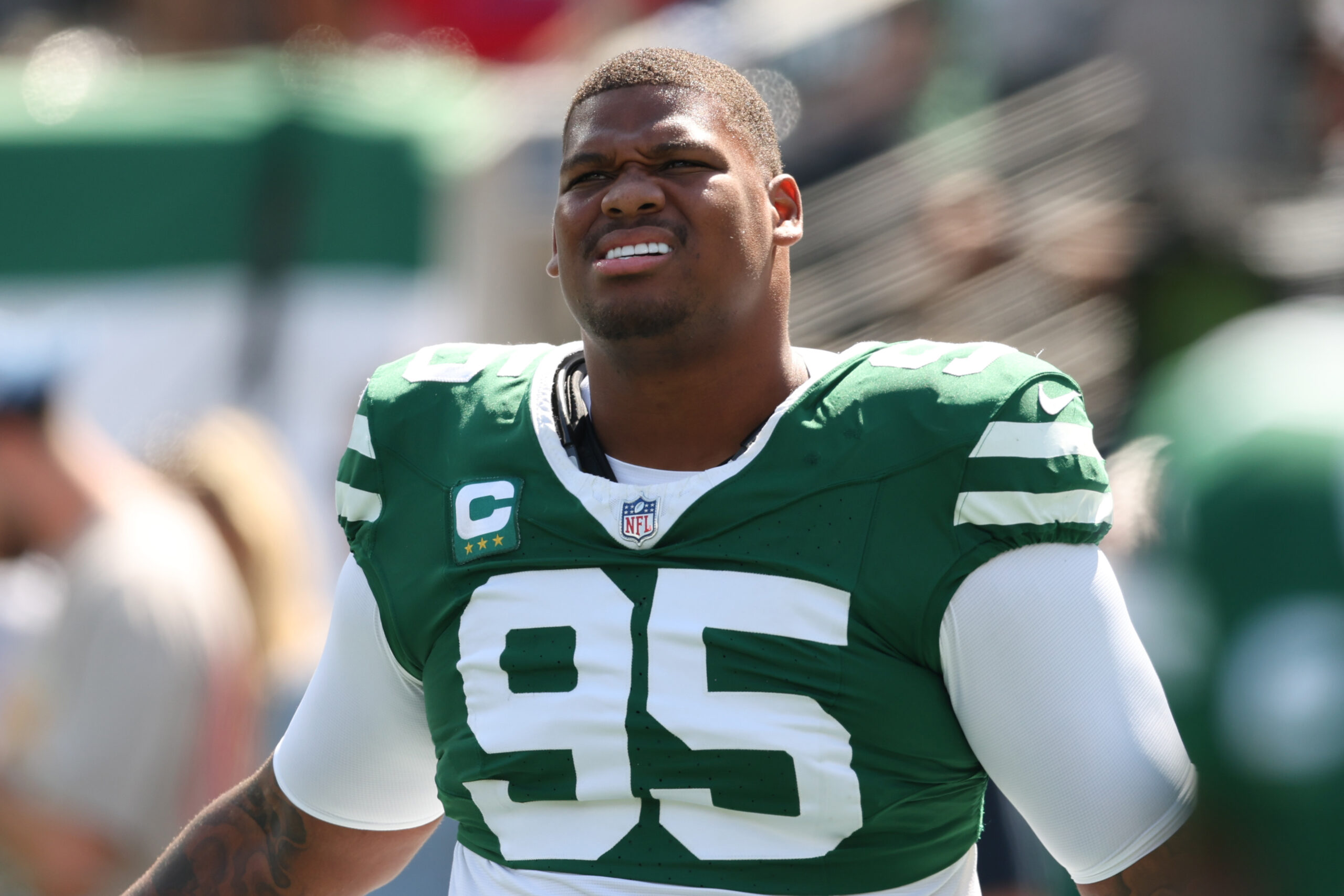
Sep 14, 2025; East Rutherford, New Jersey, USA; New York Jets defensive tackle Quinnen Williams (95) before the game against the Buffalo Bills at MetLife Stadium. Mandatory Credit: Vincent Carchietta-Imagn Images
Every major Jets move since November 2025 points to one date: the 2027 draft. Trading Sauce Gardner generated a future first-rounder. Trading Quinnen Williams generated another 2027 first plus a 2026 second. Trading Justin Fields to Kansas City cleared the quarterback room. Bringing in Geno bought exactly one year. Drafting Cade Klubnik at pick 110 added a cheap contingency. ESPN’s analysis pointed plainly toward 2027 as the target. Three first-round picks. $77 million in cap space. A once-a-decade quarterback class. Not chaos. Choreography.
Why 2027 Changes the Math
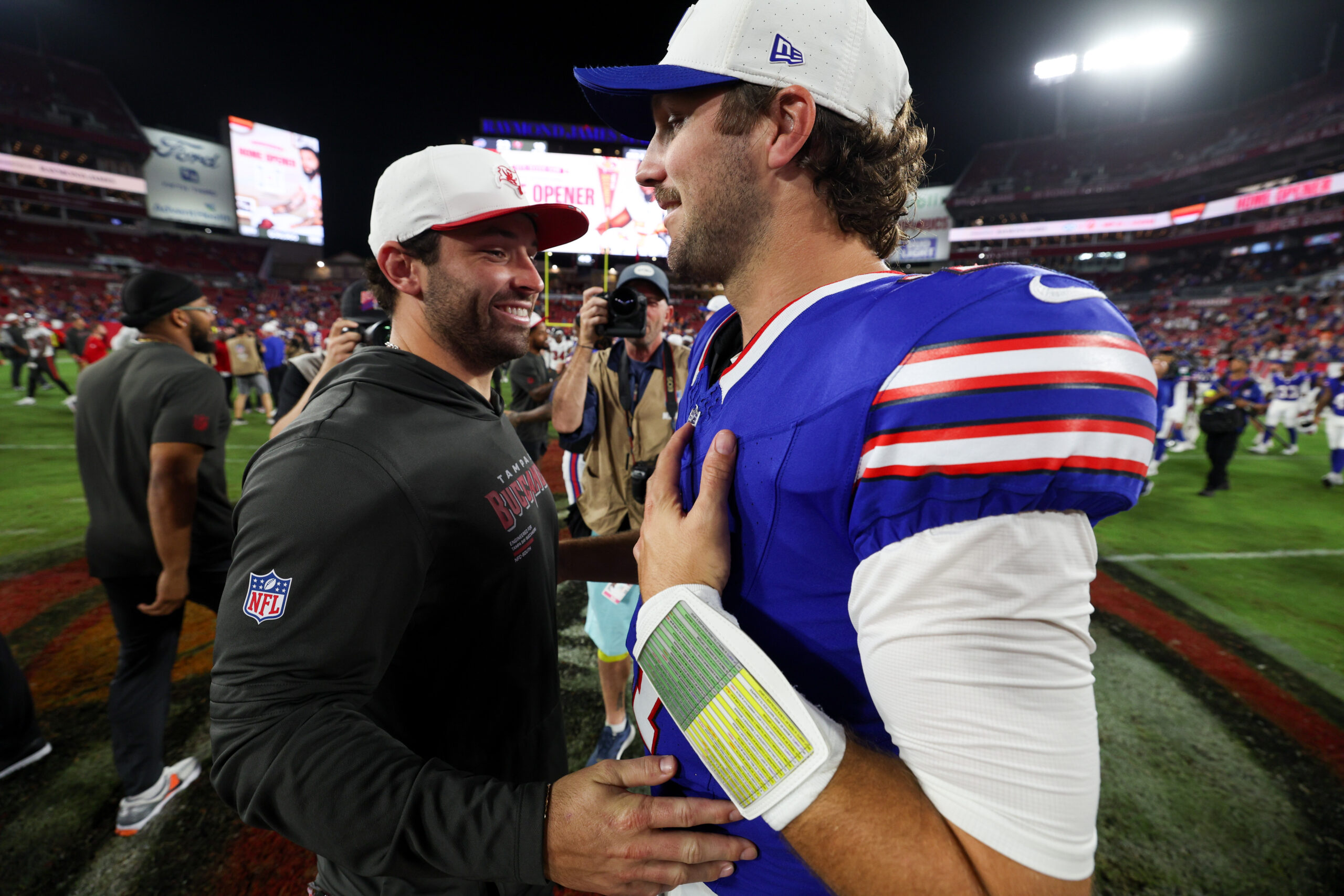
Aug 23, 2025; Tampa, Florida, USA; Buffalo Bills quarterback Josh Allen (17) greets Tampa Bay Buccaneers quarterback Baker Mayfield (6) after a preseason game at Raymond James Stadium. Mandatory Credit: Nathan Ray Seebeck-Imagn Images
ESPN polled 10 NFL scouts on their early 2027 quarterback rankings. Nine different quarterbacks received votes. That kind of depth doesn’t happen. Experts noted that at least 15 quarterbacks could conceivably be in the first-round conversation for 2027, compared to a 2026 class so thin the Jets refused to touch it with premium picks. The last comparable quarterback crop was 2018, which produced Baker Mayfield, Josh Allen, and Lamar Jackson. The Jets are betting the next wave is already forming, and they’ve positioned themselves to ride it with three shots in Round 1.
The Klubnik Lottery Ticket
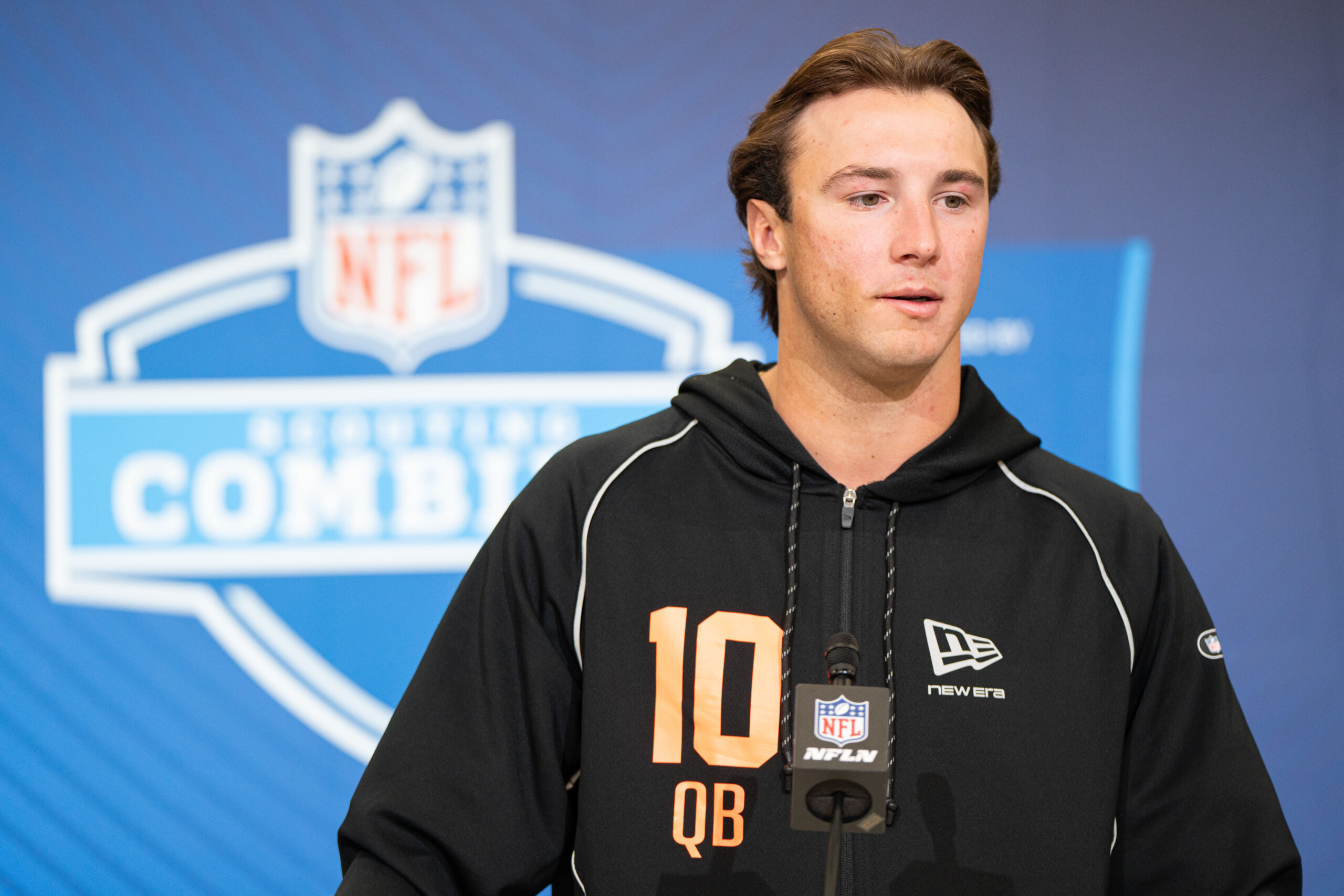
Feb 27, 2026; Indianapolis, IN, USA; Clemson quarterback Cade Klubnik (QB10) speaks to members of the media during the NFL Combine at the Indiana Convention Center. Mandatory Credit: Jacob Musselman-Imagn Images
Cade Klubnik compiled 73 touchdowns against 24 interceptions across 49 career games at Clemson, with a career completion rate near 64%, and added 463 rushing yards in his 2024 season. The Jets traded picks 128 and 140 to Cincinnati for 110 and a sixth-rounder to get him. Lottery tickets don’t usually cost extra picks. Glenn framed it as pure competition, saying any backup has to push the starter. Translation: Klubnik is the insurance policy, not the investment thesis.
The Financial Architecture
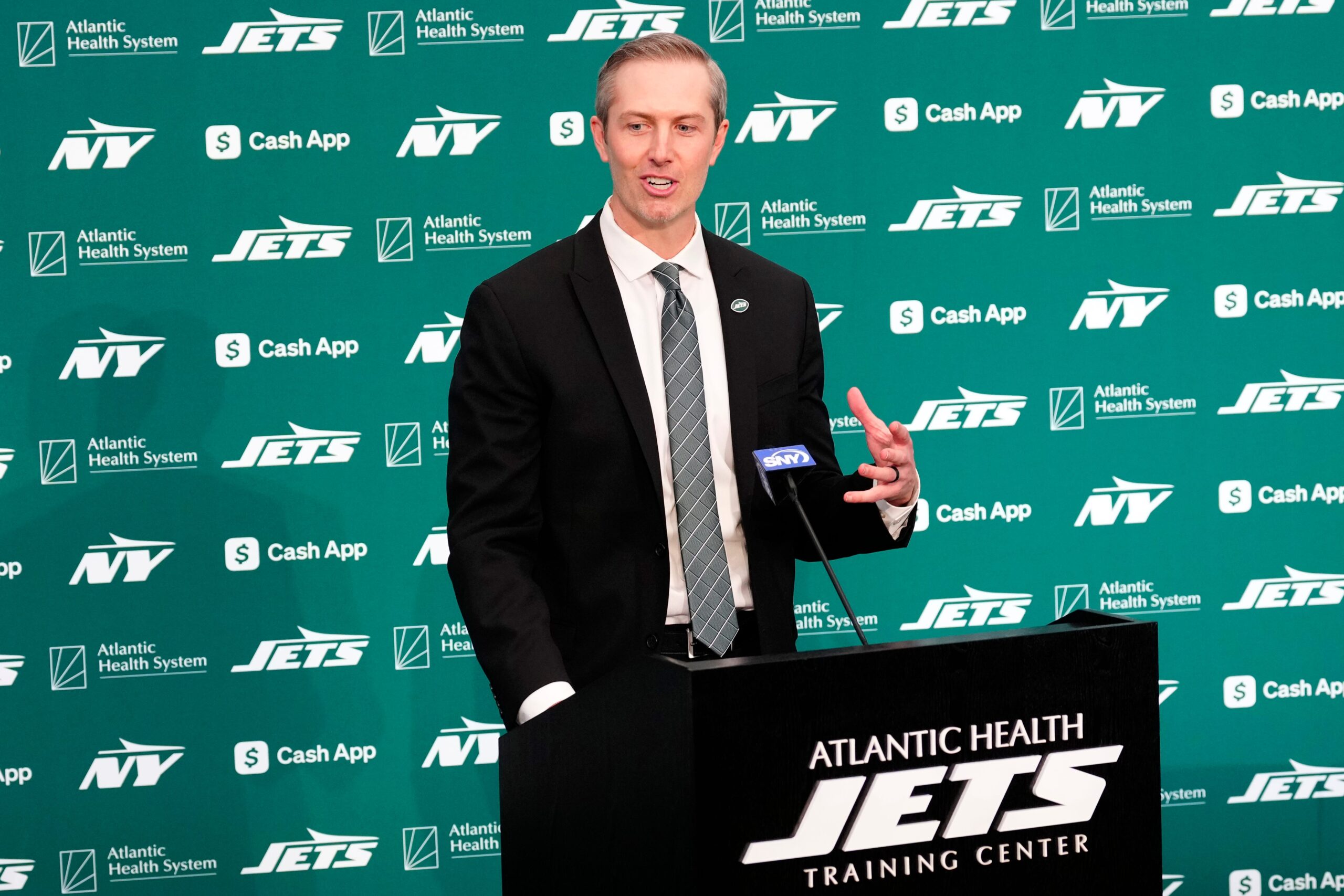
Darren Mougey speaks during a press conference where he was introduced as the new general manager of the New York Jets, at the Atlantic Health Jets Training Center, Monday, January 27, 2025, in Florham Park.
The Jets hold roughly $77 million in cap space, fourth-most in the NFL. That number matters because a 2027 first-round quarterback will cost roughly $15 to $25 million on a rookie-scale deal. With that financial cushion, the Jets can draft their franchise quarterback AND surround him with veteran talent immediately. No rebuilding purgatory. No wait-until-year-three timeline. GM Darren Mougey described this draft capital position as something that happens only a handful of times in Jets history. He built the financial runway to match it.
The David Bailey Bet
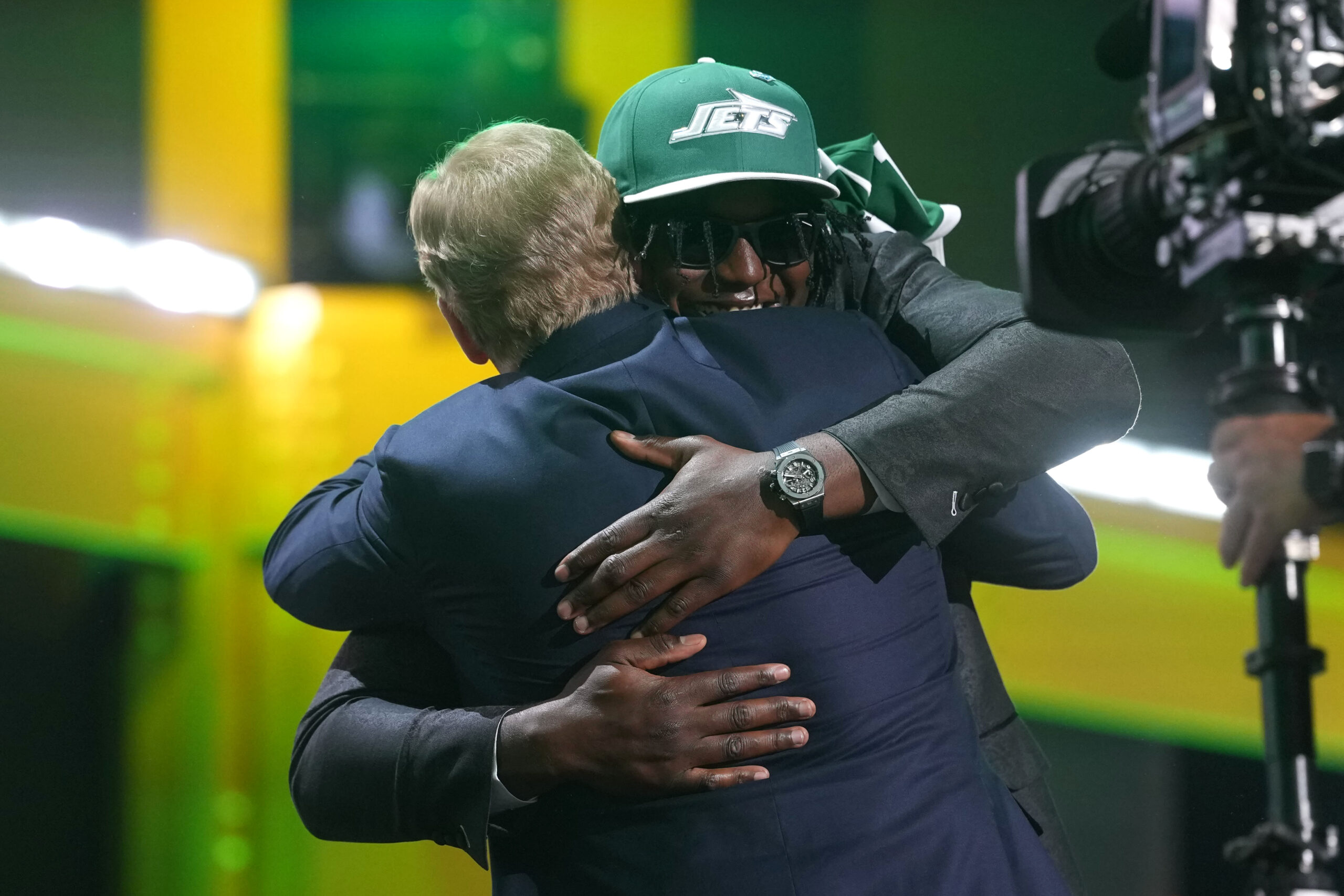
Apr 23, 2026; Pittsburgh, PA, USA; Texas Tech Red Raiders linebacker David Bailey embraces NFL commissioner Roger Goodell after he is selected by the New York Jets as the number two pick during the 2026 NFL Draft at Acrisure Stadium. Mandatory Credit: Kirby Lee-Imagn Images
The No. 2 overall pick was not a quarterback. It was edge rusher David Bailey. That single decision is the most scrutinized non-QB call of the entire draft, because a top-two pick on a defensive end sets a production bar that only a small tier of rookies clear. To validate passing on the best available 2026 quarterback, Bailey has to produce something approaching Will Anderson Jr. level impact in year one, with double-digit pressure totals and an expanding snap share. If Bailey posts a middling rookie year, the talk radio narrative writes itself. If he hits, the Jets get a defensive cornerstone and a 2027 quarterback in the same 12-month window.
The 2027 Draft Capital Map
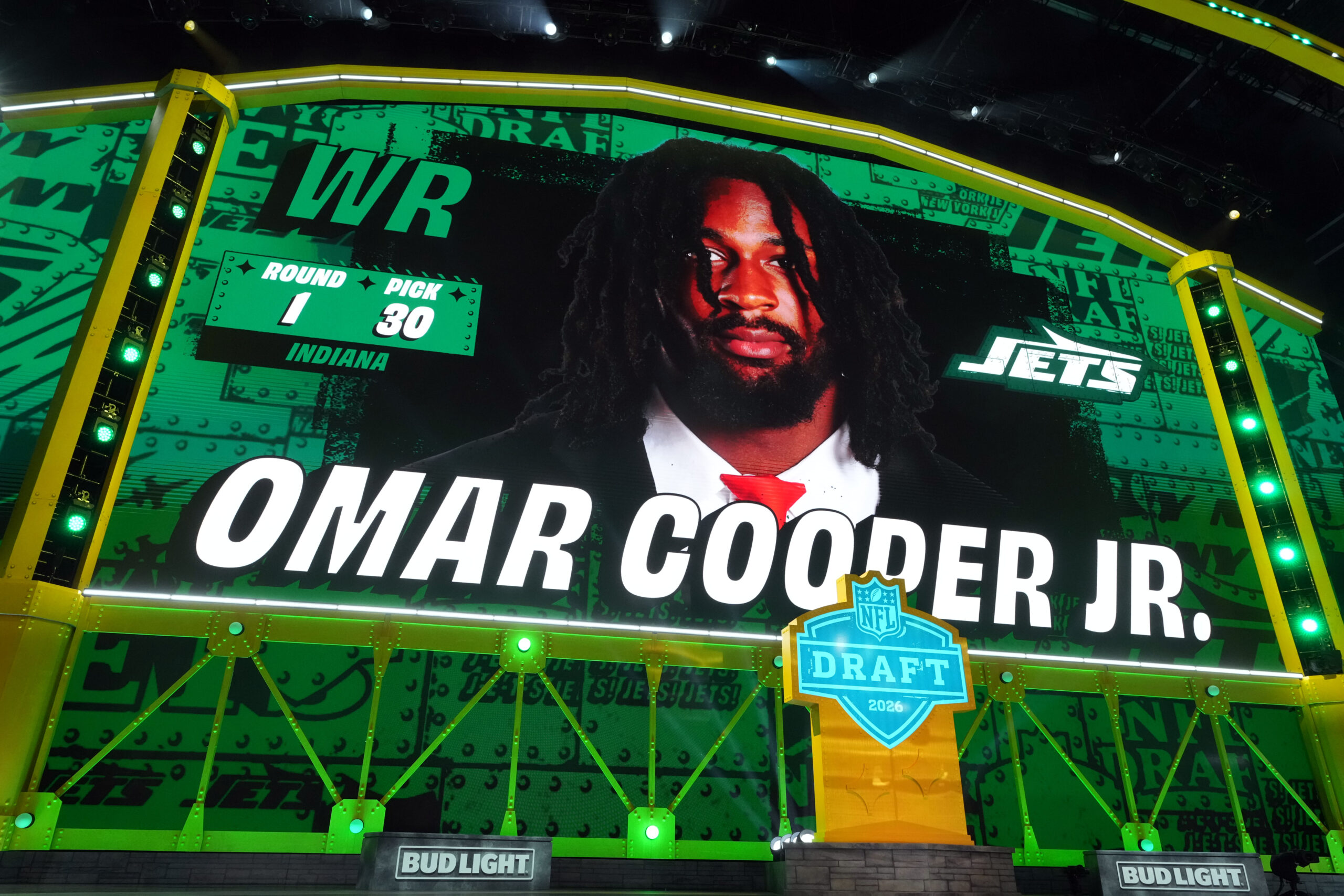
Apr 23, 2026; Pittsburgh, PA, USA; Indiana Hoosiers wide receiver Omar Cooper Jr. is selected by the New York Jets as the number 30 pick during the 2026 NFL Draft at Acrisure Stadium. Mandatory Credit: Kirby Lee-Imagn Images
The math on 2027 is what separates this rebuild from every prior Jets rebuild. The Jets own their own 2027 first-round pick, which projects to land high given the roster reset. On top of that, they hold a 2027 first acquired from Dallas in the Quinnen Williams trade, plus the 2026 second-rounder that came with it. They also hold a future first acquired from Indianapolis in the Sauce Gardner trade. Stack that against a 2027 cap projection that, combined with current carryover potential, clears nine-figure spending room, and this stops looking like a rebuild on a budget and starts looking like a fully funded moonshot.
The New Rule for Rebuilding
Mar 31, 2026; Phoenix, AZ, USA; New York Jets executive vice president communications and content officer Eric Gelfand during the 2026 NFL Annual League Meeting at the Arizona Biltmore. Mandatory Credit: Mark J. Rebilas-Imagn Images
Most rebuilding teams panic-draft a quarterback the moment they get a high pick. The Jets did the opposite. They held the No. 2 overall selection and took an edge rusher. They watched the league scramble for mediocre 2026 quarterbacks and refused to participate. The organizational logic inverts the conventional wisdom: a bad quarterback in year one of a rebuild is acceptable if you have a loaded class waiting in year two. Once you see that framework, every Jets decision since November 2025 stops looking reactive and starts looking synchronized.
Who They’re Really Targeting
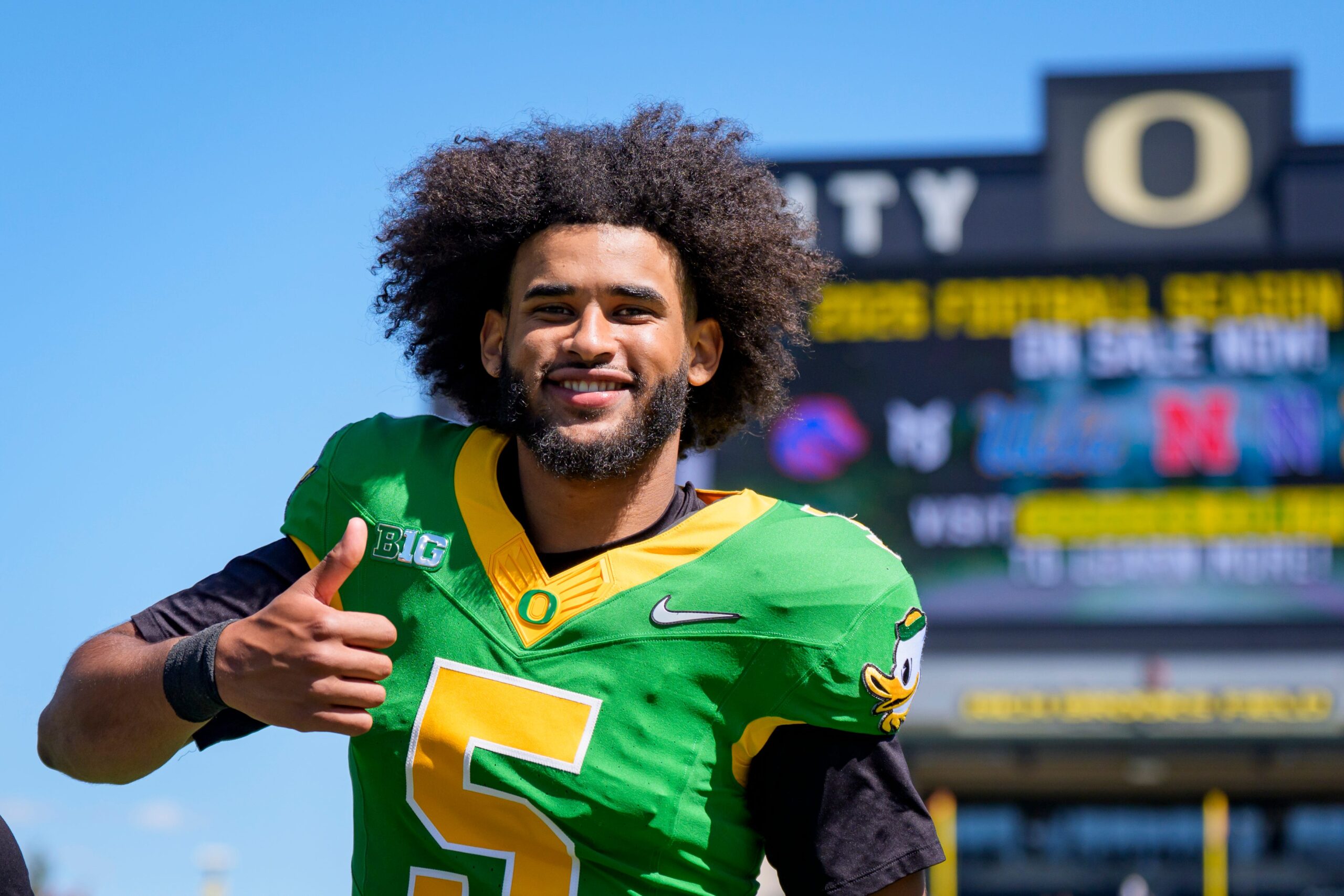
Oregon quarterback Dante Moore walks off the field during the Oregon Ducks annual spring game on April 25, 2026 at Autzen Stadium in Eugene, Oregon.
The 2027 quarterback board is unusually stacked at the top. In ESPN’s scout poll, Oregon’s Dante Moore emerged as the early favorite, with Texas’s Arch Manning and Ohio State’s Julian Sayin also receiving top-spot votes. Nine different names appeared across the ballots of ten scouts. Early 2027 mock drafts already have Arch Manning penciled in near the top of the order, and the Jets are exactly the kind of capital-rich, QB-desperate franchise that would trade up or stand pat to grab one of those names. The target list is not hypothetical anymore. It is a board.
The 2018 Comparison, Unpacked
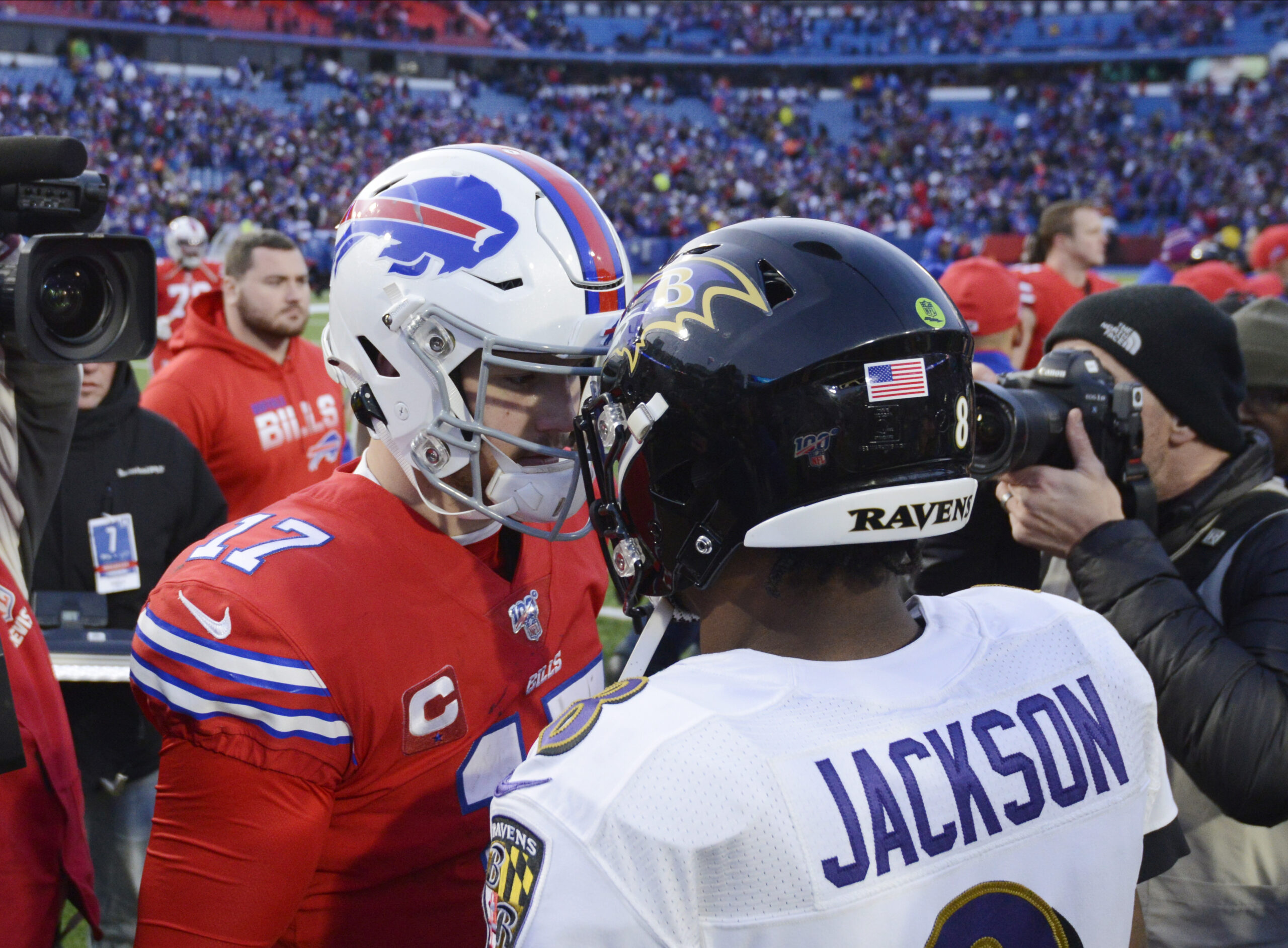
Dec 8, 2019; Orchard Park, NY, USA; Buffalo Bills quarterback Josh Allen (17) meets Baltimore Ravens quarterback Lamar Jackson (8) at mid-field after a game at New Era Field. Mandatory Credit: Mark Konezny-Imagn Images
The 2018 name-drops of Mayfield, Allen, and Jackson are not just nostalgia. Scouts see structural similarities between that class and 2027. Both classes feature a deep pool of multi-year college starters, meaning evaluators get three or four seasons of tape rather than one breakout year. Both feature physical archetypes spread across the tier, from dual-threats to classic pocket passers. And both arrive in a league environment where rookie contracts let teams build around a cheap franchise quarterback for four years. The 2025 class was hyped and collapsed. The 2027 class has the one ingredient 2025 lacked: sample size.
The Geno Problem
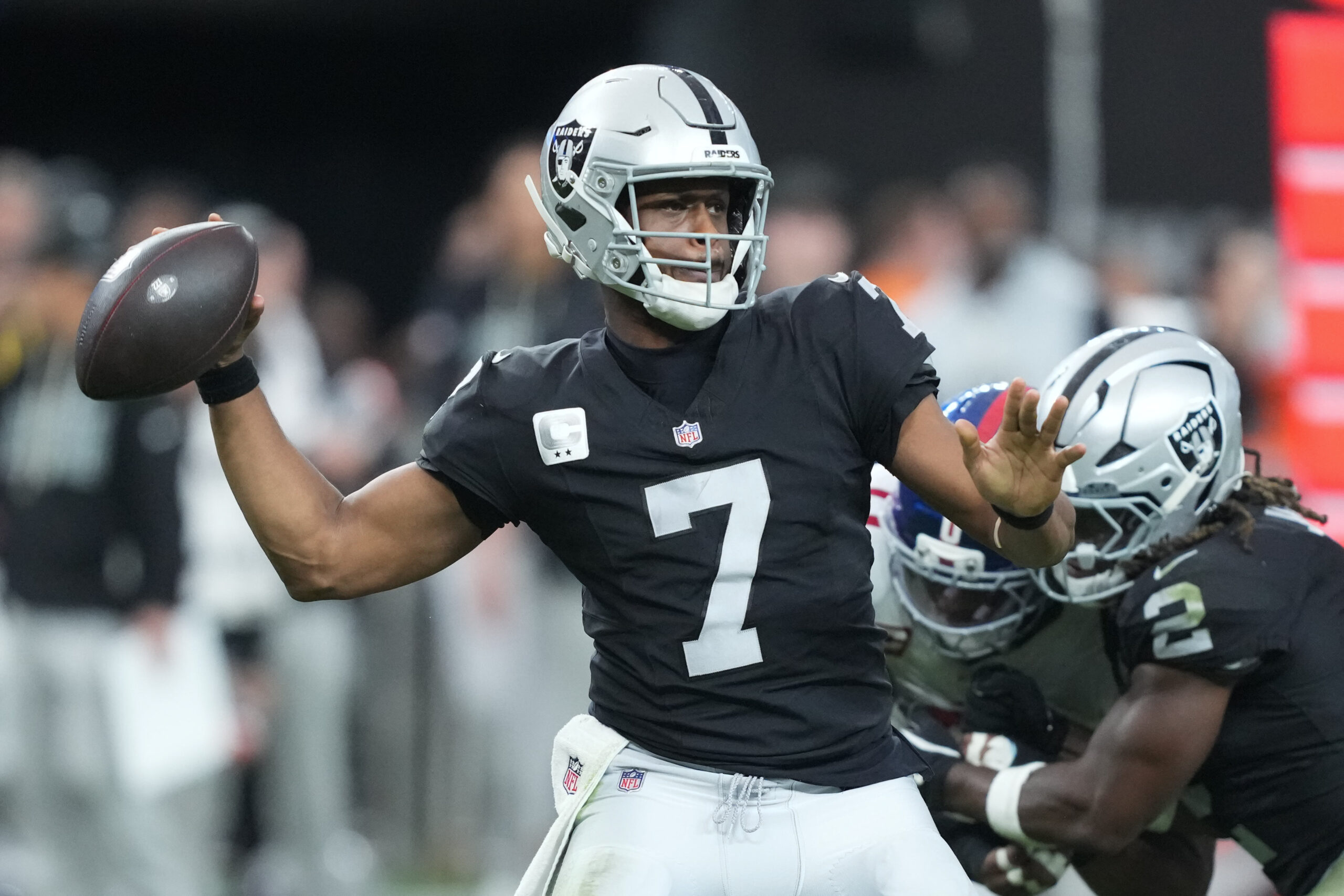
Dec 28, 2025; Paradise, Nevada, USA; Las Vegas Raiders quarterback Geno Smith (7) throws in the third quarter against the New York Giants at Allegiant Stadium. Mandatory Credit: Kirby Lee-Imagn Images
The entire strategy rests on one fragile assumption: Geno Smith can be adequate enough to not derail the plan. If he collapses, the Jets face a lost 2026 season with a thin quarterback room behind him. If he plays well enough to win eight or nine games, a different danger emerges. A false-success narrative could slow the urgency around the 2027 quarterback plunge. The organization needs Geno to be exactly good enough and exactly temporary enough. That’s a razor-thin margin.
The 15-Year Context

Mar 31, 2026; Phoenix, AZ, USA; New York Jets head coach Aaron Glenn during the 2026 NFL Annual League Meeting at the Arizona Biltmore. Mandatory Credit: Mark J. Rebilas-Imagn Images
The Jets are coming off a 3-14 season and an extended playoff drought that stretches beyond a decade. Every major outlet rating their roster-urgency metric placed them at the ceiling of the scale heading into this draft. That context is why the 2026 draft was never going to be a normal draft. It is also why the stakes on 2027 are so much higher than a standard rebuild. A franchise that has not won anything meaningful in a generation is now betting that patience, not panic, is what finally breaks the streak.
What Could Blow It Up
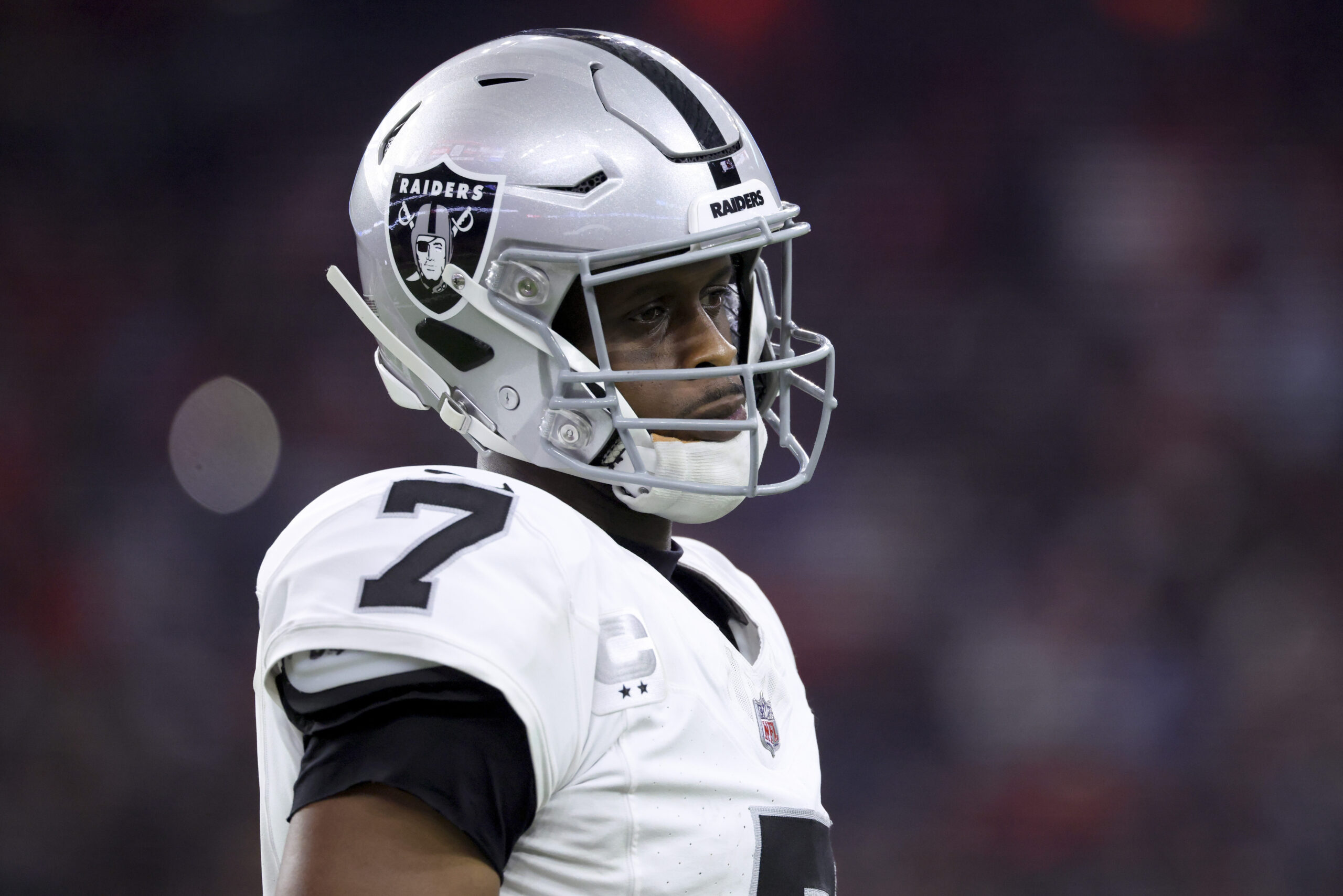
Dec 21, 2025; Houston, Texas, USA; Las Vegas Raiders quarterback Geno Smith (7) looks towards the sideline during the game against the Houston Texans at NRG Stadium. Mandatory Credit: Troy Taormina-Imagn Images
The plan has four concrete failure modes, and any of them could unravel the choreography. The 2027 quarterback class could fail to declare in the numbers scouts are projecting, thinning the first-round tier before the Jets ever get to pick. A Geno Smith surge could win nine games, push the Jets out of the top five, and force a costly trade-up package to reach the quarterback they actually want. Multiple QB-needy teams could jump the Jets in the draft order and trigger a bidding war for the top arms. And scouts could simply be wrong about the depth, exactly as they were about the 2025 class that collapsed before it ever reached the draft. Any one alone is survivable. Two at once turns a plan into a panic.
The Bet That Defines a Decade

Feb 24, 2026; Indianapolis, IN, USA; New York Jets coach Aaron Glenn speaks at the NFL Scouting Combine at the Indiana Convention Center. Mandatory Credit: Kirby Lee-Imagn Images
The Jets are not confused about quarterback. They are timing quarterback. Three first-round picks, $77 million in cap space, and a historically loaded 2027 class give them more ammunition than any Jets front office has held in a generation. But ammunition means nothing if you miss. If the 2027 class disappoints, or the Jets botch the evaluation, they will have traded two franchise defenders, endured a placeholder season, and burned their best draft position in decades for nothing. The entire organization is one draft away from vindication or catastrophe.
Sources:
Seltzer, Rich. “Poll: Oregon’s Dante Moore the early QB favorite for 2027 draft.” ESPN, April 22, 2026.
Hughes, Connor. “Jets Shift Some of Their Focus Toward Bounty of Selections in Next Two NFL Drafts.” NewYorkJets.com, January 13, 2026.
Costa, Brian. “Jets move up in 4th round to draft Clemson QB Cade Klubnik.” ESPN, April 24, 2026.
Kerr, Jeff. “New York Jets NFL Draft primer: Power ranking, needs, mock projection.” CBS Sports, April 16, 2026.
Hennessey, Ryan. “Jets’ NFL Draft Picks, Depth Chart, Salary Cap After Sauce Gardner, Williams Trades.” Bleacher Report, November 3, 2025.
Linsey, Seth. “Building for 2027: Why the New York Jets’ draft haul makes perfect sense.” Pro Football Focus, November 4, 2025.