
Fifty catches. Six hundred and eighty-two yards. That was DJ Moore’s entire 2025 season in Chicago, the worst statistical output of his eight-year career, a number so underwhelming that even the Bears’ front office had quietly begun shopping him before the calendar flipped to 2026. On March 5, Buffalo general manager Brandon Beane flew in anyway, handed over a second-round draft pick, and committed to what ESPN’s Bill Barnwell calculated as $73.5 million in total guaranteed money. The Bears popped the champagne. The Bills called it a rebuild of their passing game. The rest of the league called it something else entirely.
Chicago Had Been Looking for the Exit Since January
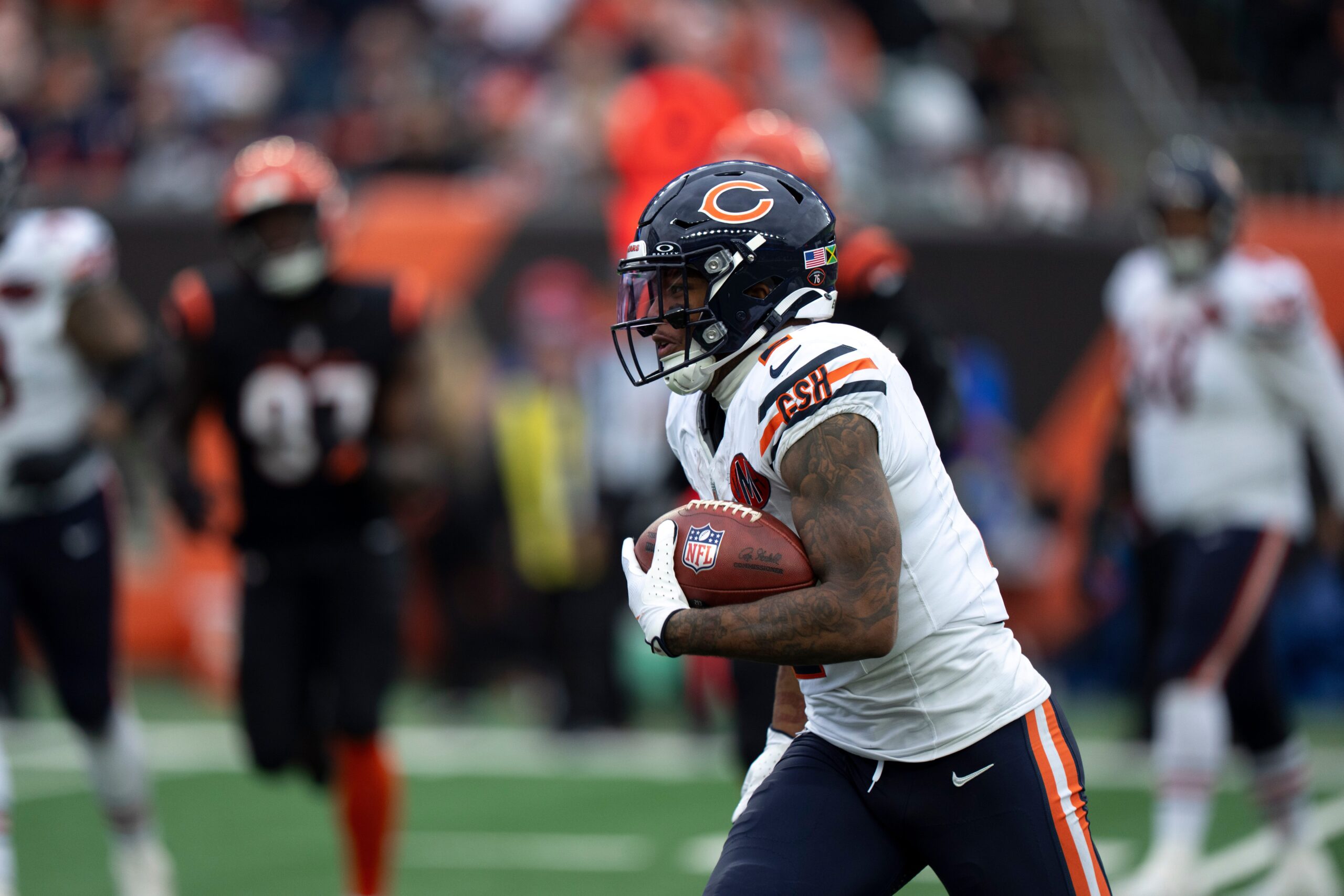
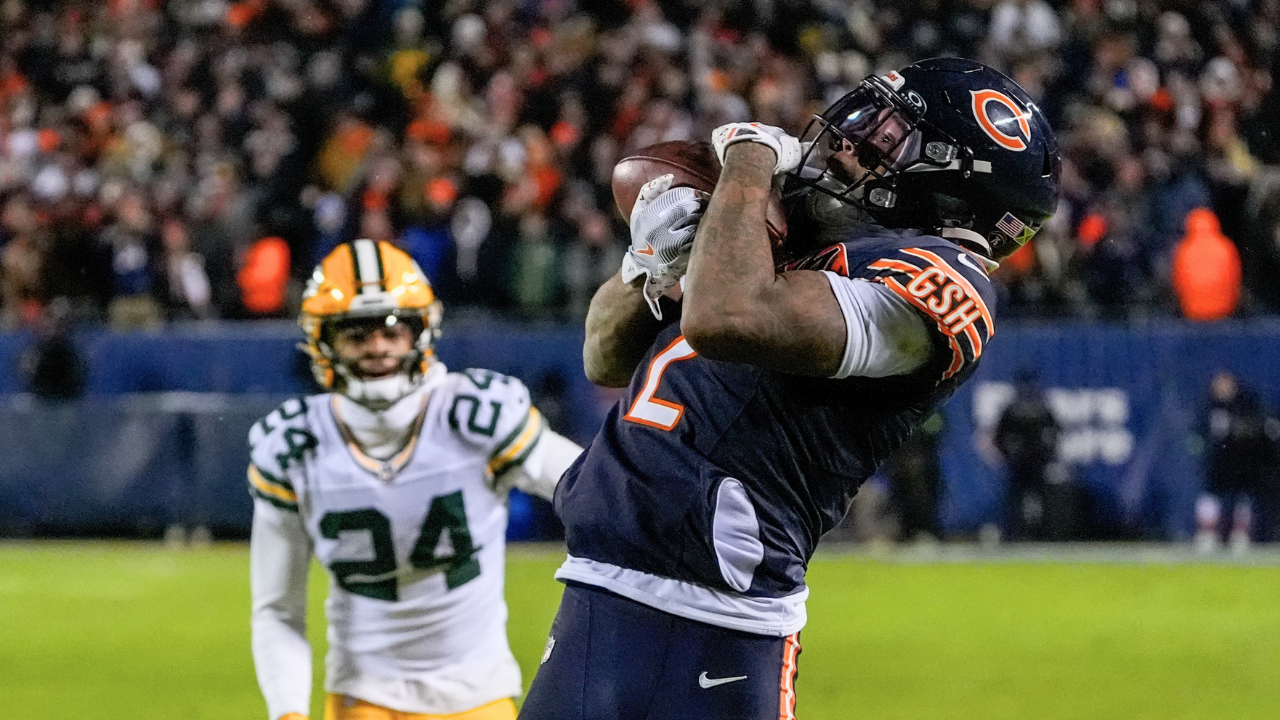
Chicago Bears wide receiver DJ Moore (2) runs for a touchdown in the fourth quarter of the NFL football game between Chicago Bears and Cincinnati Bengals at Paycor Stadium in Cincinnati on Nov. 2, 2025.
The Bears didn’t trade DJ Moore because they’d found something better; they traded him because the math was getting ugly fast. His $28.5 million cap hit for 2026 was already locked in, his 2027 base salary of $23.5 million was set to fully guarantee in mid-March, and new head coach Ben Johnson was arriving with different ideas about how an offense should move. Rome Odunze, a 2024 first-round pick, and second-year slot weapon Luther Burden III were the future. Moore, at 28 and in decline, was the past … a past that cost top-tier money. Chicago found their exit, and Buffalo held the door open.
What Buffalo Actually Signed Up For
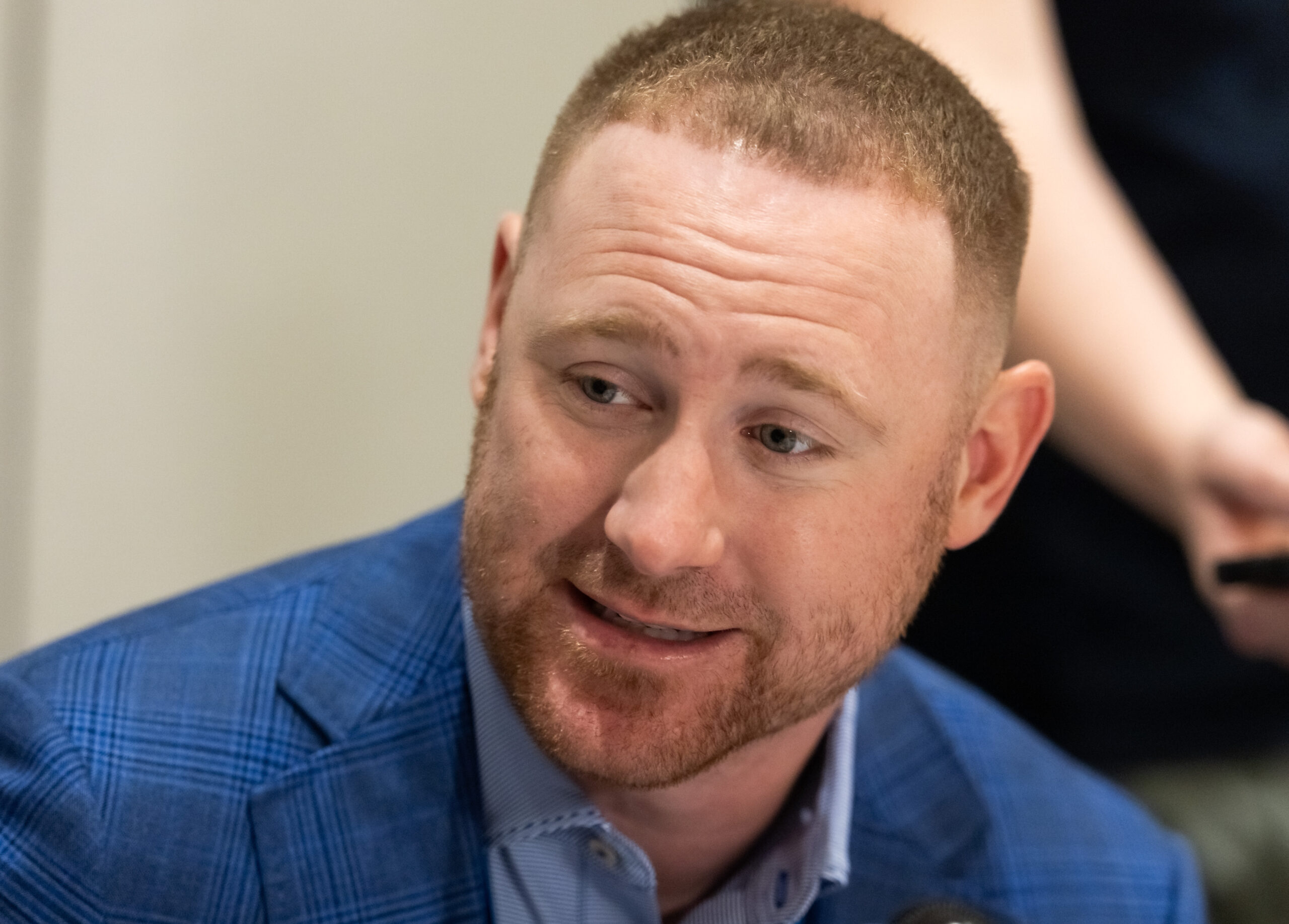
Mar 31, 2026; Phoenix, AZ, USA; Buffalo Bills head coach Joe Brady during the 2026 NFL Annual League Meeting at the Arizona Biltmore. Mandatory Credit: Mark J. Rebilas-Imagn Images
Strip away the trade framing and look at what the Bills actually committed to: $24.5 million guaranteed for 2026, another $24.5 million effectively locked in for 2027, and $15.5 million of Moore’s 2028 base salary guaranteed as part of the deal. That’s the three-year, $73.5 million scenario Barnwell laid out, and it’s the most likely one. The Bills then restructured Moore’s contract in March, converting $22.185 million of his 2026 salary into a signing bonus and spreading that money across future years. It freed up cap space now. It will create a headache later. According to Spotrac’s Michael Ginnitti, if Buffalo is forced into another restructure, Moore’s 2028 cap hit could balloon to $33 million, with $31 million in dead money if they try to cut him.
The Picks Are Gone, Too
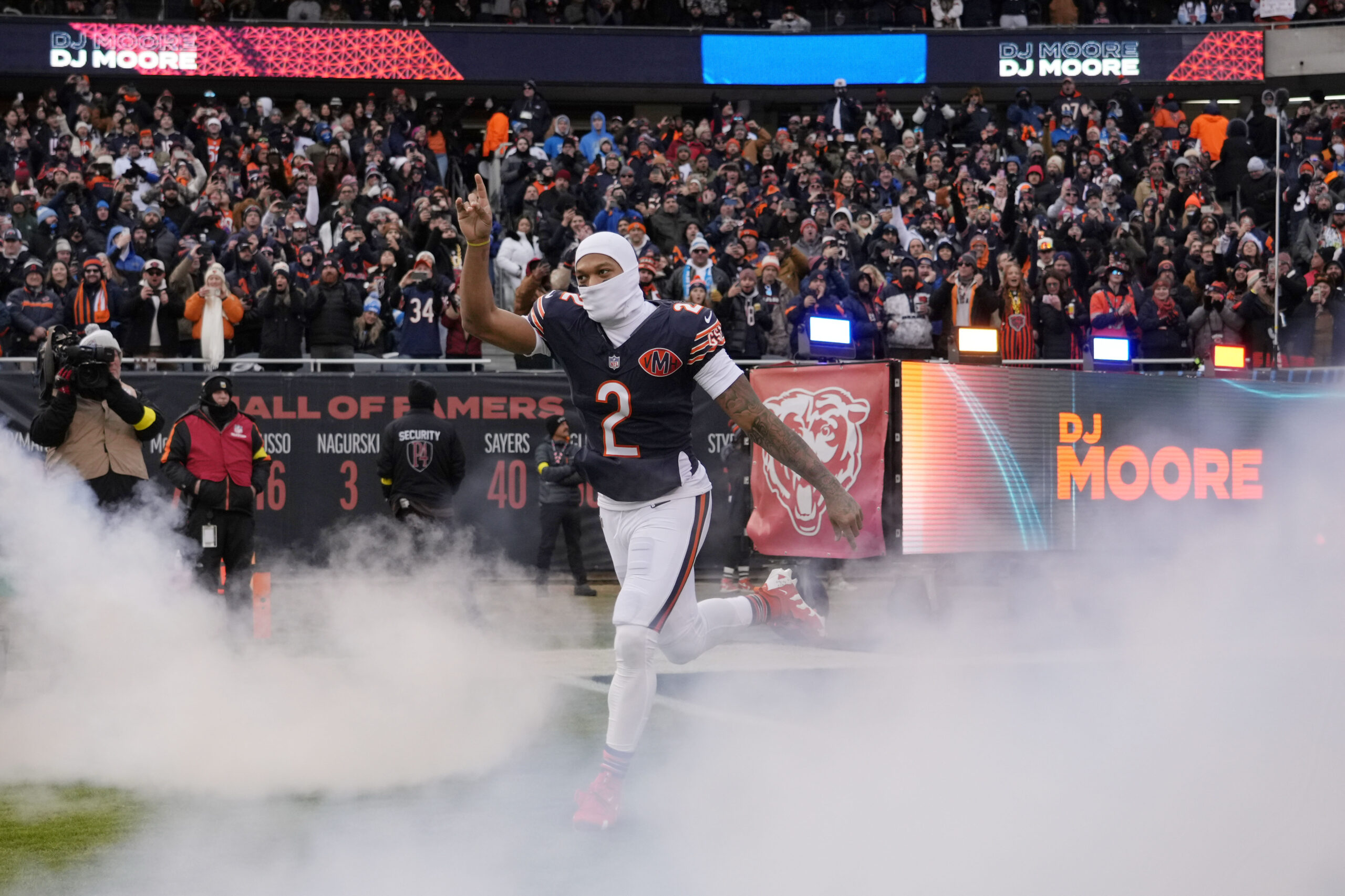
Jan 4, 2026; Chicago, Illinois, USA; Chicago Bears wide receiver DJ Moore (2) runs onto the field before the game between the Chicago Bears and the Detroit Lions at Soldier Field. Mandatory Credit: David Banks-Imagn Images
This wasn’t just a contract acquisition. Beane gave up the Bills’ 60th overall selection in the 2026 draft, a legitimate Day 2 pick capable of producing a starter, to get a receiver who was 58th among 81 qualified wide receivers in PFF’s 2025 grading. Per draft analyst Ben Baldwin’s valuation chart, that pick swap represents roughly $4.5 million per year in surplus value over four seasons, which led Barnwell to conclude Buffalo is effectively paying Moore closer to $29 million annually when you factor in the cost of the draft capital surrendered. The Bears, meanwhile, walked away holding two second-round picks in 2026, $16.5 million in reclaimed cap space, and a receiver room with nothing but upside.
ESPN Said “D.” Most Everyone Else Agreed.
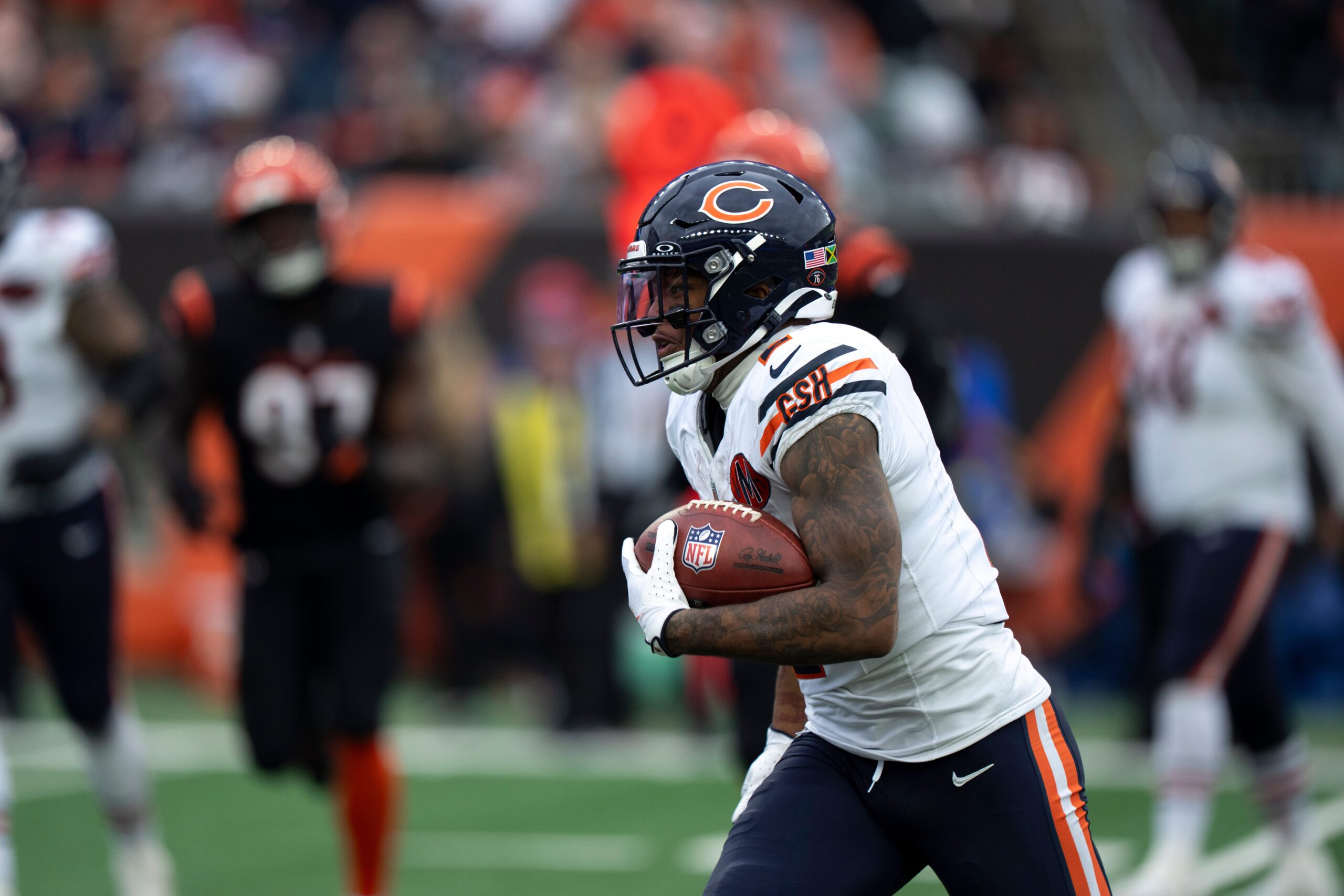
Chicago Bears wide receiver DJ Moore (2) runs for a touchdown in the fourth quarter of the NFL football game between Chicago Bears and Cincinnati Bengals at Paycor Stadium in Cincinnati on Nov. 2, 2025.
When the full contract details hit, the reaction from analysts wasn’t confusion; it was consensus. ESPN’s Seth Walder handed the Bills a “D” grade, writing that while “the Bills’ instinct at wide receiver is correct,” paying “real draft capital for the right to take on what is likely an overpriced contract and add extra guarantees is far from optimal”. Cap specialist Jason Fitzgerald of Over the Cap was more blunt, saying the deal “makes no sense at all”. The Bears collected near-unanimous A grades from outlets including USA Today. The verdict wasn’t close. It was, as multiple national analysts framed it, a landslide.
Emmanuel Acho Had Two Words: A.J. Brown
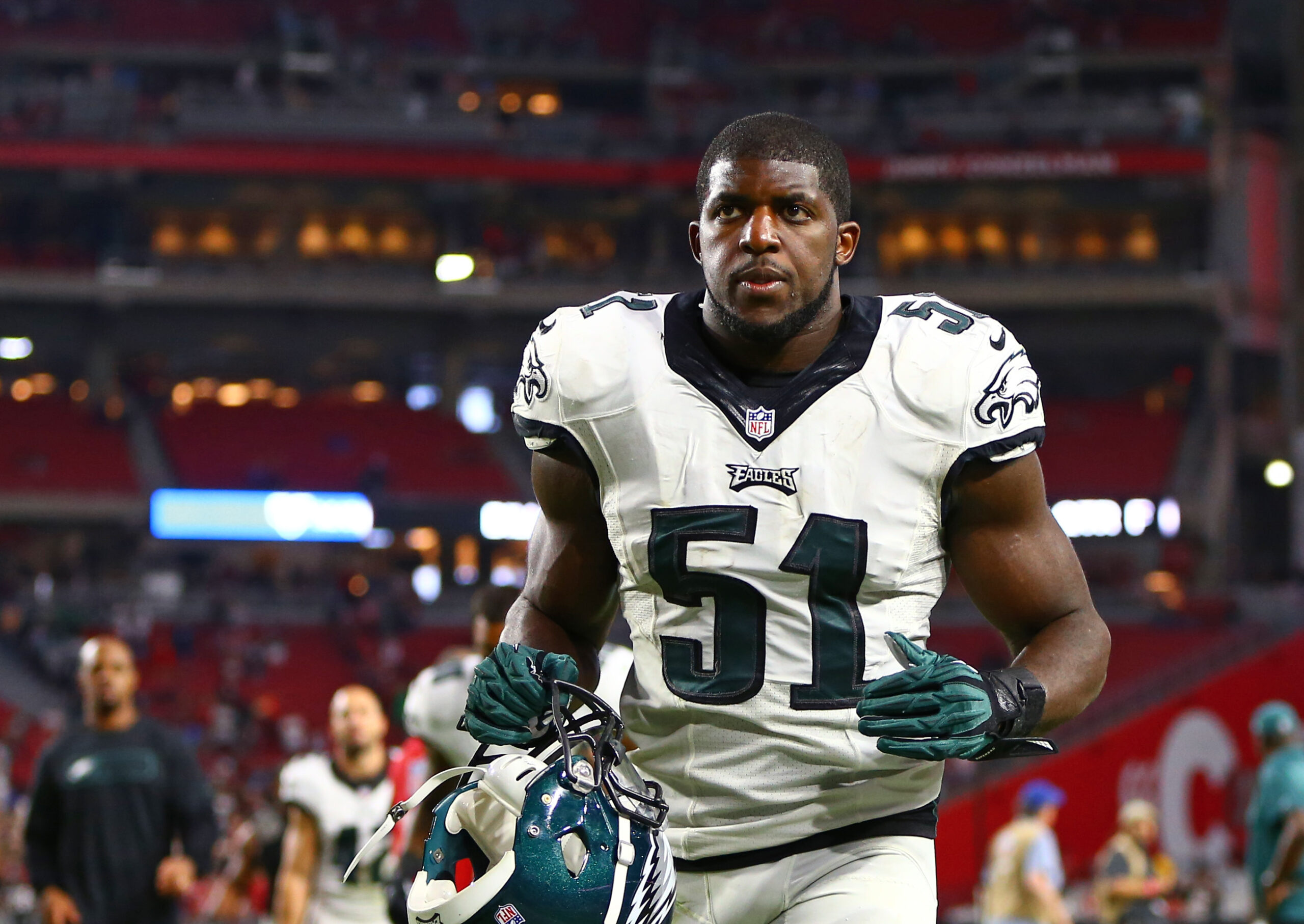
Oct 26, 2014; Glendale, AZ, USA; Philadelphia Eagles linebacker Emmanuel Acho (51) against the Arizona Cardinals at University of Phoenix Stadium. The Cardinals defeated the Eagles 24-20. Mandatory Credit: Mark J. Rebilas-Imagn Images
The most pointed criticism came from former Eagles linebacker Emmanuel Acho, who didn’t argue that Moore was a bad player; he argued that Moore was the wrong player for this moment. “DJ Moore is a really good receiver, but he’s not a generational receiver,” Acho said, calling the acquisition a “conservative move” and labeling Moore a “super-sized Khalil Shakir”. His point was direct: A.J. Brown was still theoretically available. The Bills had the financial muscle, the quarterback, and the playoff urgency to swing for something transformative. They swung for something safe. When you have Josh Allen under center, and a Super Bowl window still cracked open, “safe” is a four-letter word.
The Brady Connection: Real, But Also Convenient
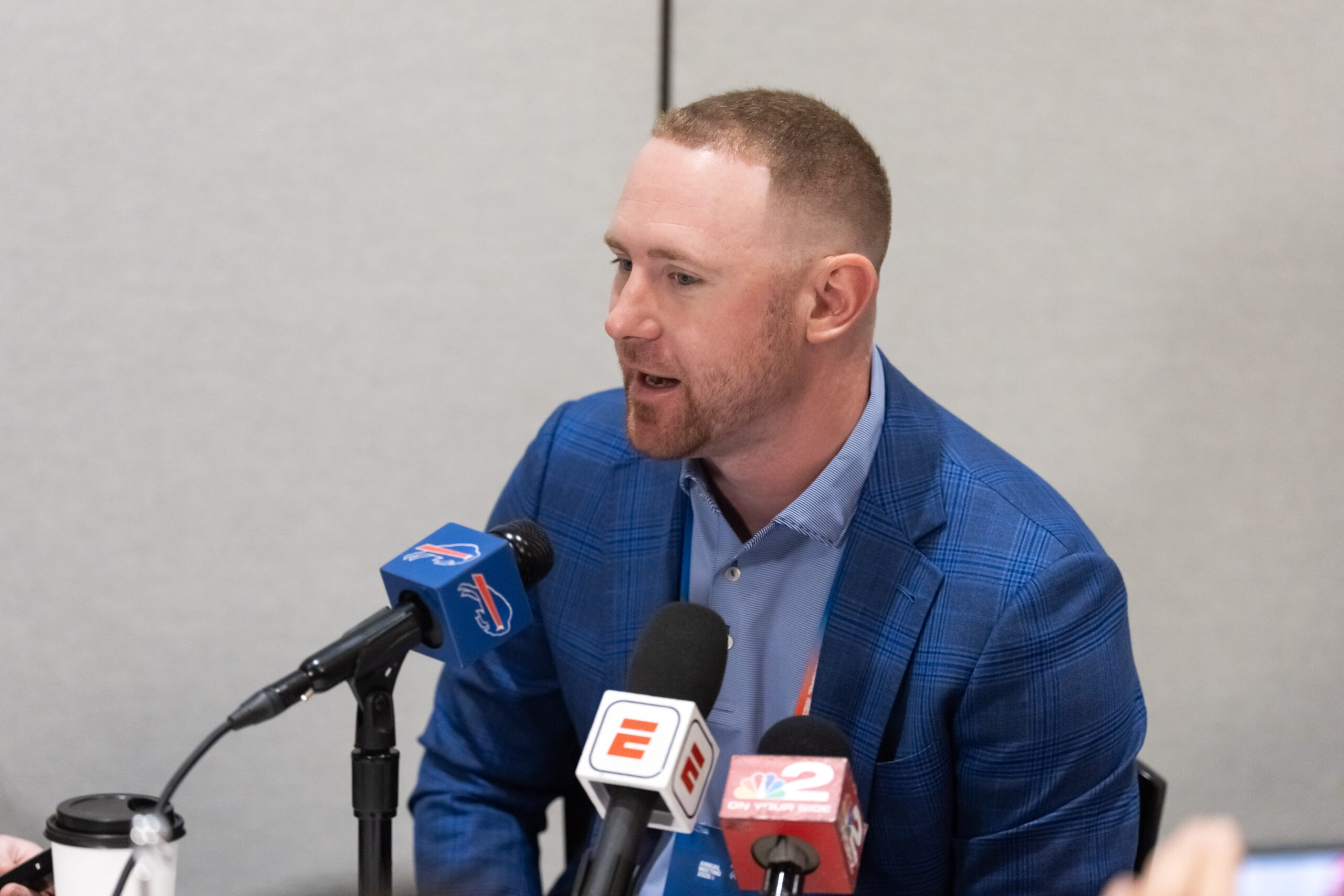
Mar 31, 2026; Phoenix, AZ, USA; Buffalo Bills head coach Joe Brady during the 2026 NFL Annual League Meeting at the Arizona Biltmore. Mandatory Credit: Mark J. Rebilas-Imagn Images
Joe Brady isn’t wrong that he and Moore have history. In 2020 and 2021, when Brady ran the air-raid offense in Carolina, Moore posted back-to-back 1,100-yard seasons and averaged 18.1 yards per reception, the best stretch of his career. So when Brady stood at the NFL league meetings and said Moore “wasn’t different than the guy that I’d coached” and outlined a vision to simply “get the ball in his hands,” it wasn’t fantasy — it was a real coaching relationship, a proven system, a legitimate reason for optimism. But the honest counter is harder to dismiss: three years, three different offensive regimes, and a production line that went 1,364 yards in 2023, 966 in 2024, 682 in 2025. That’s not a scheme problem. That’s a trend.
What the Bills Were Actually Missing
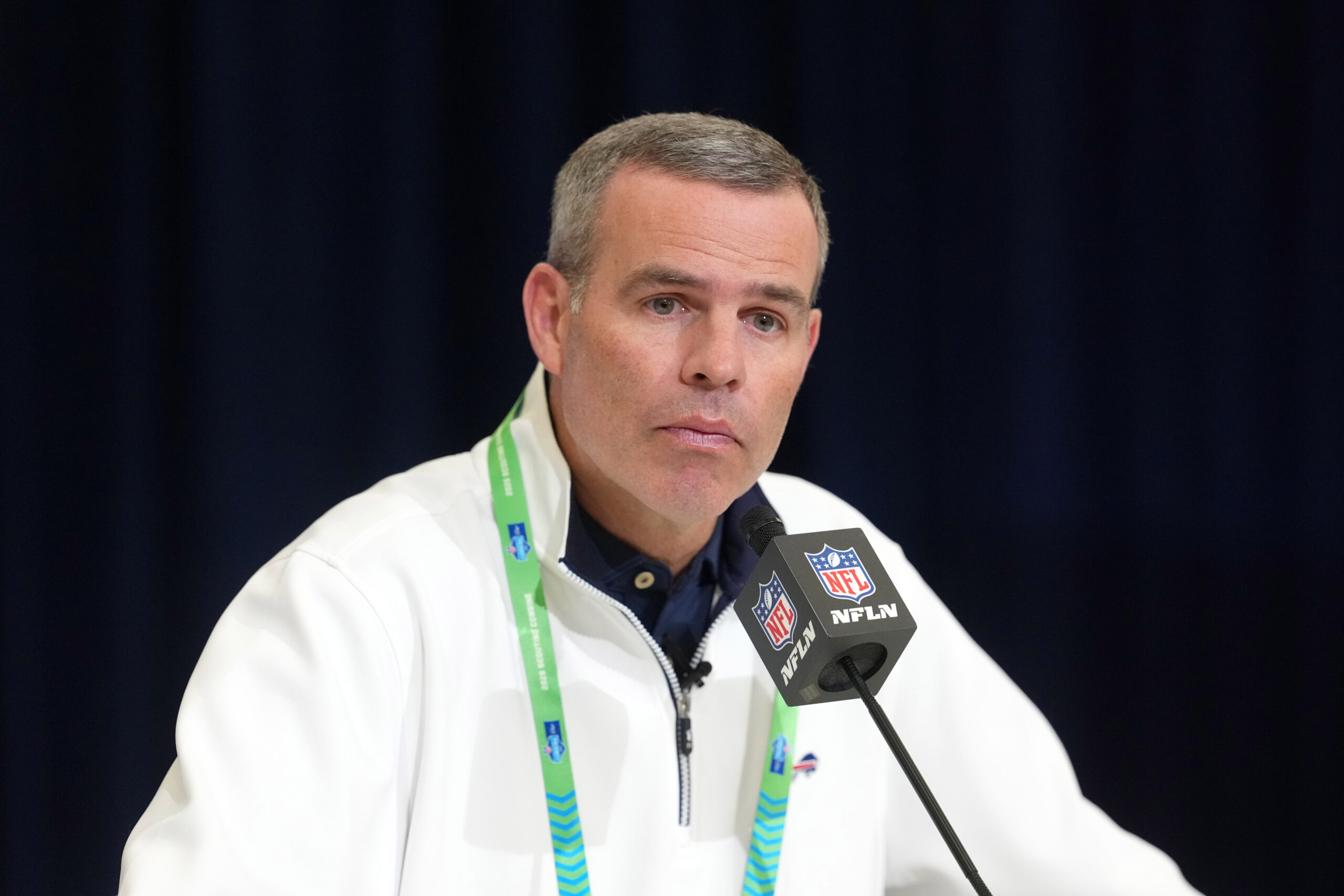
Feb 24, 2026; Indianapolis, IN, USA; Buffalo Bills general manager Brandon Beane speaks at the NFL Scouting Combine at the Indiana Convention Center. Mandatory Credit: Kirby Lee-Imagn Images
Before pinning this entirely on Beane, consider where Buffalo’s passing game was before this trade. Josh Allen threw for just 3,668 yards in 2025, his lowest total since 2019. The Bills ran the ball at an elite level with James Cook leading a ground attack that ranked first in the league in rushing yards per game. But the passing offense had been running on fumes, with Khalil Shakir as the team’s leading receiver at 719 yards. Buffalo hadn’t had a 1,000-yard wide receiver since Stefon Diggs in 2023. The Bills had the lowest average target depth in the entire NFL last season at 9.2 yards. A legitimate No. 1 receiver was a real and pressing need. The question was never whether to address it; it was the price paid to do so.
Chicago Escapes Clean, With Options
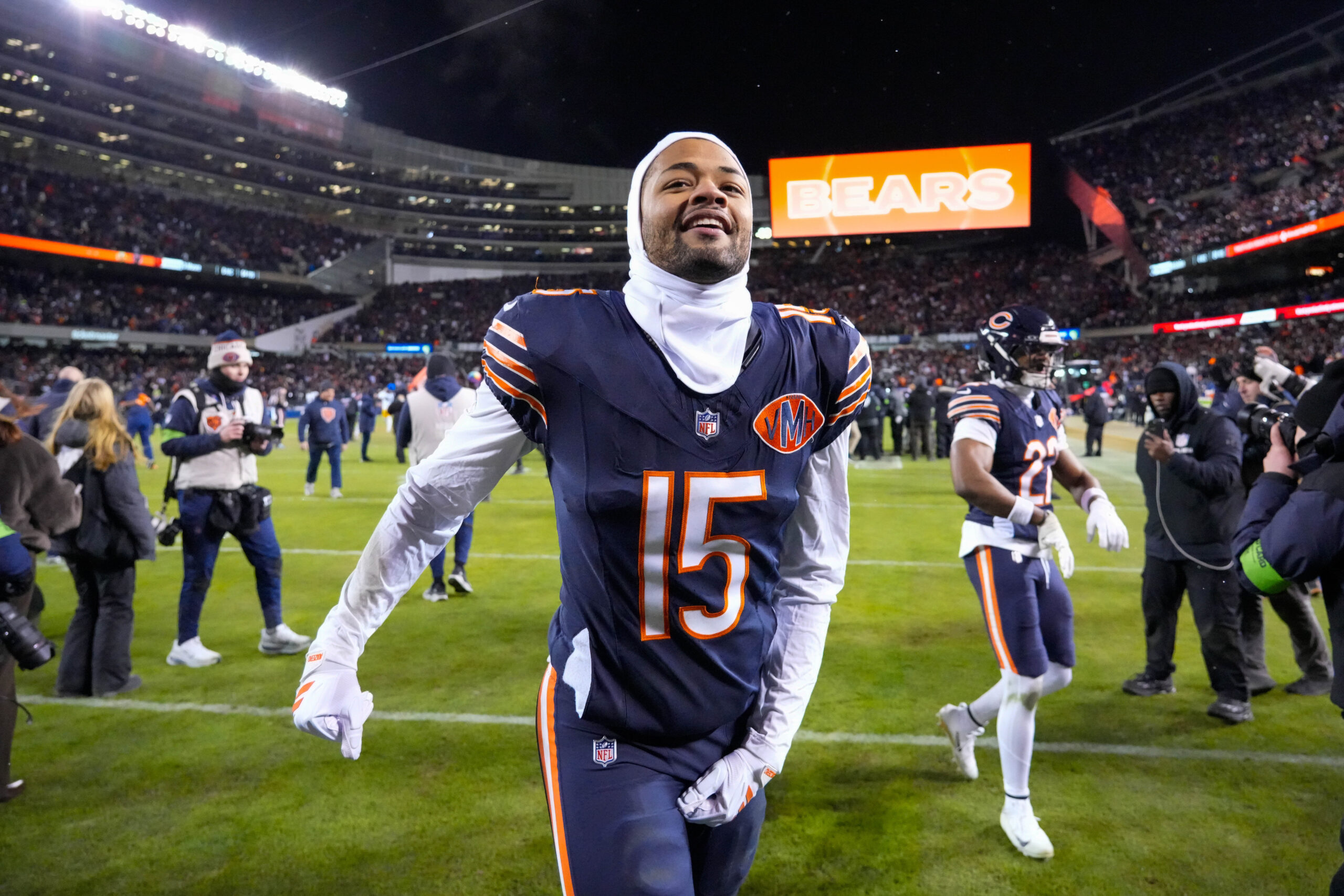
Jan 10, 2026; Chicago, IL, USA; Chicago Bears wide receiver Rome Odunze (15) leaves the field following a game against the Green Bay Packers in an NFC Wild Card Round game at Soldier Field. Mandatory Credit: David Banks-Imagn Images
While Buffalo absorbs the financial consequences, Chicago gets to build. The Bears head into the 2026 draft holding two second-round picks, a first-round selection at No. 25, and over $33 million in cap space created in part by offloading Moore. Odunze, when healthy, showed legitimate WR1 potential before a foot stress fracture derailed his 2025 season. Burden closed the year strong — 47 catches, 652 yards, a PFF grade of 79.3 that ranked 18th among all qualified receivers, and a yards-after-catch rate that suggests he creates after the ball arrives. Tight end Colston Loveland emerged as the Bears’ leading receiver in 2025. Ben Johnson arrives with a full roster to shape, draft capital to spend, and no expensive, aging obligations eating the budget.
Buffalo Bet Big. Now They Have to Be Right.
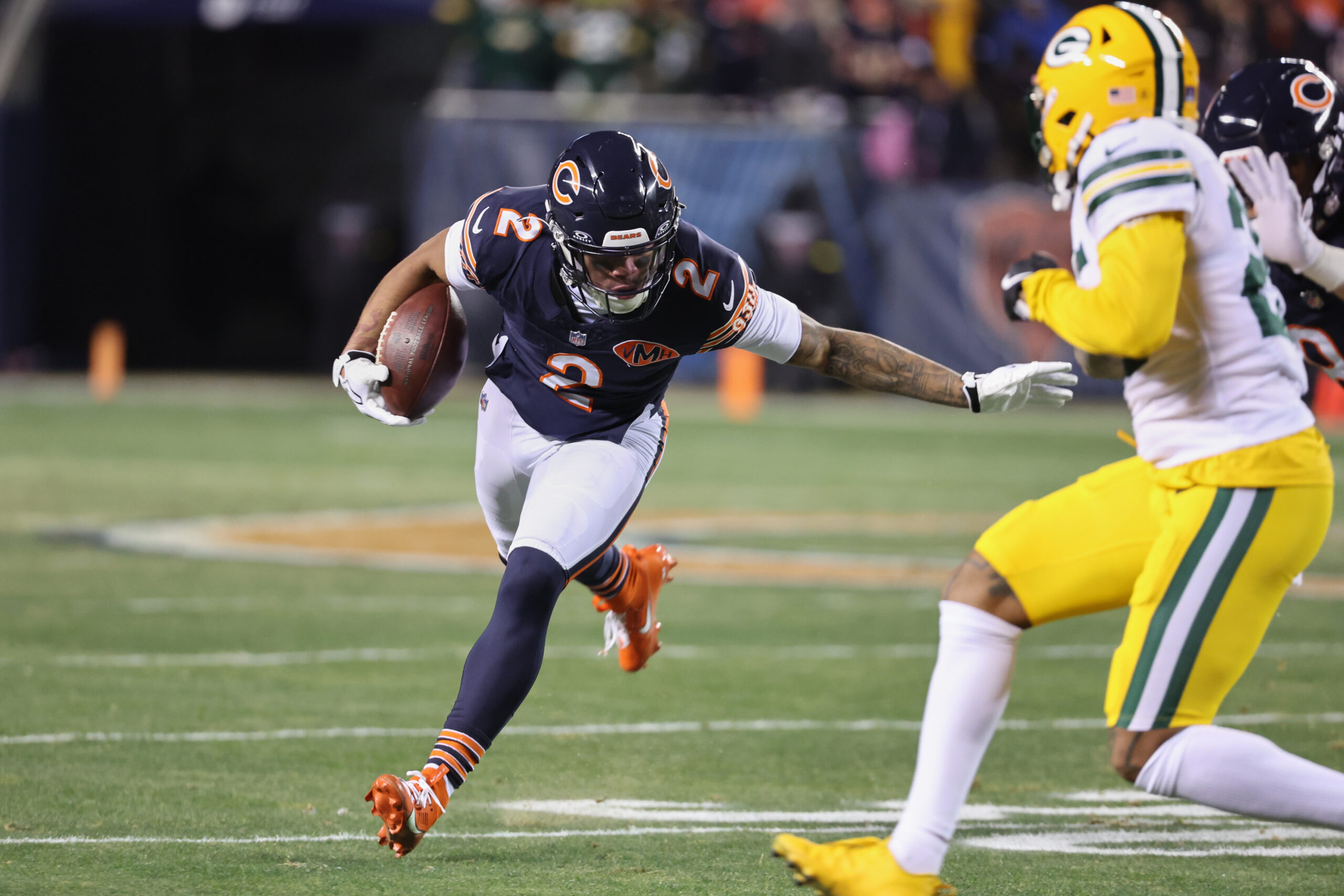
Dec 20, 2025; Chicago, Illinois, USA; Chicago Bears wide receiver DJ Moore (2) runs after the catch against the Green Bay Packers during the first quarter at Soldier Field. Mandatory Credit: Mike Dinovo-Imagn Images
Here’s what this deal comes down to: the Bills tied their passing offense and their salary cap to a 28-year-old wide receiver on a downward statistical trajectory through his age, 31 season, backed by a coaching relationship from five years ago and the belief that a scheme change will reverse what three consecutive years of data are suggesting. Maybe Brady unlocks something. Maybe Moore finds another gear in a pass-first system after three years of run-heavy Chicago ball. Those are real possibilities. But possibility isn’t a business plan, and in 2028, Buffalo could be staring at a $33 million cap hit on a player entering his age… 31 season with a body of declining work. The Bears escaped that math. The Bills wrote it into a contract.
Sources
“Bills agree to acquire Bears WR DJ Moore, sources say” — ESPN (Adam Schefter, March 5, 2026)
“Sizing up 2026 NFL offseason trades: DJ Moore, Trent McDuffie” — ESPN (Bill Barnwell, March 5, 2026)
“2026 NFL free agency grades: Kirk Cousins, Jaylen Waddle” — ESPN (Seth Walder, April 1, 2026)
“How NFL experts graded the Bears’ trade of WR DJ Moore” — Bears Wire / USA Today (March 6, 2026)
“DJ Moore 2025 Season Stats” — StatMuse
“Bills’ Joe Brady: DJ Moore was same player on 2025 tape who I coached with Panthers” — NFL.com (March 28, 2026)