
The Tampa Bay Buccaneers just sat down with the Tampa Sports Authority, Hillsborough County, and the City of Tampa to discuss a billion-dollar renovation of Raymond James Stadium. The 28-year-old venue, which hosted three Super Bowls, now ranks among the NFL’s ten oldest. COO Brian Ford confirmed the meetings aim to “develop a long-term plan that supports the stadium’s ability to continue hosting major events.” The price tag sits at approximately $1 billion. The deadline to extend the lease: January 31, 2027. Roughly 10 months from now. And that’s just the surface cost.
Why the Clock Started Ticking

Jan 4, 2026; Inglewood, California, USA; Los Angeles Rams tight end Colby Parkinson (84) scores a touchdown against the Arizona Cardinals during the second half at SoFi Stadium. Mandatory Credit: Gary A. Vasquez-Imagn Images
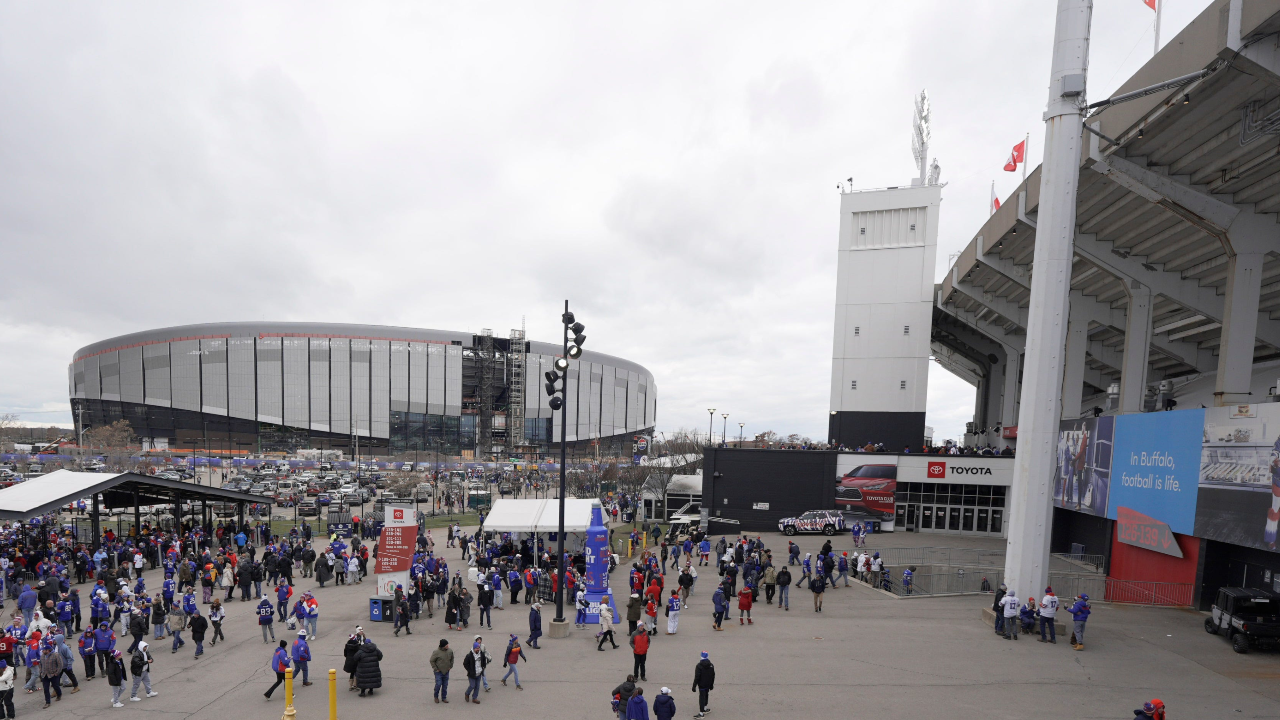
The NFL’s modernization wave forced this. SoFi Stadium opened in 2020 at $5 billion. Allegiant Stadium cost $1.9 billion the same year. Buffalo’s Highmark Stadium arrives in 2026 at $2.1 billion with $850 million in public money. Every new venue resets the competitive floor, and Raymond James got its last major renovation in 2016-2018 for $160 million. That investment? Already considered insufficient. A $160 million upgrade became outdated in roughly five years. The Buccaneers’ $1 billion ask isn’t ambition. It’s survival math against a league that keeps raising the bar.
Your Ticket Prices Just Entered the Conversation
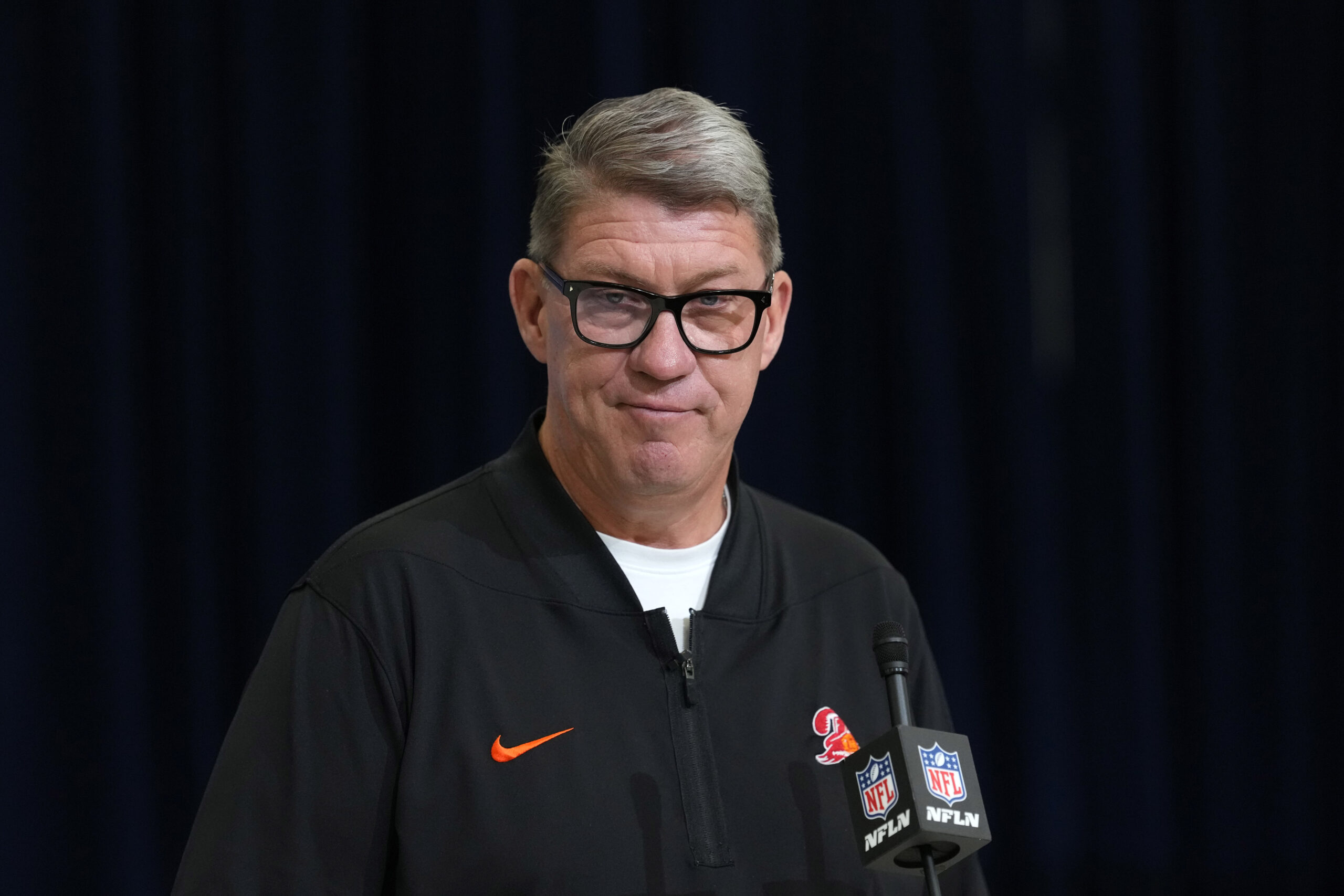
Feb 24, 2026; Indianapolis, IN, USA; Tampa Bay Buccaneers general manager Jason Licht speaks at the NFL Scouting Combine at the Indiana Convention Center. Mandatory Credit: Kirby Lee-Imagn Images
If the Buccaneers extend, the first five-year option doubles annual rent to $7 million and activates extensions locking the team to the facility through 2048. That 27-year commitment means decades of renovation debt baked into operations. Fans absorb those costs through ticket pricing, concessions, and premium seating restructuring. The stadium holds 65,000 with expansion potential to 75,000 for marquee events. Filling those seats at higher price points becomes the math that makes a billion-dollar renovation pencil out. The fan experience Joel Glazer called “so important” comes with a bigger receipt.
The Rays Are Eating the Same Budget
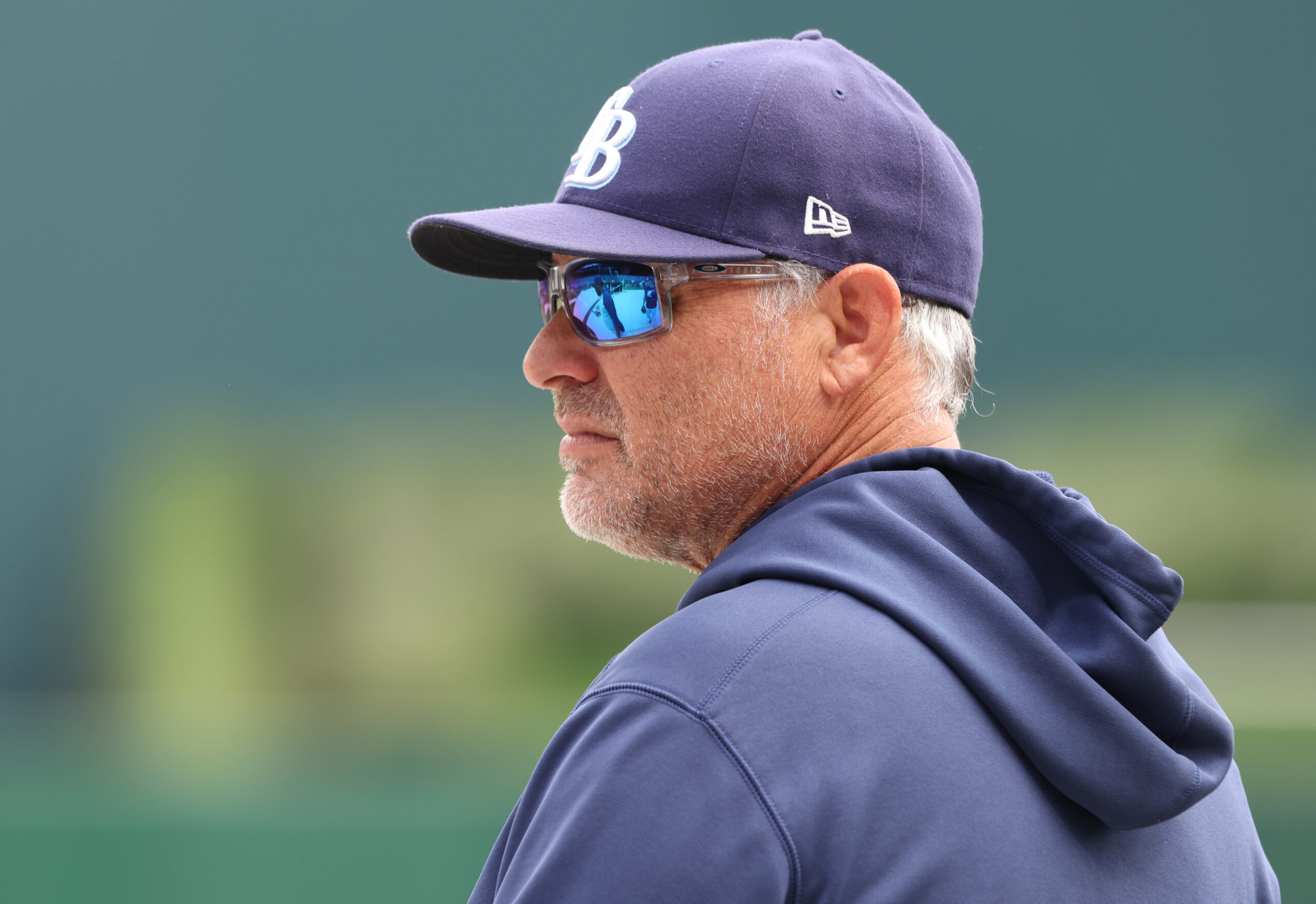
Apr 18, 2026; Pittsburgh, Pennsylvania, USA; Tampa Bay Rays manager Kevin Cash (16) looks on during batting practice against the Pittsburgh Pirates at PNC Park. Mandatory Credit: Charles LeClaire-Imagn Images
Directly across the street on Dale Mabry, the Tampa Bay Rays are building a $2.3 billion ballpark on Hillsborough College’s campus, targeting a 2029 opening. The Rays want approximately $1.15 billion in public funding. Combined with the Buccaneers’ renovation, Tampa faces a potential $3.3 billion stadium bill from two franchises drawing from the same municipal pool. Two billion-dollar projects on the same corridor, with overlapping timelines and identical funding sources. Tampa Sports Authority President Eric Hart called the initial Buccaneers meeting “a productive step.” No cost-sharing framework was discussed. None.
The Championship Venue That’s Already Obsolete

Dec 11, 2025; Tampa, Florida, USA; Tampa Bay Buccaneers wide receiver Chris Godwin Jr. (14) celebrates with quarterback Baker Mayfield (6) and wide receiver Mike Evans (13) in the end zone after catching a touchdown pass against the Atlanta Falcons during the fourth quarter at Raymond James Stadium.
The Buccaneers won Super Bowl LV at Raymond James Stadium in 2021, becoming the only NFL team to win a championship on their home field. Only 25,000 fans witnessed it due to COVID restrictions, against a 69,218 capacity. Five years later, that same venue needs a billion dollars to remain competitive. Think about that. A Super Bowl host, deemed worthy of the NFL’s biggest stage, now classified as approaching obsolescence. Tampa is scheduled to host the 2029 College Football Playoff National Championship at Raymond James. Whether the stadium is ready depends entirely on what happens in the next 10 months.
The Perpetual Renovation Trap

Cardinals head coach Ken Whisenhunt walks off the field after losing to the Steelers in Super Bowl XLIII at Raymond James Stadium in Tampa, Fla., on February 1, 2009.
Here’s the mechanism nobody talks about. Every new stadium built at $2 billion or $5 billion raises the competitive floor for every other city. Older venues don’t age gracefully. They become liabilities within a decade. Tampa spent $160 million in 2016-2018. Obsolete by 2026. Spend $1 billion now. By the mid-2030s, the next wave of $3 billion venues will make this renovation look dated. Stadium funding stops being a one-time infrastructure investment. It becomes a permanent line item. Schools, roads, hospitals, all competing with the same tax dollars that keep a football team from leaving town.
The Owner Who Talks Fan Experience While Planning a Relocation
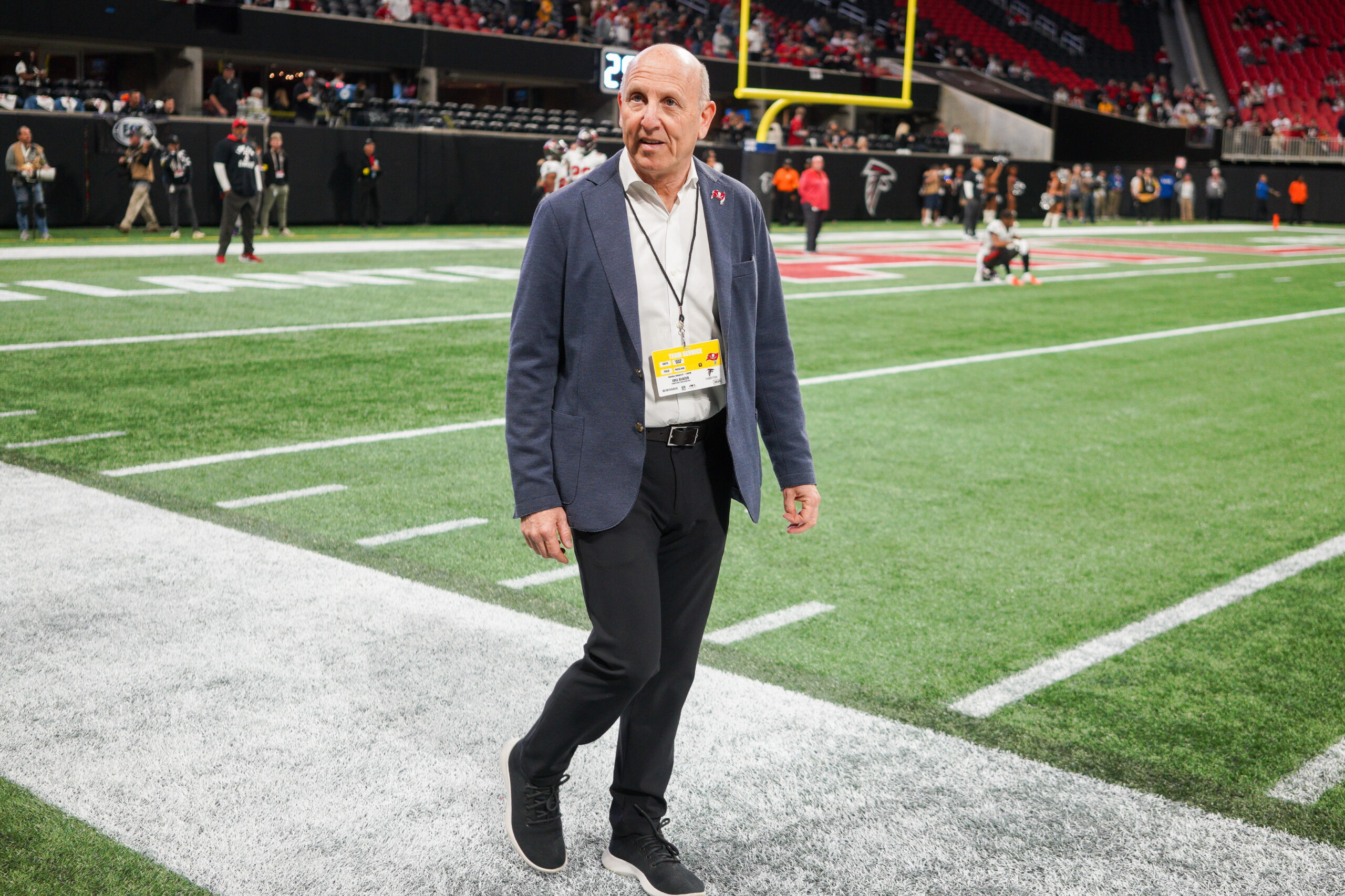
Jan 8, 2023; Atlanta, Georgia, USA; Tampa Bay Buccaneers owner Joel Glazer before a game against the Atlanta Falcons at Mercedes-Benz Stadium. Mandatory Credit: Brett Davis-Imagn Image
Joel Glazer told reporters at the NFL Annual Meeting in April 2026: “It’s something you’re always looking at because the fan experience is so important in the NFL, in all sports.” Meanwhile, the Buccaneers are actively considering a temporary relocation to Orlando during construction, potentially playing home games at Camping World Stadium, roughly 90 minutes from Tampa. The Jaguars just received unanimous NFL owner approval to do exactly that for their 2027 season. Fan experience is so important that fans might drive an hour and a half to experience it.
The Jaguars Just Wrote the Playbook

Jaguars General Manager James Gladstone talked about the upcoming NFL Draft during the Jacksonville Jaguars’ annual pre-draft luncheon press conference in the media room at the Miller Electric Center Thursday April 9, 2026 in Jacksonville, Fla. [Doug Engle/Florida Times-Union]
Jacksonville’s temporary move to Orlando for 2027 established a precedent that changes the negotiating math for every NFL franchise. Temporary relocation is no longer a nuclear option. It’s an approved operational pathway, endorsed unanimously by league owners. That precedent hands every team leverage: fund our renovation, or we leave for a season. Maybe longer. The Buccaneers now have a tested blueprint. Orlando has the facility. The NFL has the approval mechanism. What was once unthinkable is now a line item in a renovation proposal. Every city with an aging stadium should be paying attention.
Who Wins When Taxpayers Lose
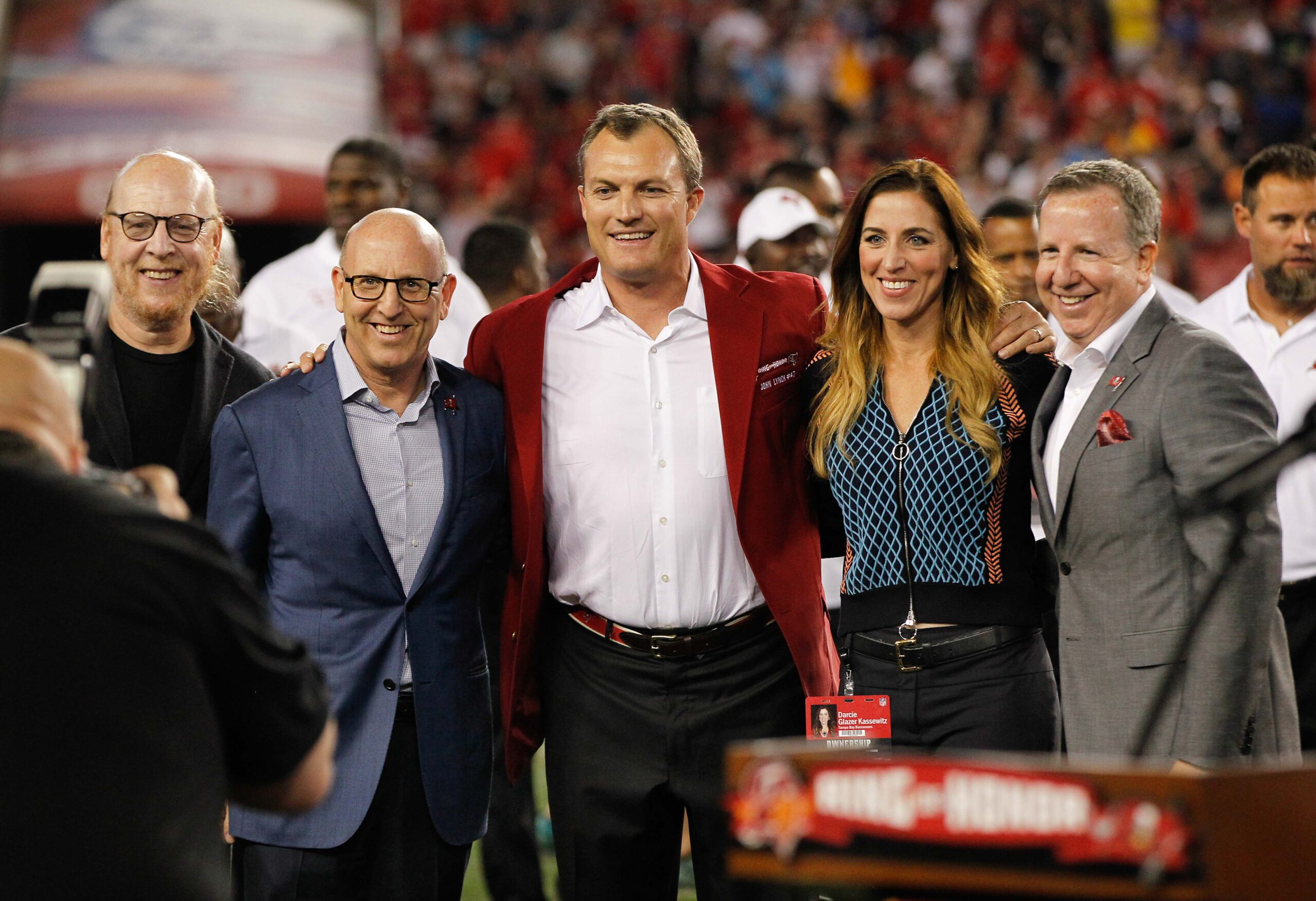
Nov 3, 2016; Tampa, FL, USA; Tampa Bay Buccaneers former safety John Lynch (center) stands for a photo with the Glazer family which own the Tampa Bay Buccaneers as his name is added to the Buccaneers Ring of Fame during the halftime ceremony of a football game between the Tampa Bay Buccaneers and the Atlanta Falcons at Raymond James Stadium. Mandatory Credit: Reinhold Matay-Imagn Images
In the 2016-2018 renovation, the Tampa Sports Authority contributed $29 million of a $160 million project. The Glazer family covered most of the rest. If that ratio holds on a $1 billion project, taxpayers could face hundreds of millions in obligations. The Rays’ project alone projects 39,000 construction jobs and $8 to $10 billion in surrounding private development. Politicians point to those numbers. Taxpayers point to potholes. The winners are franchise owners who convert public anxiety about team departure into public financing. The losers are municipal budgets that never recover the flexibility they surrendered.
The Cascade That Hasn’t Stopped
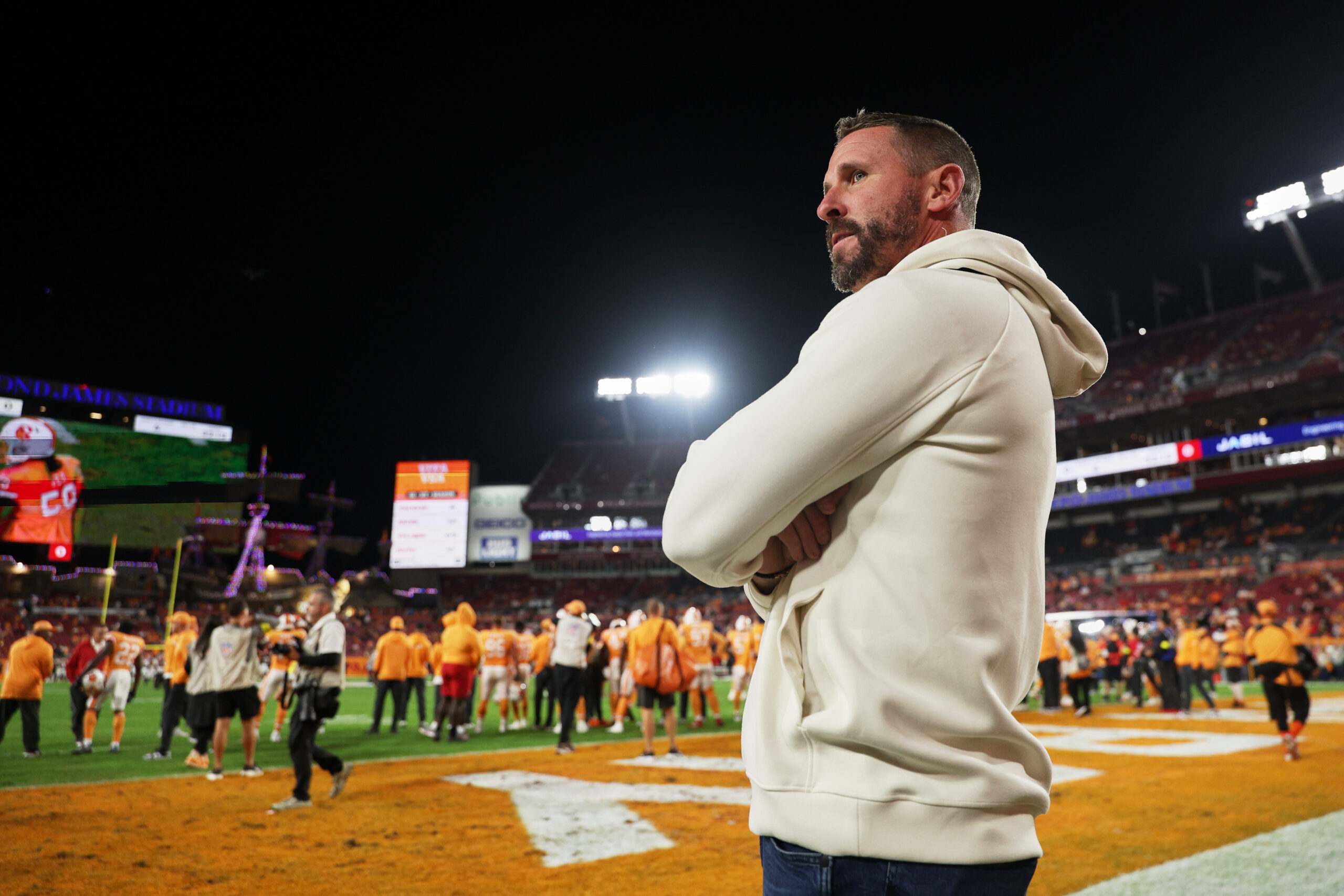
Dec 11, 2025; Tampa, Florida, USA; University of South Florida Bulls football head coach Brian Hartline stands on the field before the game between the Atlanta Falcons and the Tampa Bay Buccaneers at Raymond James Stadium. Mandatory Credit: Nathan Ray Seebeck-Imagn Images
The Buccaneers share Raymond James with the University of South Florida Bulls. A renovation closure displaces two programs, not one. Municipal budget workshops are already scheduled for April and May 2026 to weigh both stadium projects against city services. If voters reject public funding, both franchises could threaten relocation simultaneously. And eight to twelve other NFL teams face similar 2026-2028 renovation pressures in aging venues across the country. Tampa’s decision will set the template. The $1 billion question was never really about one stadium. It was about whether public money for professional sports becomes a permanent American obligation.
Sources:
Tampa Bay Times — “Bucs to meet with sports authority, discuss massive stadium project”
Sports Business Journal — “Bucs eye Raymond James Stadium renovations as lease deadline nears”
NBC Sports / ProFootballTalk — “Buccaneers have met with Tampa Sports Authority about a renovation”
NFL.com — “NFL owners unanimously approve Camping World Stadium in Orlando as temporary home for Jaguars in 2027”
WUSF — “Bucs ready to talk with Tampa Sports Authority about major renovation of Raymond James Stadium”
TBBW — “Rays, Tampa outline $2.3B stadium framework