
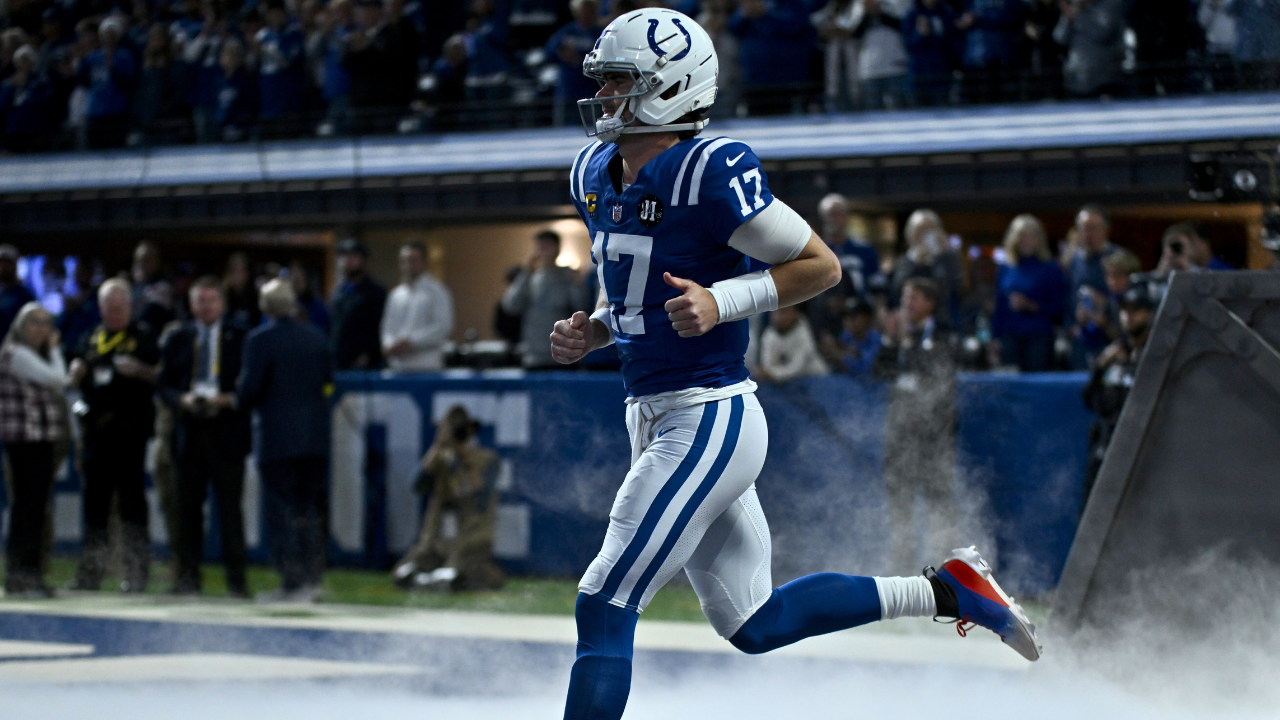
Indianapolis committed $37.833 million in guaranteed money to Daniel Jones and left the back door wide open. The Colts placed the transition tag on their quarterback, a mechanism so rarely used at the position that the last time it happened, Bill Clinton was running for re-election and Jeff George was the Atlanta Falcon who got it. That was 1996.
Thirty years of NFL front offices looked at this lever and passed it by. The Colts just pulled it.
Not Your Standard Tag
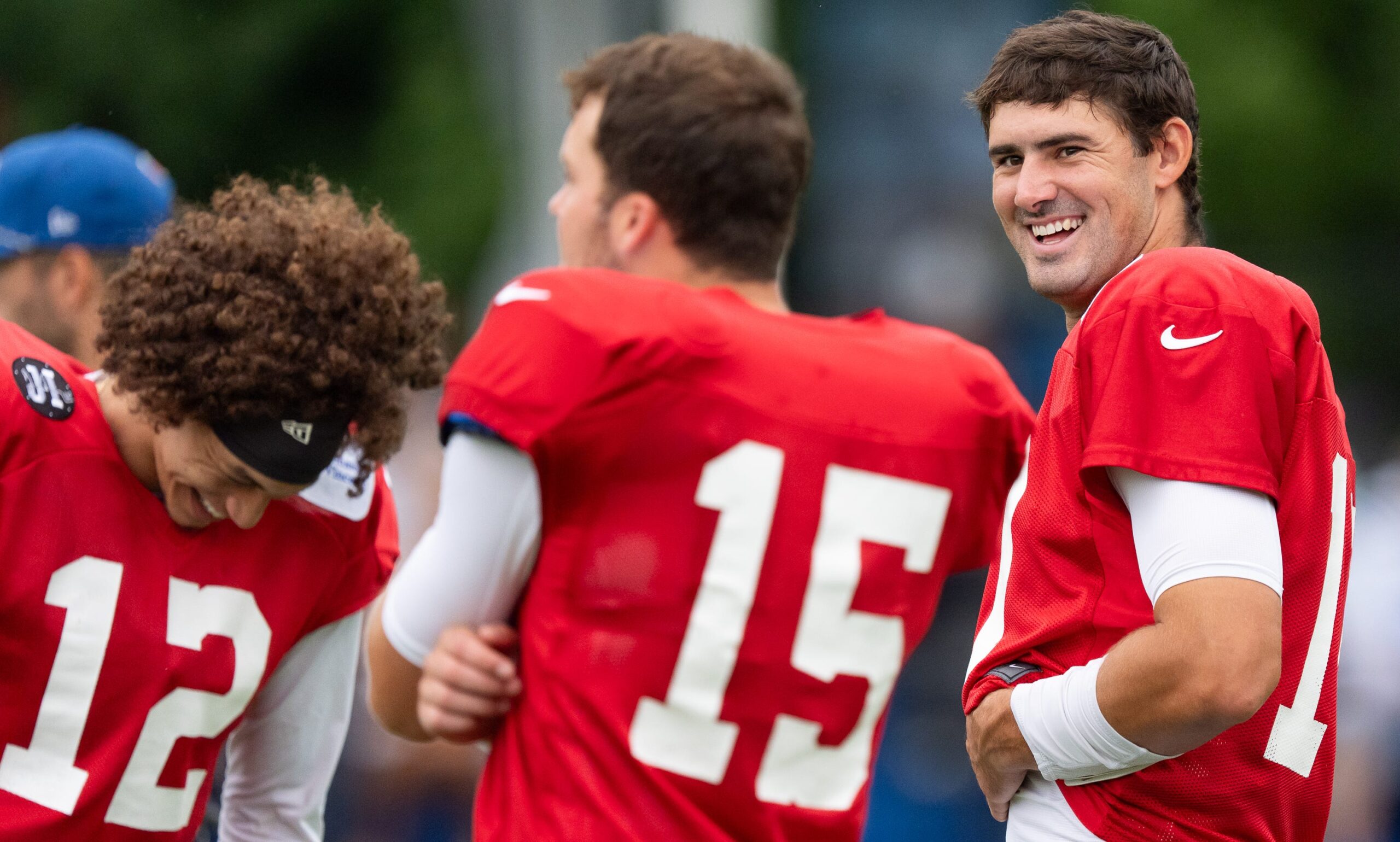
Indianapolis Colts quarterback Daniel Jones (17) laughs with the quarterbacks group Monday, July 28, 2025, during training camp held at Grand Park in Westfield.
The transition tag isn’t a franchise tag. It gives Jones the right to negotiate with all 31 other teams, sign an offer sheet, and force the Colts into a binary choice: match every dollar and every term, or let him walk with zero draft compensation coming back. The franchise tag on a quarterback would have cost $43.895 million but comes with two first-round picks if the player leaves. Indianapolis saved roughly $6 million by choosing the cheaper tag and traded away every safety net in the process.
The Achilles Factor
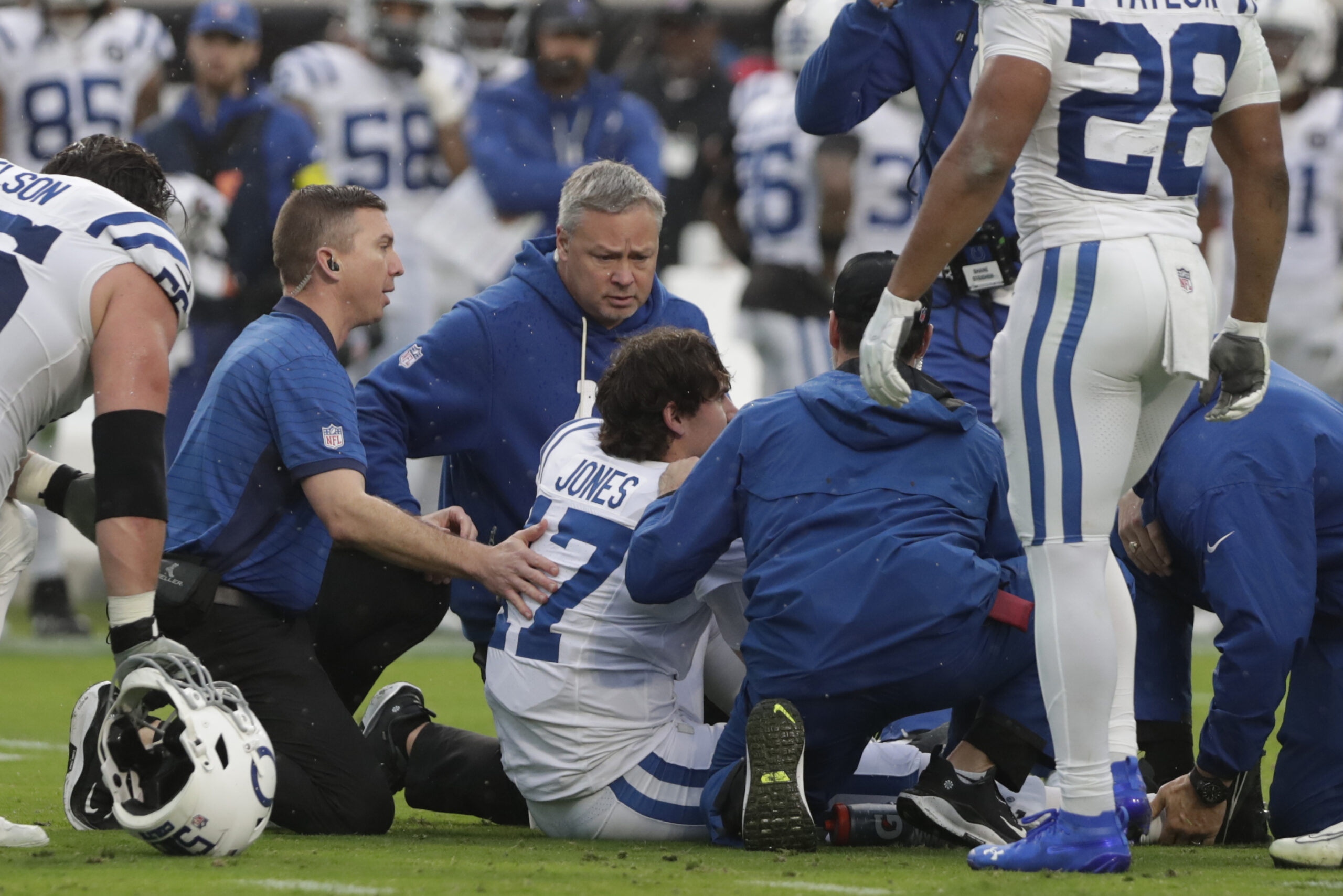
Dec 7, 2025; Jacksonville, Florida, USA; Indianapolis Colts quarterback Daniel Jones (17) is tended to by trainers after going down with an apparent injury against the Jacksonville Jaguars during the first half at EverBank Stadium. Mandatory Credit: Travis Register-Imagn Images
Jones was electric in 2025. Through ten games, the Colts were 8-2 with one of the league’s most productive offenses. He ranked fourth in completion percentage, fourth in yards per attempt, and posted 13 touchdowns against just three interceptions in that stretch. Shane Steichen called his play “as good as it gets”. Then, a hairline fibula fracture limited his mobility. Then a non-contact Achilles tear in the first quarter of a Week 14 loss at Jacksonville ended everything. He finished the year with 3,101 passing yards, 19 touchdowns, and eight interceptions across 13 starts.
Why Choose The Weaker Weapon
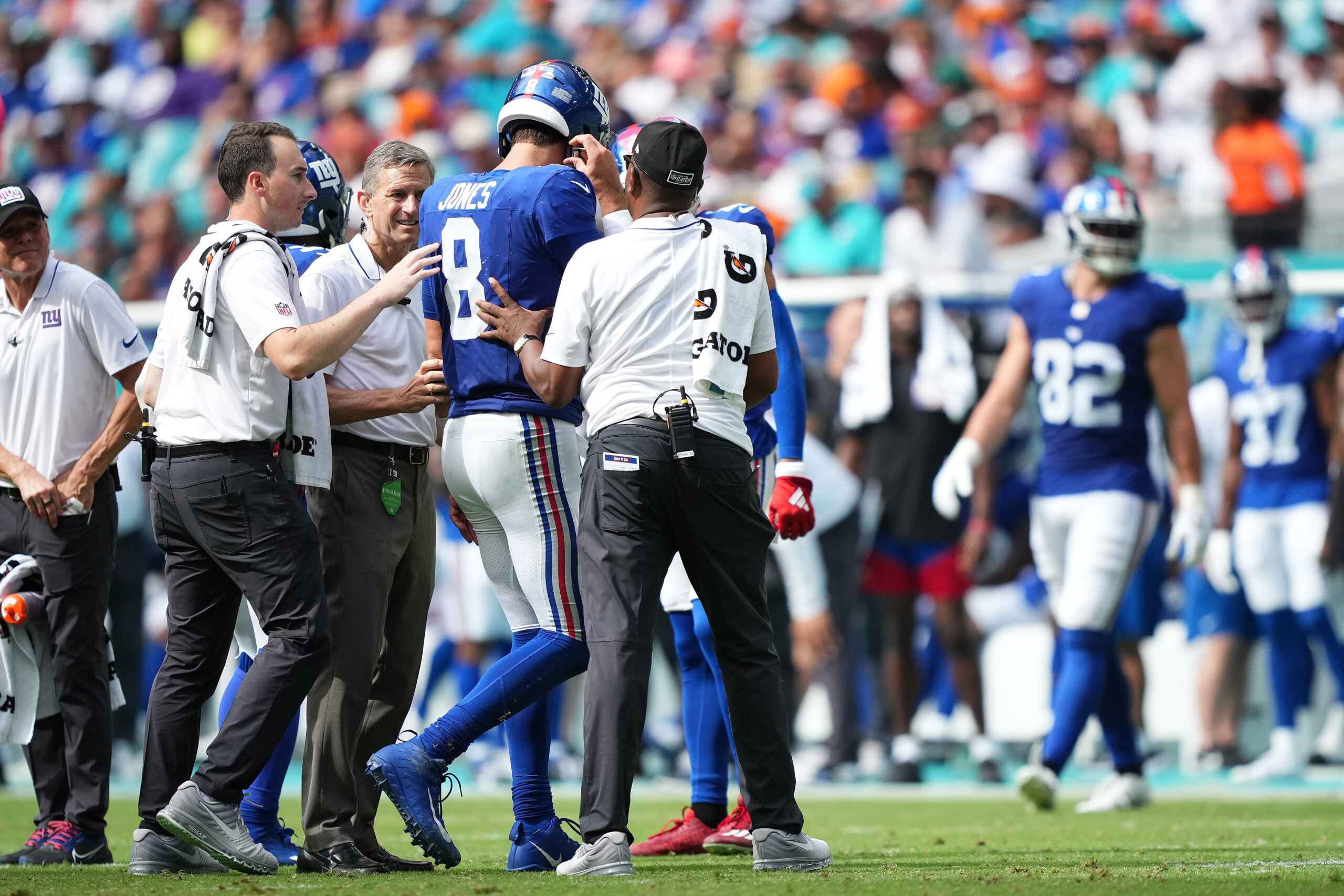
Oct 8, 2023; Miami Gardens, Florida, USA; New York Giants quarterback Daniel Jones (8) leaves the field with an apparent injury with team trainers during the second half agianst the Miami Dolphins at Hard Rock Stadium. Mandatory Credit: Jasen Vinlove-Imagn Images
The Achilles is the leverage. The Colts believe the extension they’ve offered Jones is the best deal he’ll find while recovering from a torn Achilles that likely keeps him sidelined into the 2026 season. ESPN’s Seth Walder reported that Indianapolis used the transition tag because they’re confident no team will outbid them on a quarterback who won’t be fully healthy until training camp at the earliest. If they’re wrong and someone throws more money at Jones, the Colts can match and keep their guy, at whatever price the market sets.
The Poison Pill Precedent
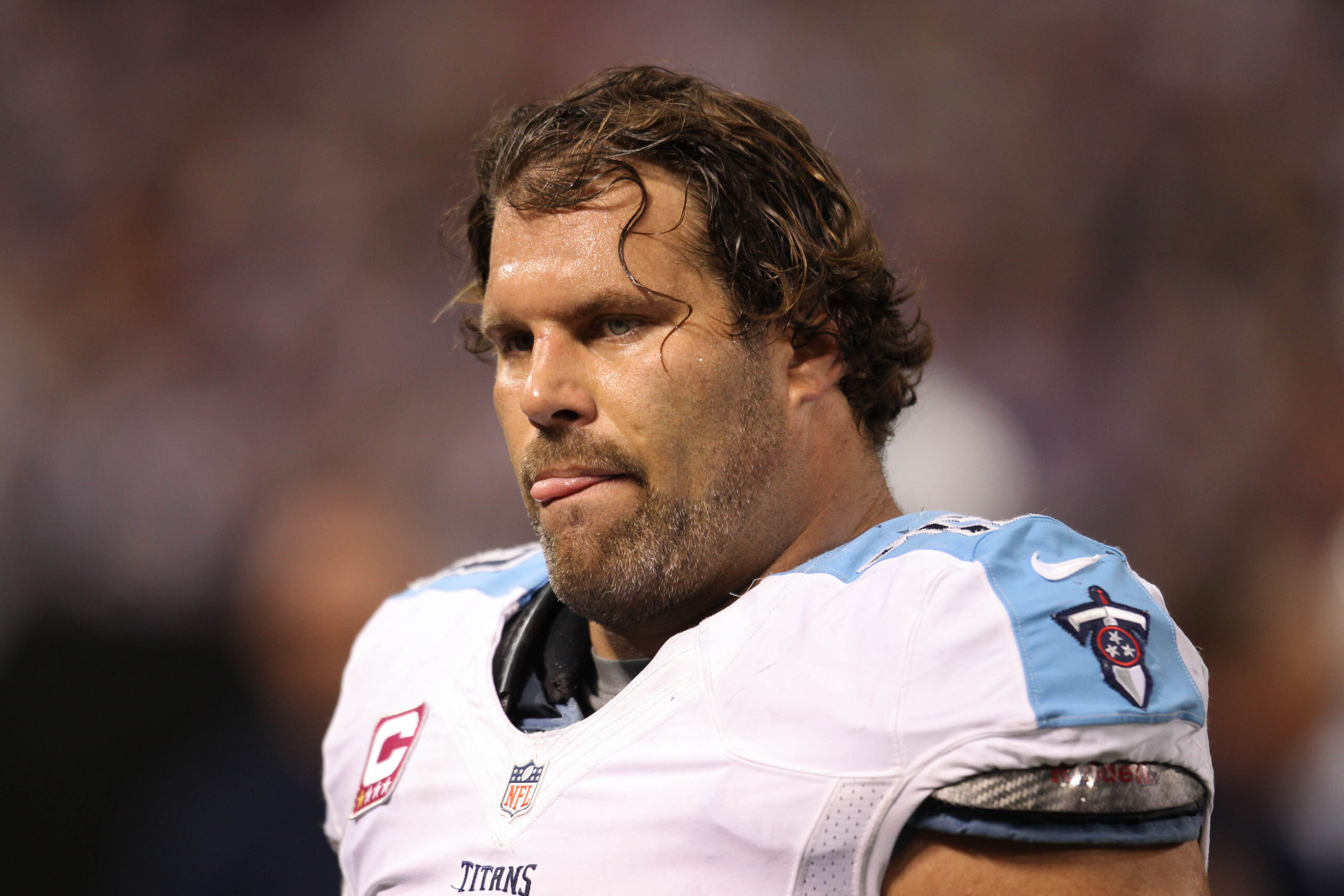
Oct 7, 2012; Minneapolis, MN, USA; Tennessee Titans offensive guard Steve Hutchinson (73) against the Minnesota Vikings at the Metrodome. The Vikings defeated the Titans 30-7. Mandatory Credit: Brace Hemmelgarn-Imagn Images
History says this can detonate. In 2006, the Seattle Seahawks used a transition tag on guard Steve Hutchinson. The Minnesota Vikings signed Hutchinson to an offer sheet loaded with a poison-pill clause that made it nearly impossible for Seattle to match. Hutchinson walked. Seattle got nothing. That fiasco triggered an NFL rule change banning such clauses. Here’s the wrinkle: the Vikings’ cap architect behind that 2006 maneuver, Rob Brzezinski, is currently Minnesota’s interim general manager, and the Vikings need a quarterback.
The Market That Might Not Exist
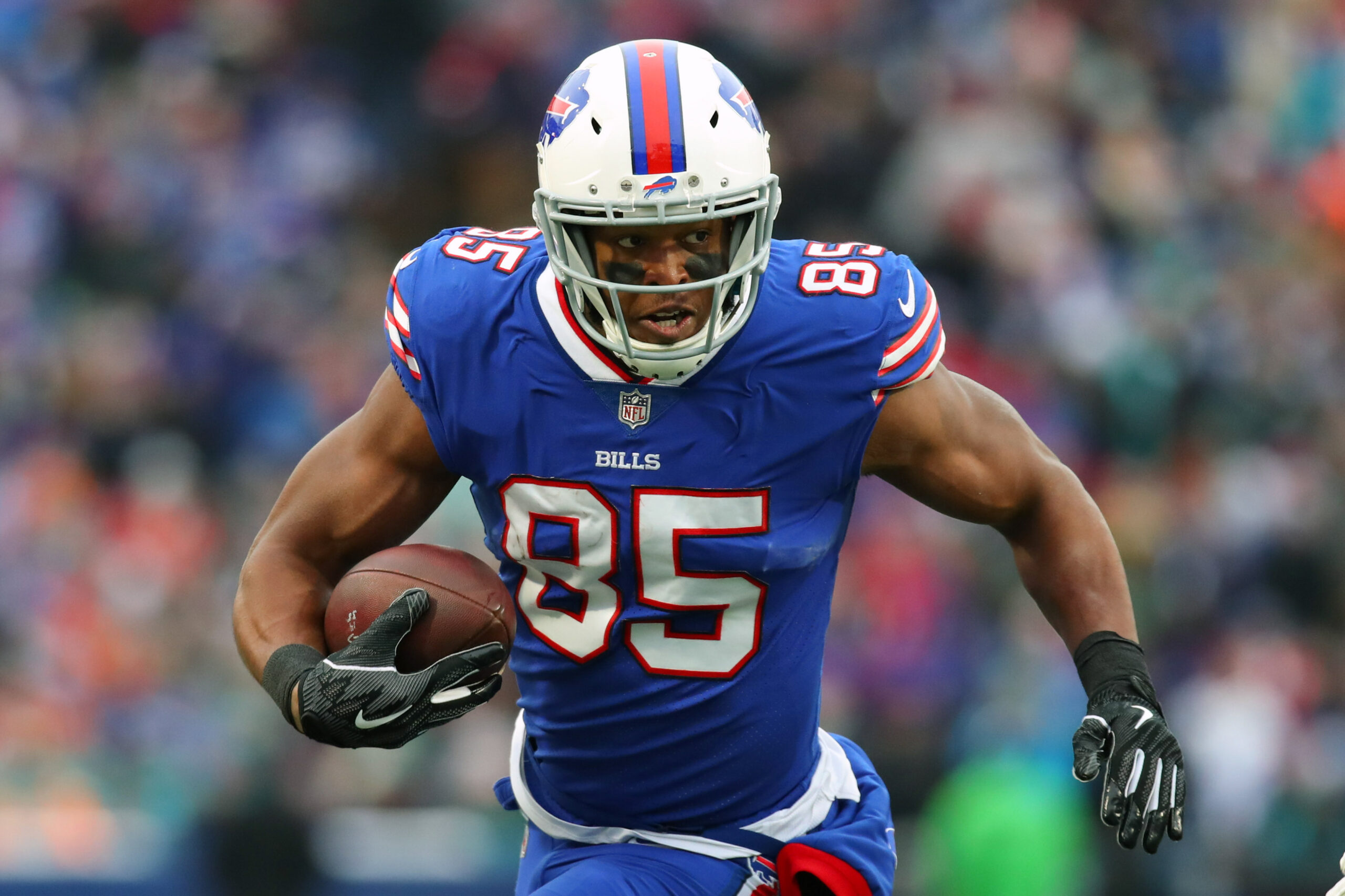
Dec 30, 2018; Orchard Park, NY, USA; Buffalo Bills tight end Charles Clay (85) runs with the ball after a catch against the Miami Dolphins during the second quarter at New Era Field. Mandatory Credit: Rich Barnes-Imagn Images
The Colts are gambling that the Achilles suppresses Jones’ market. The most recent player to leave via transition tag was tight end Charles Clay in 2015, when the Bills pried him from Miami with a front-loaded offer the Dolphins refused to match. At quarterback, a team would have to commit massive guaranteed money to a signal-caller coming off a major lower-body injury. That’s a steep ask. But if even one front office believes Jones’ pre-injury form is the real version, Indianapolis could face an offer sheet they didn’t budget for, while already sitting $4.7 million over the $301.2 million salary cap.
What Jones Proved Before It Broke
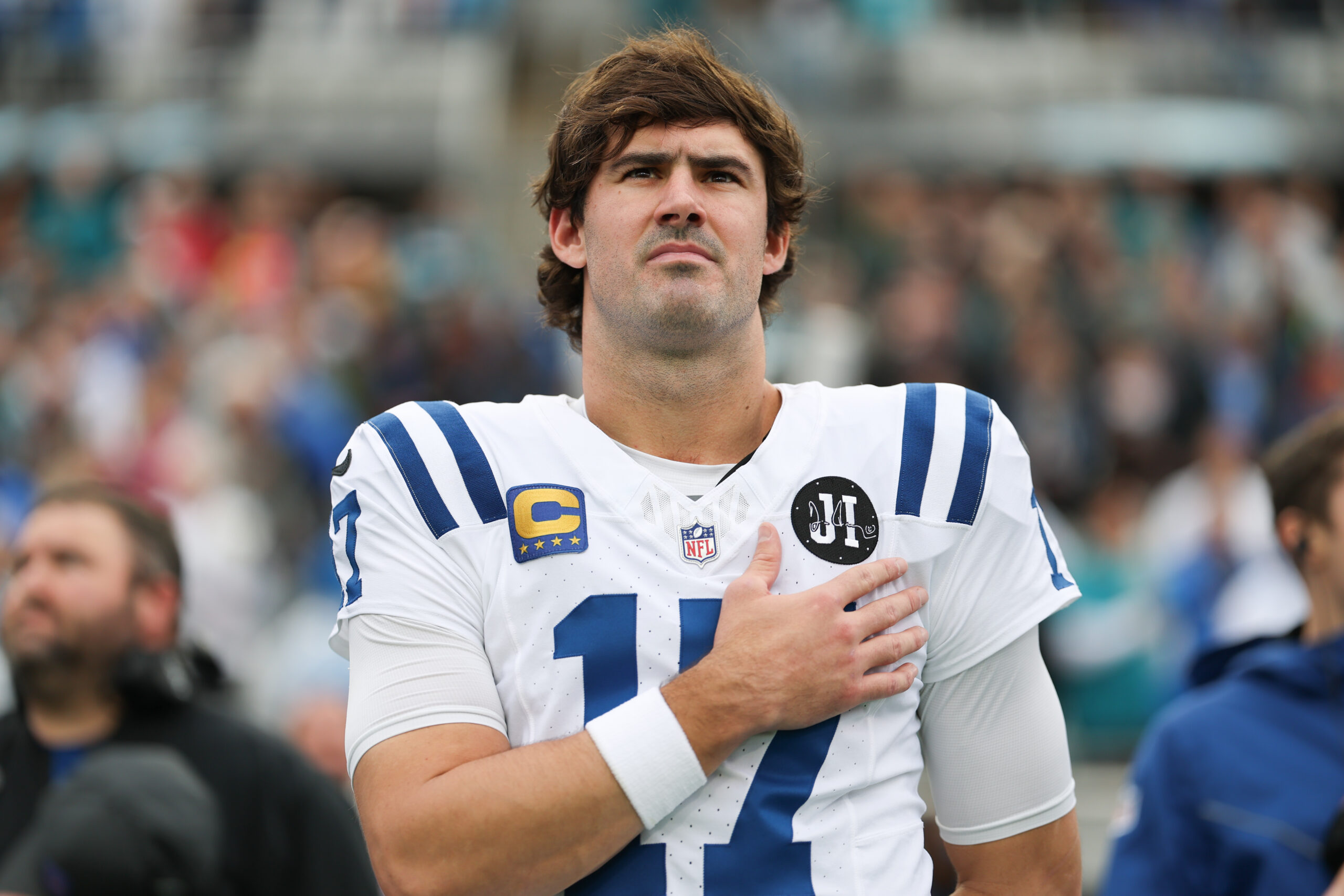
Dec 7, 2025; Jacksonville, Florida, USA; Indianapolis Colts quarterback Daniel Jones (17) stands on the field during the National Anthem before a game against the Jacksonville Jaguars at EverBank Stadium. Mandatory Credit: Matt Pendleton-Imagn Images
Before the injury, Jones had transformed from the quarterback the Giants released mid-season in November 2024 into a legitimate franchise starter. He led the NFL in Total QBR through three weeks. He became the only player in 90 years with at least three rushing touchdowns, three passing touchdowns, and zero turnovers over the first three games of a season, per the Elias Sports Bureau. Steichen unlocked something in Jones that six years in New York had never found. The question is whether that player still exists on the other side of an Achilles reconstruction.
A Cap Squeeze With No Margin
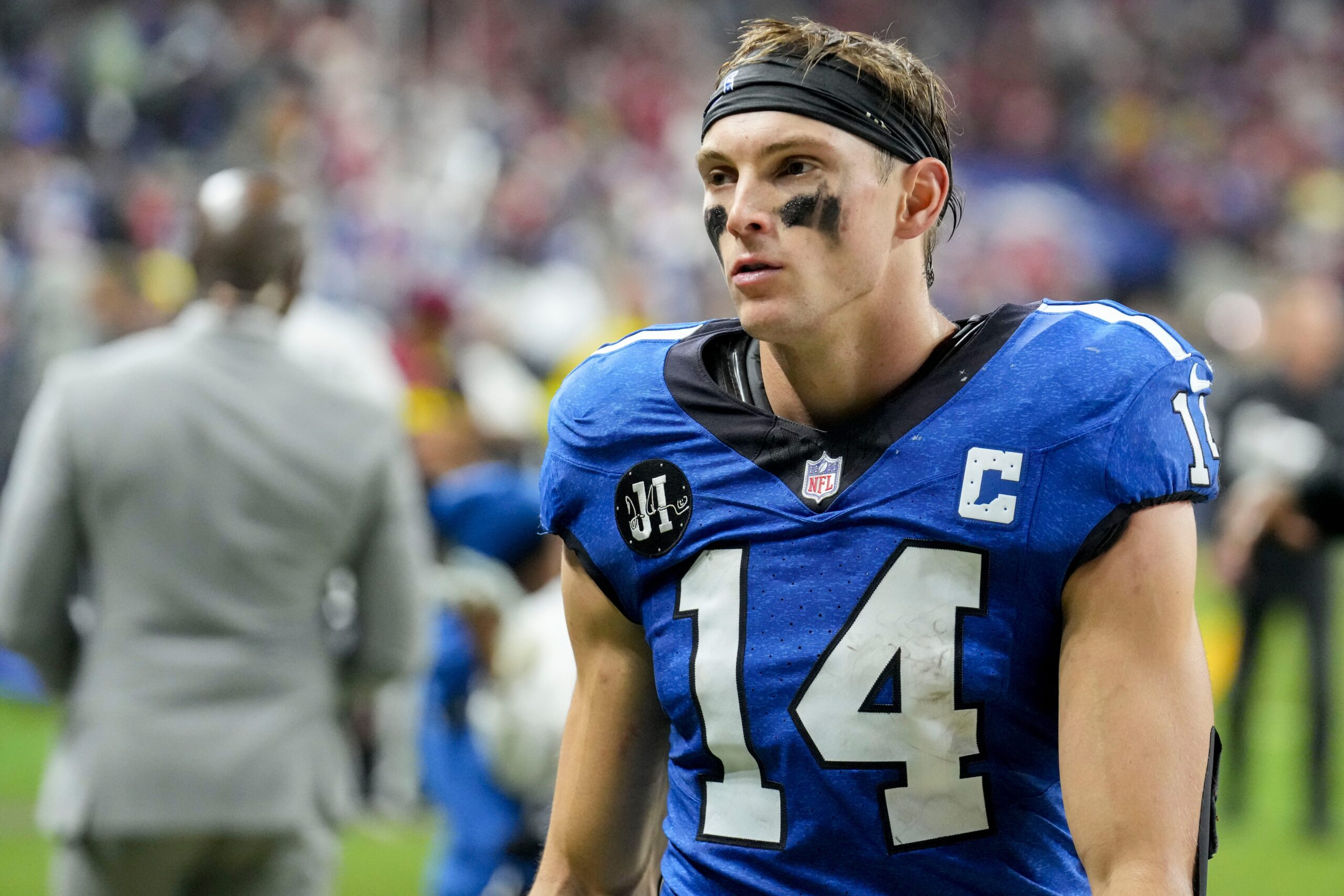
Indianapolis Colts wide receiver Alec Pierce (14) leaves the field Monday, Dec. 22, 2025, after losing a game against the San Francisco 49ers at Lucas Oil Stadium in Indianapolis.
The transition tag’s $37.833 million tender counts against Indianapolis’ books regardless of what happens next. The Colts were already over the $301.2 million salary cap before free agency opened. They also needed to retain deep-threat receiver Alec Pierce, who led the league in yards per reception in back-to-back seasons. Choosing the transition tag over the franchise tag freed up roughly $6 million in cap space, money that went straight toward locking Pierce into a four-year, $114 million extension.
The Bet Paid Off—Barely
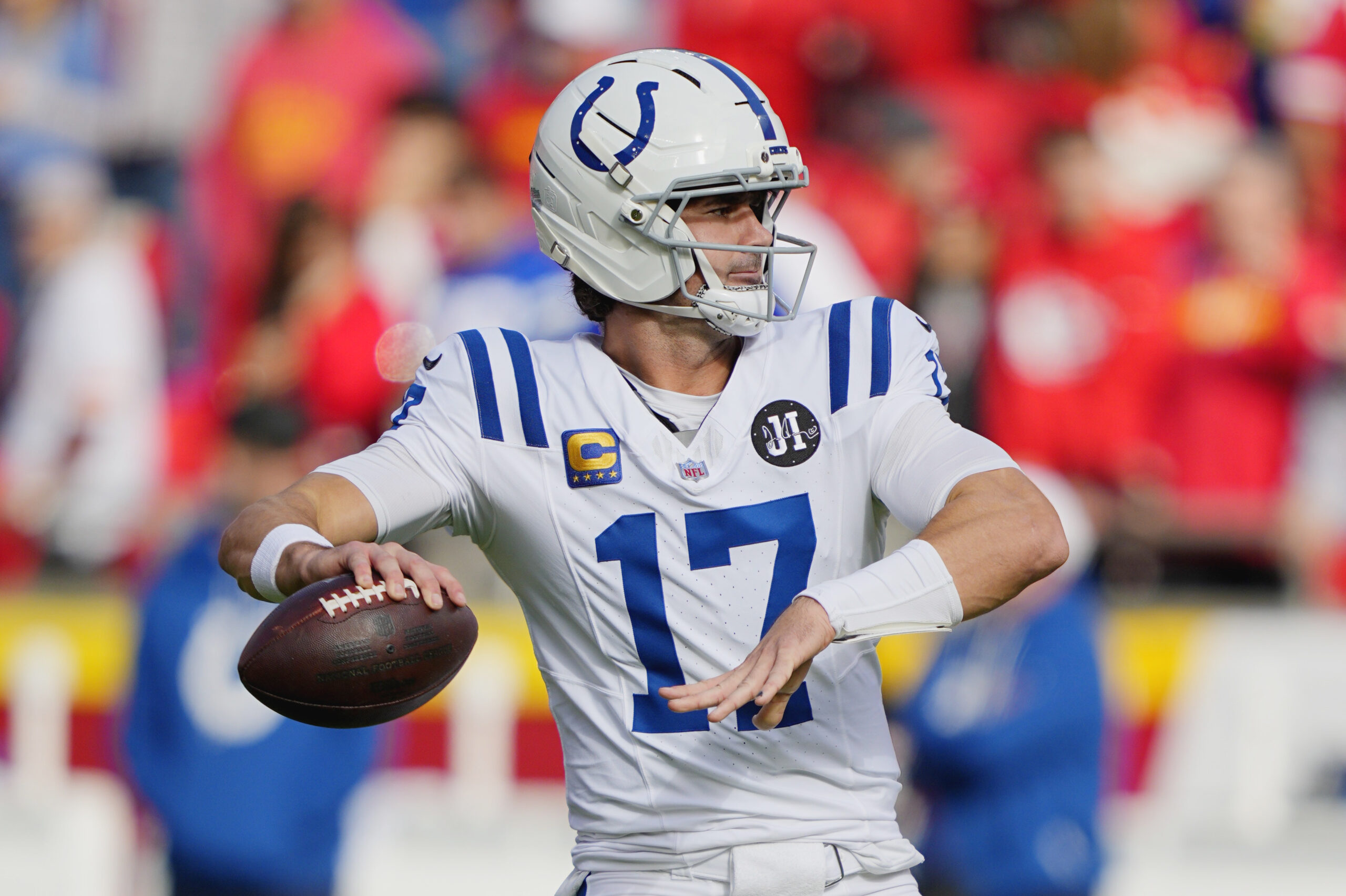
Nov 23, 2025; Kansas City, Missouri, USA; Indianapolis Colts quarterback Daniel Jones (17) warms up before the game against the Kansas City Chiefs at GEHA Field at Arrowhead Stadium. Mandatory Credit: Jay Biggerstaff-Imagn Images
Jones and the Colts reportedly agreed to a two-year, $88 million deal that can reach $100 million with incentives, pulling him off the open market before any team could test the tag’s vulnerability. That puts Jones at $44 million per year, 16th among NFL quarterbacks. For a player coming off a torn Achilles, it’s significant money. For the Colts, it’s cheaper than what a bidding war could have produced.
What The Transition Tag Told The League

Colts GM Chris Ballard has orchestrated a major rebuild in three years at the helm. Ini1brd 04 23 2019 Star 1 B001 2019 04 22 Img L1367057707 Ballard1 1 1 93of6psc L1367101148 Img L1367057707 Ballard1 1 1 93of6psc
The mechanism Indianapolis chose revealed something important: the Colts were willing to risk losing their quarterback for nothing to avoid overpaying by $6 million on a franchise tag. That’s either ruthless cap management or a high-wire act that happened to end with a net. The transition tag is back from the dead after three decades of dormancy at quarterback. The next team that dusts it off might not land as clean.
Sources:
ESPN 2026 NFL Franchise Tag Deadline Winners and Losers — ESPN
Colts Applying Transition Tag to QB Daniel Jones — NFL.com
NFL Announces Franchise Tag, Transition Tag Values for 2026 — NBC Sports
Colts QB Daniel Jones Suffers Achilles Injury, Ruled Out — ESPN
Colts, Daniel Jones Have Made Significant Progress on Two-Year Contract — NFL.com
Colts Are $4.7 Million Over Salary Cap Ahead of Free Agency — IndyStar